Table of Contents
ToggleIntrduction
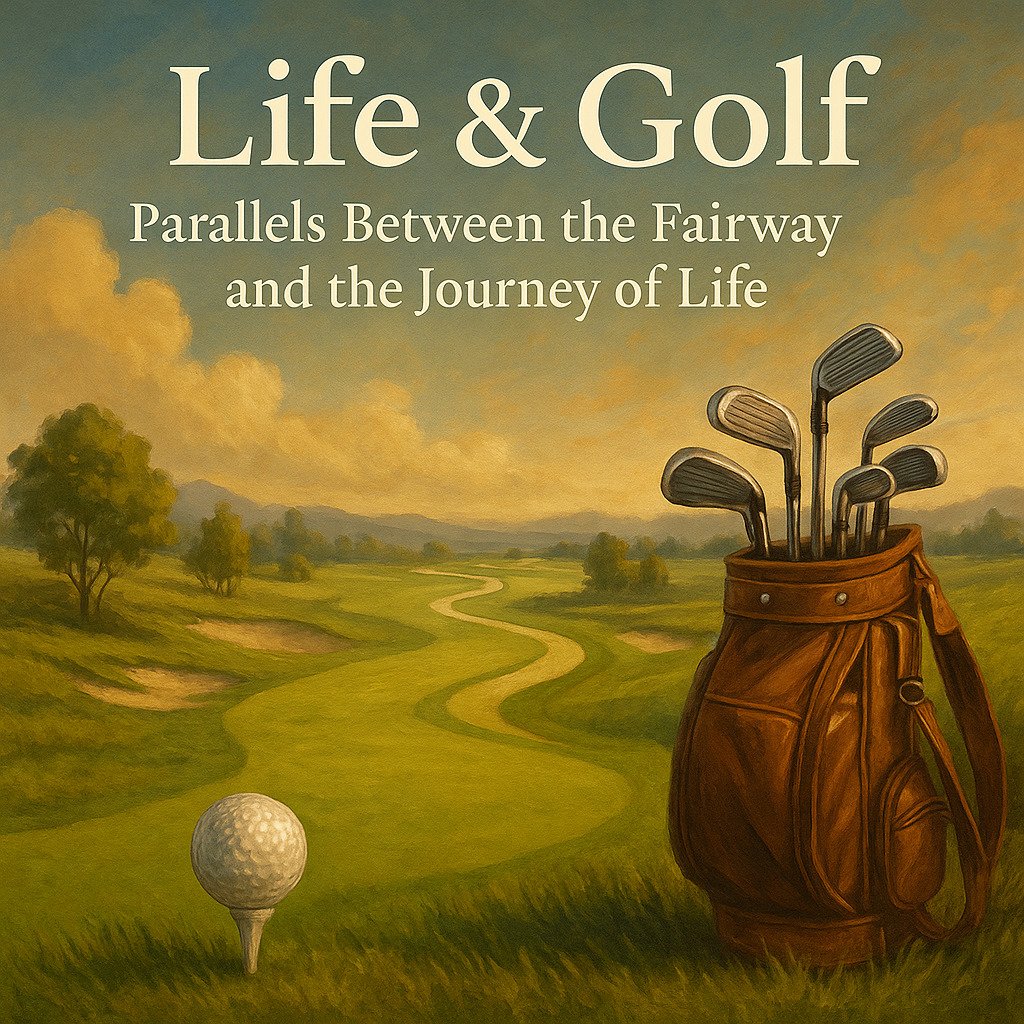
Life, much like golf, is not a sprint but a thoughtful walk across an ever-changing landscape. Every swing we take, every decision we make, and every detour we encounter shapes our journey in ways both subtle and profound. On the golf course, as in life, perfection is elusive — yet the pursuit itself becomes a source of meaning, discipline, and quiet joy.
Golf is more than just a game of clubs and scorecards. It is a silent teacher, whispering lessons about patience, resilience, humility, and self-awareness. The fairway becomes a reflective space where one learns to accept both the brilliance of a well-struck shot and the wisdom gained from a missed one. In this gentle rhythm lies a deeper metaphor for living — to embrace progress, forgive errors, and continue moving forward with grace.
“Life & Golf” explores this beautiful parallel, revealing how the spirit of the game mirrors the essence of human existence, offering not just recreation, but perspective, balance, and purpose.
“As numerous writers have pointed out (see Learning Life Lessons From Golf), the fairway often mirrors life’s unpredictable path…” https://publicsquaremag.org/faith/gospel-fare/learning-life-lessons-from-golf/
Wellness Through Golf: A Quiet Companion to Body and Mind
Golf holds a unique place among sports — it heals as gently as it challenges. Beyond the precision of the swing and the strategy of the game lies a holistic experience that nourishes both body and mind. The simple act of walking across sprawling greens, breathing in fresh air, and maintaining steady focus creates a rhythm that quietly rejuvenates the spirit.
Physically, golf promotes mobility, balance, and endurance. The consistent walking between holes, combined with the controlled mechanics of the swing, improves circulation, flexibility, and overall stamina, especially for those embracing the later chapters of life. Unlike high-impact sports, golf offers sustained activity without undue strain, making it a perfect companion for graceful ageing.
Mentally, the game provides clarity and calm. Each shot demands presence, patience, and thoughtful execution. The silence of the course, punctuated only by the swish of a club or the call of birds, becomes a meditative sanctuary — a space where stress dissolves and perspective deepens.
Emotionally, golf fosters routine, companionship, and purpose. It offers moments of reflection, shared laughter, and a sense of belonging that goes far beyond scorecards. In many ways, the fairway becomes not just a playing ground, but a path towards balance, resilience, and inner peace.
Life Is a Golf Course: Lessons from the Fairway to the Final Hole
At first glance, golf may appear to be little more than a leisurely sport of clubs, balls, and immaculately groomed greens. But observe more closely, and its deeper essence begins to unfold. Beneath the measured swings and silent concentration lies a profound metaphor for life itself. Each stroke teaches patience, every miss demands resilience, and every fairway walked becomes a quiet lesson in self-discovery and acceptance.
A standard round of golf consists of eighteen holes with a total par of 72 — a number that curiously mirrors the average human lifespan. If one were to imagine each hole as representing a phase of approximately four years, the golf course transforms into a symbolic pathway charting the journey from birth to the twilight of life. Seen through this lens, the game becomes more than recreation; it becomes a thoughtful reflection of our own passage through time, filled with moments of learning, challenge, growth, and grace.
This analogy allows us to explore life not as a straight road, but as a course of changing terrain — sometimes smooth, sometimes demanding, yet always instructive.
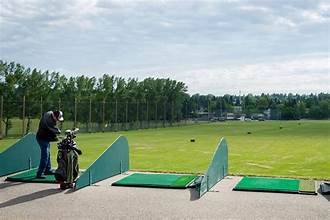
Where Golfers Are Born: The Range as a Womb
Practicing at the golf range is much like the time a child spends in the mother’s womb — a silent yet vital phase of nurturing and preparation. It is here that foundations are quietly formed, strength is gradually built, and confidence begins to take root. Just as life takes nine months to shape before its first breath, a beginner golfer too needs this sheltered period to understand the fundamentals, develop rhythm, and gain the assurance required before stepping onto the actual course.
This unseen labor is what makes the visible journey possible.
The first hole symbolizes early childhood — from birth to the age of four — a stage marked by complete dependence and gentle guidance. In the same way, the first golf shot, the tee-off, relies heavily on the Driver — the club that provides both power and direction to set the journey in motion. Like a mother’s protective presence in a child’s earliest years, the Driver offers stability and support at the very beginning.
Both moments — the birth of life and the first stroke of the game — are filled with anticipation, innocence, and promise. While the initial direction may influence the path ahead, it never defines the entire journey. Much like life itself, early beginnings are only the first chapter in a story still being written.

Hole One: The Protected Beginning
Hole One represents the earliest stage of life — from birth to around four years — a period defined by safety, dependency, and unconditional care. At this stage, a child exists within a cocoon of protection, surrounded by the comforting presence of parents, especially the mother. Decisions are not yet theirs to make; the world is interpreted through gentle hands, soothing voices, and watchful eyes.
Just as the first hole on a golf course is often less demanding and carefully structured, this phase of life shields the individual from harsh realities. The ground is smooth, the challenge mild, and the expectations minimal. The emphasis is not on performance but on nurturing — learning to stand, to walk, to understand, and to trust.
In golf terms, this hole is not about distance or precision, but about establishing balance and comfort. The golfer, much like the child, is still discovering their stance and rhythm. There may be mis-hits, stumbles, and uncertainty, but all of it is softened by the forgiving nature of this early stage.
It is a beginning wrapped in warmth, where mistakes are met with reassurance and every small effort is applauded. The real test of skill and endurance lies ahead, but for now, life allows us to feel secure, cherished, and guided — preparing us for the journey that follows.


Hole Two: Finding Direction with Gentle Guidance
The second hole reflects the tender age between four and eight — a formative phase when a child begins to step beyond the safety of the mother’s embrace and tentatively explore the wider world. Curiosity blossoms, independence slowly awakens, and the first real attempts at self-direction begin. Yet, while the desire to move forward grows, the need for guidance remains essential.
Just as a child learns to walk without constant support, finding balance through reassurance and encouragement, the golf ball too must be carefully steered after the initial tee-off. This is the stage where precision becomes more important than power. Well-chosen intermediate clubs help the ball stay within the fairway, aligned with the intended path and guarded from straying into uncertainty.
Both in life and in golf, this phase is about learning control gently — building confidence without pressure. The foundations of discipline, awareness, and early decision-making begin here. It is a time when direction is shaped softly, not imposed, allowing growth to occur naturally and purposefully.
This stage quietly prepares the individual for the more demanding terrains that lie ahead — where instinct, understanding, and resilience will be truly tested.
Hole Three: The Age of Awareness and Expectation
Hole Three represents the stage of life between eight and twelve years — a period when awareness begins to deepen and individuality starts to take shape. The child now develops a clearer sense of self, voices opinions with growing confidence, and starts to recognise expectations placed by family, school, and society. Obedience slowly gives way to independent thinking, and curiosity is guided by a budding understanding of right and wrong.
In much the same way, the fairway at Hole Three demands sharpened accuracy and thoughtful control. It is no longer about merely advancing the ball, but about placing it wisely. Positioning becomes critical, as a well-directed shot here lays the foundation for what follows. The focus shifts from experimentation to calculated intention.
Similarly, a child at this stage needs a carefully balanced environment — one that offers freedom to explore while still providing structure, boundaries, and gentle discipline. It is within this framework that confidence grows and a sense of responsibility quietly emerges.
This phase subtly prepares the individual for the more complex emotional and intellectual challenges of adolescence, where expectations intensify and life’s contours begin to sharpen. Like the golfer preparing for the next swing, the child learns that awareness and discipline now go hand in hand.
Hole Four: The Age of Competition and Course Correction
The fourth hole represents the adolescent years between twelve and sixteen — a phase when a child begins to step into a more visibly competitive world. It is during this stage that comparisons naturally arise and academic or extracurricular rivalries begin to take shape. The desire to prove oneself, to stand apart, and to earn recognition becomes stronger, accompanied by the important realisation that both success and failure are part of growth.
On the golf course, Hole Four often marks the moment when players become more observant of one another. Each stroke is quietly assessed, strengths are noticed, mistakes carefully registered, and players instinctively begin to refine their own approach based on what they witness. Strategy becomes more deliberate, and self-awareness more pronounced.
Likewise, during this stage of life, young minds grow increasingly conscious of their environment. They draw cues from peers, measure themselves against others, and begin the subtle process of internal adjustment. This is where course correction truly begins — not in defiance but in thoughtful reflection.
It is no longer just about making one’s own shot; it is about understanding group dynamics, learning from observation, and making mindful refinements to improve, adapt and mature. This phase lays the groundwork for resilience, self-discipline and emotional intelligence — all essential for the journey that lies ahead.
Holes Five to Eight: Navigating Challenges and Stepping into Adulthood
Holes Five to Eight represent the transformative years between sixteen and thirty — a crucial phase when life begins to take on shape, direction, and responsibility. Much like this stretch of the golf course, often lined with bunkers, water hazards, and narrow fairways, these years are filled with trials, transitions, and moments that quietly define who we become. It is here that the pressures of academic milestones, competitive examinations, and the first hesitant steps into the professional world begin to exert their influence.
During this period, youth gradually shifts from impulsiveness to intention. Exposure to reality sharpens judgement, and carefree spontaneity gives way to thoughtful consideration. Just as a golfer learns to choose wisely between a powerful drive and a delicate chip to remain safely on the green, the young adult learns to balance ambition with restraint. Rash decisions slowly give way to careful planning, and idealism matures into purpose.
The emotional turbulence of adolescence begins to settle, replaced by a more grounded, goal-oriented rhythm. Priorities become clearer, discipline strengthens, and the understanding grows that progress demands patience, commitment, and perseverance.
By the end of this stretch, many find their footing — completing their education, overcoming stiff competition, securing their first employment, and beginning to shoulder financial and personal responsibilities. Like a golfer who has now read the course well and adjusted his play accordingly, the young adult steps forward with renewed confidence, enhanced clarity, and an emerging sense of control over life’s unfolding fairway.
Holes Nine to Twelve: Mastery, Responsibility, and Guiding the Next Generation
Holes Nine to Twelve mirror the years between thirty and sixty — the most productive and defining phase of life. These are the years of maturity, leadership, and purposeful living, when an individual has established a clear identity, achieved professional stability, and assumed the central role of provider, nurturer, and guide. No longer merely participants in life’s game, they now become its steady architects.
This stage reflects the quiet confidence of experience. Decisions are no longer impulsive but measured, shaped by wisdom gained through years of triumphs and trials. As responsibilities expand, so does the sense of duty — towards family, community, and the values one holds dear. Life becomes less about personal gain and more about sustaining, supporting, and shaping those who depend upon you.
Much like introducing one’s children to the game of golf, this phase involves passing on life’s most valuable lessons — discipline, balance, patience, and grace. The individual becomes a mentor, consciously or otherwise, guiding the next generation through example rather than instruction alone. Leadership here is gentle yet firm, rooted in understanding rather than authority.
These holes symbolise a well-earned sense of composure and control. Challenges are met with quiet assurance, and success is no longer defined solely by professional milestones but by the strength of relationships, the stability of the home, and the legacy quietly being built. Like a seasoned golfer who knows the rhythm of the course, life at this stage flows with purpose, balance, and reflective wisdom.
Holes Thirteen to Eighteen: The Final Stretch with Grace and Reflection
The final six holes — thirteen to eighteen — beautifully mirror the later stage of life, spanning approximately sixty to seventy-two years. This is the closing stretch of the course, where the golfer moves forward with a quiet dignity, having faced life’s fair share of challenges and played the game with dedication and purpose. A gentle sense of fulfilment lingers in the air, accompanied by an awareness that the journey is gradually approaching its natural pause — much like an individual standing on the threshold of retirement, looking back at a lifetime shaped by effort, commitment, and achievement.
At this stage, ambition gives way to introspection. The drive for constant advancement softens, replaced by thoughtful reflection and measured contentment. Attention shifts towards managing the resources and wisdom accumulated over the years — planning retirement benefits, safeguarding financial stability, and ensuring a comfortable future. The mind turns towards maintaining relevance and vitality beyond professional life.
Just as a seasoned golfer approaches the final holes with composure and thoughtful precision, the retiree begins to explore newer avenues of purpose — nurturing hobbies, engaging with family, contributing through mentorship, and finding joy in the slower rhythms of life. This phase is not about withdrawal, but about redefining one’s role with grace and quiet confidence.
It is a moment of balance — between what has been lived and what still awaits. The fairway may be nearing its end, yet the journey continues, enriched by wisdom, love, and the serene understanding that life, like golf, is best savoured not only in its victories but in its graceful conclusion.
Conclusion
In conclusion, I firmly believe that to make life richer, more meaningful, and truly enjoyable, one should continue playing golf for as long as the body and spirit permit — even into life’s final chapter. Golf, in its quiet rhythm and graceful discipline, offers not just physical movement but a profound connection to purpose, reflection, and inner peace.
For those who may not know, I held a golf club for the very first time at the age of seventy-two — a moment that marked the beginning of an unexpected yet deeply fulfilling transformation. The sport has brought renewed energy into my life, instilled a fresh sense of direction, and gifted me joy that extends far beyond the fairway.
If you wish to explore this personal journey further, I warmly invite you to read my blog:
“Swinging into Retirement: My Journey into Golf at 72” — a heartfelt reflection on how embracing golf later in life rekindled passion, purpose, and perspective.
Life, much like golf, is never defined by when you begin, but by how wholeheartedly you choose to play.
The crown jewels of the golfing world are scattered across breathtaking landscapes, each with its own history, charm, and challenge. Leading the list is the legendary Royal County Down in Northern Ireland, where the rugged mountains meet the Irish Sea. Next comes Royal Dornoch in Scotland, a timeless masterpiece steeped in tradition. No golfing journey is complete without The Old Course at St. Andrews — the very birthplace of the game. Across the Atlantic, Pine Valley Golf Club in the United States stands as a benchmark for course design and difficulty. Completing this elite list is Muirfield in Scotland, known for its strategic layout and prestigious championships. Together, these five courses form the ultimate pilgrimage for golfers worldwide.
The post explores how the game of golf mirrors real life — filled with patience, discipline, setbacks, small victories, and the constant pursuit of self-improvement. It shows how lessons on the course often guide us off it as well.
Golf teaches you to stay calm under pressure, accept mistakes gracefully, and celebrate progress, however small. Much like life, every shot matters, but so does the mindset behind it.
Not at all. Even if you’ve never held a golf club, the reflections and life parallels will resonate with anyone who believes in growth, resilience, and finding joy in the journey.
Golf subtly instills patience, focus, emotional control, and humility. It reminds us that consistency beats haste and that perfection is less important than perseverance.
Age only adds richness to both. The post highlights how golf becomes more meaningful with time, turning into a companion in retirement and a source of physical and mental well-being.
By drawing relatable comparisons between fairways and life pathways, the post encourages readers to introspect their own choices, rhythm, and acceptance of life’s unpredictability.
It is both. While golf is a physical game, the post treats it as a meditative practice — a philosophy that nurtures balance, clarity, and self-awareness.
Instead of focusing only on techniques or scores, “Life & Golf” delves into emotions, memories, and the soulful connection between the game and personal evolution.
Yes, it gently nudges readers toward seeing golf as more than a sport — as a lifestyle that promotes harmony, discipline, and inner peace.
The key takeaway is simple yet profound: Life, like golf, is not about the perfect swing — it’s about enjoying the course, embracing the misses, and staying in the game with grace.