Dinesh Joshi

Hi, I’m Dinesh Joshi, an imaginative and experienced content writer with over 36 years of diverse experience in the Pharmaceutical, Steel, and Oil & Gas sectors. My writing is enriched by a deep understanding of these industries and a scientific background, ensuring accurate and highly relevant content for your audience. I possess Blogging, Content Strategy, Creative Writing, and Web Content Writing expertise.

Literature: Voices, Ideas and the Human Experience

Introduction Literature has always been far more than words written on paper. It is the emotional memory of civilizations, the conscience of societies and the timeless expression of human imagination and experience. Across centuries and cultures, literature has preserved wisdom, questioned injustice, inspired revolutions and explored the deepest dimensions of human existence. Through stories, poetry, drama, essays and personal reflections, literature continues to shape the way humanity thinks, feels and understands itself. From ancient oral traditions and sacred epics to modern novels and digital storytelling, literature has evolved alongside civilization itself. Yet despite changing forms and technologies, its essential purpose remains unchanged — to capture the human journey in all its complexity, beauty and contradiction. In today’s fast-moving world dominated by technology, information overload and shrinking attention spans, literature continues to offer something uniquely valuable: depth. It encourages reflection in a distracted age, empathy in divided societies and imagination in increasingly mechanized environments. Literature allows humanity to pause and rediscover the emotional and intellectual dimensions of life that often become neglected amidst material progress and digital speed. The Literature section of WolverineSpeak.com seeks to approach literature not merely as academic study or book discussion, but as a living exploration of civilization, society, philosophy and human consciousness. Unlike many conventional literary blogs focused only on reviews or summaries, this platform aims to examine the deeper relationship between literature and life itself. Evolution of Literature: From Oral Traditions to the Digital Age The evolution of literature mirrors the evolution of humanity. Long before written language emerged, stories were preserved through oral traditions, folklore and poetry passed across generations. Ancient civilizations used literature to preserve spiritual wisdom, cultural values and historical memory. As writing systems developed, literature expanded into philosophical texts, epics, poetry, drama and intellectual discourse. Works such as the Ramayana, the Mahabharata, Greek epics and classical philosophical writings became foundational pillars of civilization itself. Over time, literature evolved through: Religious and devotional movements Classical artistic traditions Social reform movements Political revolutions Modern psychological exploration Contemporary digital expression Each era shaped literature, and literature in turn shaped each era. Major Forms of Literature Literature expresses itself through diverse forms, each offering a unique way of understanding human experience. Poetry transforms emotion into rhythm and imagery, often expressing feelings and ideas that ordinary language cannot fully capture. Fiction uses imagination and storytelling to explore society, morality, relationships and the complexities of human behavior. Drama brings literature into performance, transforming written words into living emotional experience through theatre and dialogue. Essays encourage reflection, intellectual inquiry and critical thinking, while memoirs preserve personal journeys and lived experiences that often carry universal emotional significance. Together, these forms create the rich and evolving landscape of literary expression across civilizations and generations. Literature as Reflection of Society One of literature’s greatest strengths lies in its ability to reflect society with honesty and emotional depth. Literature captures not only historical events, but also the thoughts, fears, aspirations and moral struggles of the people living through them. Every age produces literature shaped by its realities: Ancient literature explored mythology and spirituality Medieval literature reflected faith and kingship Modern literature examined industrialization, inequality and nationalism Contemporary literature explores identity, technology and globalization Literature often acts as society’s moral conscience. Writers have historically challenged injustice, questioned power structures and given voice to marginalized communities. Through emotional storytelling and reflective thought, literature helps societies understand both their strengths and their failures. Influence of Literature on Civilization Few forces have shaped civilization as profoundly as literature. Beyond entertainment, literature has influenced: Cultural identity Moral values Philosophical thought Political awareness Social reform Spiritual understanding Sacred texts, epics, philosophical writings and literary movements have guided civilizations for centuries. Literature preserves the intellectual and emotional heritage of humanity while continuously inspiring change and reflection. Many reform movements and national awakenings were deeply influenced by literary thought. Through books, poetry and essays, societies have debated freedom, justice, morality and human dignity across generations. In many ways, literature serves as the living memory of civilization itself. Indian Literary Heritage India possesses one of the world’s richest literary traditions. From the Vedas and Upanishads to regional poetry, devotional literature and modern fiction, Indian literary heritage reflects extraordinary diversity of language, philosophy and spiritual inquiry. Indian literature has continuously explored: Dharma and morality Spiritual consciousness Human relationships Social harmony Emotional sensitivity Philosophical reflection The Ramayana and Mahabharata remain among the world’s greatest literary and civilizational works, influencing culture and ethics across generations. Regional literary traditions in Hindi, Bengali, Tamil, Urdu, Marathi and many other languages have further enriched India’s cultural identity. Bhakti and Sufi poetry brought spirituality into the language of ordinary people, while modern writers used literature as an instrument of social reform and national awakening. Indian literary heritage remains not merely a cultural asset, but a continuing source of intellectual and emotional inspiration Literature in the Digital Age The digital revolution has transformed how literature is created, distributed and consumed. E-books, audiobooks, online publishing and social media writing have expanded literary accessibility on an unprecedented scale. Writers today can reach global audiences instantly, while readers can explore literature from diverse cultures and languages through digital platforms. Regional voices and independent creators now possess opportunities that were once unimaginable. At the same time, modern literary culture faces serious challenges: Declining reading attention spans Information overload Commercialization of content Preference for speed over reflection Yet despite these changes, literature continues to remain deeply relevant because human beings continue to seek meaning, emotional connection and thoughtful expression beyond mere information. Future of Literature The future of literature will likely be shaped by both technological innovation and enduring human needs. Artificial intelligence, interactive storytelling and immersive digital experiences may transform literary formats and methods of creation. However, literature’s deepest strength lies in qualities that remain profoundly human: Emotion Memory Imagination Empathy Reflection Moral inquiry As societies become increasingly automated and technologically driven, literature may become even more valuable because it preserves the emotional and philosophical dimensions of human existence. The future of

Literature: Voices, Ideas and the Human Experience Read More »

Festivals

Celebrating Traditions, Faith & Collective Joy This section is currently being developed as part of the Arts & Culture series on WolverineSpeak.com. Festivals are among the most vibrant expressions of human civilization — bringing together faith, tradition, music, rituals, seasonal rhythms, community celebrations, and cultural identity across generations. Upcoming features in this section will explore: Indian festivals and traditions, regional celebrations, Himalayan fairs and yatras, spiritual gatherings, folk customs, seasonal observances, and the cultural significance behind these celebrations. Please revisit soon as this section gradually evolves into a rich cultural journey through India’s festive traditions and living heritage. 👉 Meanwhile, explore other features under Arts & Culture.

Festivals Read More »

Cultural Heritage

Preserving the Legacy of Civilizations This section is currently being developed as part of the Arts & Culture series on WolverineSpeak.com. Cultural heritage reflects the collective memory of civilizations through monuments, traditions, crafts, folklore, architecture, language, sacred spaces, and community traditions passed across generations. Upcoming features will explore: India’s architectural heritage, Himalayan cultural traditions, temples and sacred sites, folk heritage, indigenous traditions, historical preservation, and the importance of protecting cultural identity in a rapidly changing world. Please revisit soon as this section grows into a rich archive of heritage, history, and cultural continuity. 👉 Meanwhile, discover more stories from Arts & Culture.

Cultural Heritage Read More »

Spirituality & Beliefs

Exploring Faith, Philosophy & Inner Traditions This section is currently under development as part of the Arts & Culture knowledge series. Across civilizations, humanity has continuously searched for meaning, inner peace, spiritual understanding, and connection with the divine. From ancient philosophies and sacred rituals to meditation, pilgrimage, and faith traditions, spirituality remains deeply woven into human culture and identity. Upcoming features will explore: Indian spiritual traditions, Himalayan spirituality, sacred journeys, meditation and philosophy, temples and rituals, local belief systems, and the role of faith in everyday life. Please revisit soon as this section expands into a thoughtful exploration of spirituality, culture, and human consciousness. 👉 Explore other journeys under Arts & Culture while this section is being prepared.

Spirituality & Beliefs Read More »

The Future of Artificial Intelligence and Humanity

Future of Artificial Intelligence and Humanity The This article is currently under development as part of our “Beyond Science” knowledge series. Artificial Intelligence is rapidly reshaping the future of human civilization — influencing how we work, communicate, create, learn, govern, and even define intelligence itself. From generative AI and robotics to ethics, automation, and human-machine collaboration, the questions surrounding AI are becoming increasingly important for society. This upcoming feature will explore: the rise of artificial intelligence, opportunities and risks, AI ethics and governance, the future of work, human creativity in the age of machines, and how AI may redefine humanity’s future. Please revisit soon as we continue expanding this section with research-driven and reader-friendly insights. 👉 Explore other articles under “Beyond Science” while this feature is being prepared. Related Reads 👉 Mysteries of the Universe👉 Gut Feelings: The Science Behind Your Second Brain👉 When a Forgotten Volcano Awakens: Ethiopia’s Sleeping Giant and Its Global Reach

The Future of Artificial Intelligence and Humanity Read More »

Illustration of black holes, galaxies, stars, and cosmic mysteries in deep space

Mysteries of the Universe

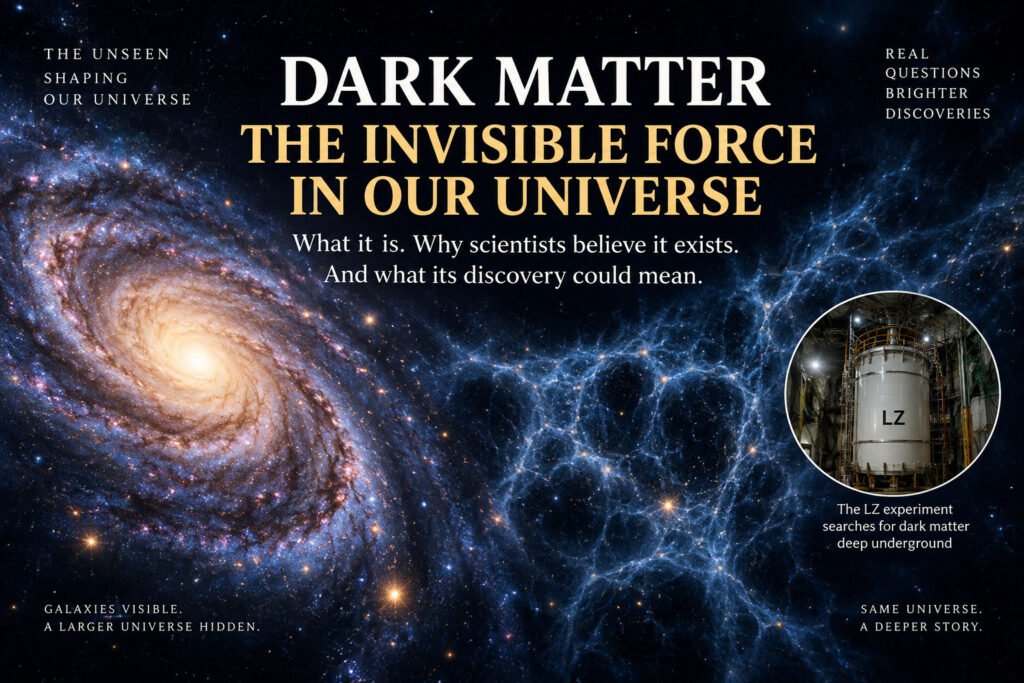
Exploring the Cosmic Questions That Still Challenge Humanity From the birth of the universe to the mysteries hidden inside black holes, humanity has always looked toward the cosmos with wonder, curiosity, and unanswered questions. Despite extraordinary advances in astronomy, physics, and space exploration, the universe continues to hold secrets that challenge the limits of human understanding. This section journeys into some of the greatest cosmic mysteries ever explored by science — questions that stretch across space, time, matter, and the very nature of reality itself. Here we explore: What Lies Inside a Black Hole?Journey into one of the universe’s most extreme and mysterious objects where gravity bends space and time beyond imagination. Dark Matter: The Invisible UniverseDiscover the unseen substance believed to make up most of the universe — yet remains completely invisible to human observation. Many cosmic mysteries continue to challenge both physics and human understanding, much like the unanswered questions explored in Beyond Science. Are We Alone in the Cosmos?Explore humanity’s ongoing search for extraterrestrial life and the scientific efforts to answer one of our oldest questions. The Mystery of Time TravelCan time truly bend? Is travel into the future or past scientifically possible? We examine the theories and paradoxes surrounding time itself. How the Universe BeganFrom the Big Bang to cosmic evolution, we explore the origins of existence and the birth of galaxies, stars, and matter. Multiverse Theory ExplainedCould countless parallel universes exist beyond our own? Modern physics suggests possibilities once confined to science fiction. The Search for Alien LifeFrom Mars missions to distant exoplanets, scientists continue searching for signs of life beyond Earth. Humanity’s search for extraterrestrial intelligence also connects closely with our broader exploration of future technologies and space innovation. The Expanding Universe and Dark EnergyWhy is the universe expanding faster and faster? The answer may lie in one of modern cosmology’s greatest mysteries — dark energy. As science pushes deeper into the cosmos, each discovery often reveals even greater unknowns. The universe reminds us that human knowledge, however advanced, still stands at the edge of vast cosmic mystery. In the end, the greatest wonder may not simply be what we already know — but how much still remains undiscovered. Related Reads 👉 Beyond Science – Frontiers of Wonder Where Curiosity Meets Discovery👉 When a Forgotten Volcano Awakens: Ethiopia’s Sleeping Giant and Its Global Reach👉 Virus: Between Life and Non-Life👉 Gut Feelings: The Science Behind Your Second Brain👉 The Future of Artificial Intelligence and Humanity Frequently Asked Questions(FAQs) 1. What are the biggest mysteries of the universe? Some of the greatest cosmic mysteries include black holes, dark matter, dark energy, time travel, extraterrestrial life, and the origin of the universe. 2. What is dark matter? Dark matter is an invisible form of matter believed to make up a large portion of the universe’s mass, though it cannot be directly observed. 3. Are black holes dangerous? Black holes are extremely powerful cosmic objects, but they pose no immediate threat to Earth because they are located far away in space. Accordion Title Modern physics suggests that certain forms of time travel may theoretically be possible, though practical human time travel remains unproven. 5. What is the multiverse theory? The multiverse theory proposes that multiple universes may exist beyond our own, each potentially having different physical laws and realities. 6. Are scientists searching for alien life? Yes. Scientists actively search for extraterrestrial life through space missions, telescope observations, and studies of potentially habitable planets. 7. Why is the universe expanding? Scientists believe a mysterious force called dark energy may be driving the accelerated expansion of the universe.

Mysteries of the Universe Read More »