Table of Contents
ToggleThe Cultural Tapestry of Uttarakhand
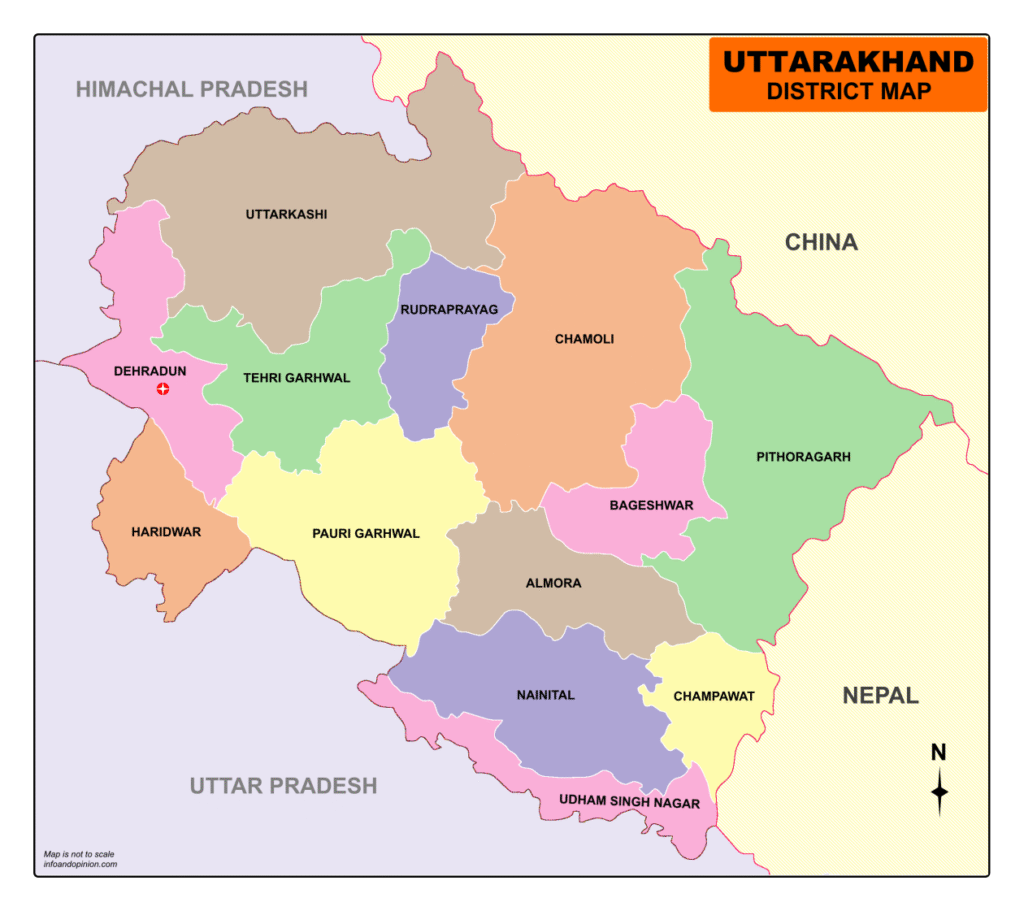
Though Uttarakhand is geographically divided into the two principal regions of Kumaon and Garhwal, its cultural identity extends far beyond administrative boundaries. The state is enriched by three deeply rooted cultural traditions — Kumaoni, Garhwali, and Jaunsari-Bawar — each carrying its own distinctive rhythm of life, language, folklore, rituals, attire, music, and artistic expression.
From the sacred valleys of Garhwal to the serene landscapes of Kumaon and the tribal heritage of Jaunsar-Bawar, every region reflects a unique blend of mythology, spirituality, nature worship, and community traditions. Yet despite their differences, all three share a profound reverence for the Himalayas, local deities, ancestral customs, and the spiritual bond between human life and nature.
Together, these traditions weave the living cultural fabric of Uttarakhand — a land where faith is not confined to temples alone but flows through festivals, folk songs, village rituals, oral traditions, seasonal celebrations, and everyday life itself.
To explore these cultural landscapes more deeply, you may also read the following dedicated features:
🌄 The Spirit of Kumaon: Culture, Art & People
🕉️ Garhwal: The Sacred Heart of Uttarakhand
🪶 Jaunsar-Bawar: The Tribal Soul of the Himalayas
Each of these journeys offers a closer look into how mythology, faith, heritage, and community traditions continue shaping the enduring soul of Uttarakhand across generations.
👉 Explore the wider world of Indian arts, traditions, and cultural heritage.
Dev Bhoomi: My Connection
My connection with the culture and spiritual heritage of Uttarakhand is deeply personal — not merely as an admirer of its timeless traditions, but as someone whose ancestral roots belong to this sacred Himalayan land. My family traces its origins to Danya Village in the Almora district of Kumaon — a serene mountain settlement surrounded by forests, ancient temples, folk traditions, and stories of faith preserved across generations.
For readers interested in learning more about Danya Village, a detailed reference may be found at MyRoots – Danya Village, Almora. While the article offers valuable historical and cultural insights, readers are encouraged to independently verify the information presented there.
Like many Kumaoni families seeking improved educational opportunities, healthcare, and modern facilities, the Joshis of Danya gradually migrated to Almora town over time. Yet even after migration, the emotional bond with their ancestral homeland remained deeply intact. In fact, the locality where they settled in Almora came to be known as Danya, preserving a living connection with their native village and cultural identity.
This tradition of carrying village identities into new settlements was common across Kumaon, where migrating families often named their neighborhoods after their ancestral villages, creating distinct cultural clusters within Almora town itself. Readers interested in this fascinating social and cultural evolution may explore my detailed feature on the Mohallas of Almora.
While researching the lineage and cultural history of the Joshis of Danya, I also came across the remarkable platform Brahmins of Kumaon Hills, which beautifully documents the traditions, genealogy, and ancestral narratives of Kumaoni Brahmin families. Reading these accounts rekindled a profound sense of belonging, continuity, and pride in my heritage.
Although I did not spend my childhood entirely amidst those deeply spiritual surroundings, the stories, values, customs, and memories associated with my ancestral roots have always remained close to my heart. They continue shaping my understanding and appreciation of Uttarakhand’s rich cultural and spiritual fabric.
Perhaps that is why the land is lovingly called:
Dev Bhoomi — The Land of the Gods.
It is not merely a geographical identity, but a living civilization where mythology, faith, nature, and everyday life continue to exist in quiet harmony across the Himalayas.
👉 Personal journeys and ancestral memories often deepen our connection with the mountains.
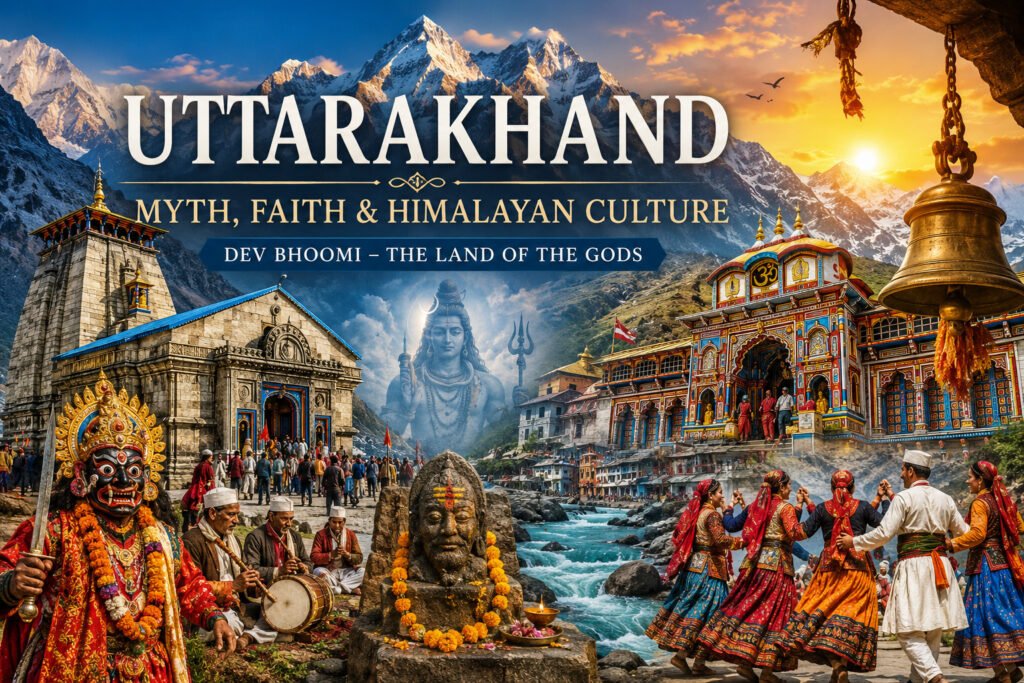
Why is Uttarakhand Called Dev Bhoomi?
Uttarakhand is lovingly known as Dev Bhoomi — the “Land of the Gods” — a title deeply rooted in its spiritual heritage, sacred geography, and timeless connection with faith. Nestled in the lap of the Himalayas, the state is home to countless ancient temples, revered shrines, sacred rivers, meditation sites, and pilgrimage routes that have inspired devotion for centuries.
Among its most sacred spiritual landmarks are the revered Char Dham pilgrimage sites — Badrinath, Kedarnath, Gangotri, and Yamunotri — considered among the holiest destinations in Hindu tradition. Every year, millions of pilgrims undertake this spiritual journey through the Himalayas, seeking blessings, inner peace, and a deeper connection with the divine.
The rivers Ganga and Yamuna, both deeply worshipped in Indian civilization, also originate from the glaciers of Uttarakhand, further strengthening the region’s spiritual significance. In ancient scriptures and folklore, the Himalayas are often described as the abode of gods, sages, and enlightened souls — a sacred realm where spirituality and nature coexist in profound harmony.
For generations, saints, rishis, ascetics, and seekers have travelled to these mountains in search of meditation, wisdom, and spiritual awakening. Hidden caves, ancient ashrams, forest shrines, and temple bells scattered across the hills continue to preserve this enduring atmosphere of devotion and mysticism.
Yet the spirit of Dev Bhoomi extends beyond grand temples alone. In Uttarakhand, faith lives quietly within everyday life — in village rituals, folk traditions, local deities, seasonal festivals, sacred forests, and the deep respect people hold for nature and the Himalayas themselves.
It is this seamless blending of spirituality, mythology, nature, and human life that gives Uttarakhand its timeless identity as:
Dev Bhoomi — The Sacred Land of the Himalayas.
👉 The spiritual identity of Uttarakhand reflects India’s deeper traditions of faith and devotion.
When and how was Uttarakhand Born?
Uttarakhand officially became the 27th state of India on 9 November 2000, when the Himalayan region was carved out of the state of Uttar Pradesh after a long and emotionally charged movement for separate statehood. The creation of the state marked not only an administrative change, but also the recognition of a distinct cultural, geographical, and social identity deeply rooted in the Himalayas.
For decades, people of the region had voiced concerns that the unique challenges of the hill areas — including difficult terrain, limited infrastructure, migration, unemployment, and ecological sensitivity — required a governance model better suited to the aspirations and realities of mountain communities. Alongside developmental concerns, there was also a strong desire to preserve the region’s linguistic traditions, cultural heritage, folk identity, and spiritual legacy.
The movement for statehood gradually evolved into a powerful people’s movement supported by students, women, social activists, intellectuals, and local communities across both Kumaon and Garhwal. The struggle witnessed several emotional moments and sacrifices that remain deeply etched in the collective memory of Uttarakhand.
Readers interested in exploring the formation of the state and the major events leading to its creation may also read the detailed feature:
👉 How Uttarakhand Was Formed: The Journey to Statehood
At the time of its formation, the new state was initially named Uttaranchal. However, in 2007, it was officially renamed Uttarakhand — a name that carries far deeper historical, cultural, and spiritual resonance. The word itself appears in ancient Indian literature and broadly refers to the “northern land” or the sacred Himalayan region associated with spirituality, pilgrimage, and civilization.
Today, Uttarakhand stands not merely as a political state, but as a unique Himalayan identity where nature, faith, culture, and history continue to shape the lives and consciousness of its people.
The Deep Roots of Worship in Everyday Life
In the hills of Uttarakhand, worship is not limited to temples, rituals, or special occasions alone — it quietly flows through the rhythm of everyday life. Faith here is deeply woven into the cultural fabric of villages, families, seasons, agriculture, festivals, and community relationships. The divine is not viewed as distant, but as a living presence closely connected with nature, ancestors, and daily existence.
Almost every village in Uttarakhand reveres its own Gram Devta — the village deity believed to protect the people, safeguard the land, bless the harvest, and guide the community through both prosperity and hardship. These local deities occupy a sacred place in the collective consciousness of the people, and their presence is felt through folk traditions, seasonal rituals, devotional songs, fairs, and community gatherings.
In my ancestral village of Danya, the Gram Devta continues to hold deep emotional and spiritual significance for the villagers, symbolizing not only divine protection but also unity, continuity, and shared cultural identity. The temple dedicated to the deity serves as far more than a place of worship — it is a spiritual and social center where people gather during festivals, prayers, celebrations, and difficult moments alike.
Across generations, these sacred traditions have helped preserve a powerful sense of belonging and harmony within village life. In Uttarakhand, spirituality is not practiced separately from daily existence; rather, it lives quietly within ordinary moments — in the ringing of temple bells at dawn, in prayers before sowing crops, in local fairs, in folk songs echoing through the mountains, and in the enduring reverence for nature itself.
Perhaps this is what gives the culture of Uttarakhand its unique spiritual depth:
faith here is not merely followed — it is lived.
Pilgrimage and Faith Traditions
The spiritual landscape of Uttarakhand is deeply shaped by its ancient pilgrimage routes, sacred temples, river confluences, and enduring faith traditions that have drawn devotees, saints, and seekers to the Himalayas for centuries. Here, spirituality is not merely a matter of ritual — it is a journey woven into mountains, rivers, forests, legends, and collective memory.
Among the most revered spiritual journeys is the sacred Char Dham Yatra — comprising Badrinath, Kedarnath, Gangotri, and Yamunotri. Undertaken by millions of pilgrims every year, this Himalayan pilgrimage is considered one of the holiest spiritual circuits in Hindu tradition. The journey is not only an act of devotion but also an emotional and spiritual experience where faith, endurance, and nature come together amidst the grandeur of the Himalayas.
Equally significant are the ancient pilgrimages associated with the Panch Kedar and the Panch Prayag. The Panch Kedar temples — dedicated to Lord Shiva — are deeply rooted in mythology and are believed to carry profound spiritual energy within the remote Himalayan terrain. Meanwhile, the Panch Prayag refers to the five sacred river confluences where Himalayan rivers merge, each revered as spiritually purifying and symbolically powerful in Hindu belief.
Yet the spiritual identity of Uttarakhand extends beyond major pilgrimage centers alone. Across villages and mountain communities, local faith traditions continue to flourish through the worship of regional deities, ancestral spirits, and nature-linked beliefs. Among them, Goddess Nanda Devi occupies a special place in the cultural and spiritual life of the region. Revered as a divine mother figure and protector of the mountains, her worship reflects the deep emotional bond between the people and the Himalayan landscape.
The devotion to local folk deities, sacred forests, rivers, and mountain peaks beautifully illustrates how spirituality in Uttarakhand is inseparable from nature itself. In these hills, faith is not confined to scripture or temple walls — it lives within the rivers, the forests, the snow peaks, and the collective spirit of the people.
👉 Festivals and pilgrimages continue preserving Uttarakhand’s living traditions.
Culture Beyond Temples
In Uttarakhand, spirituality does not remain confined within temple walls alone — it flows naturally into music, folklore, dance, rituals, festivals, and community traditions. Faith here is deeply intertwined with cultural expression, shaping the artistic and social life of the people across generations.
Many of the region’s traditional art forms and folk practices carry strong spiritual and mythological roots. Among the most distinctive is the ancient tradition of Jagars — powerful spiritual ceremonies in which local deities, ancestral spirits, and divine forces are invoked through devotional singing, rhythmic drumming, and ritual performance. More than mere ceremonies, Jagars are living expressions of collective memory, faith, healing, and the deep emotional connection between communities and their spiritual heritage.
Similarly, folk performances such as Pandav Nritya blend storytelling, mythology, music, and dance into vibrant cultural experiences inspired by episodes from the Mahabharata. These performances are not simply artistic entertainment; they serve as a means of preserving oral traditions, local beliefs, and cultural continuity within mountain communities.
Religious gatherings and fairs also play a central role in sustaining Uttarakhand’s cultural identity. Among the most revered is the Nanda Devi Raj Jat Yatra — often described as the “Kumbh of the Himalayas.” This extraordinary pilgrimage and cultural procession reflects devotion, community participation, folklore, and the enduring reverence for Goddess Nanda Devi across the region.
Across Uttarakhand, such traditions reveal how culture and spirituality exist not as separate worlds, but as inseparable dimensions of everyday life. Songs, rituals, dances, fairs, and seasonal celebrations continue carrying forward the spiritual consciousness of the mountains — preserving a heritage where faith is experienced not only through worship, but also through shared cultural expression and collective belonging.
👉 The Himalayan region preserves centuries of living cultural and spiritual heritage.
Bhairav Devta: The Fierce Guardian of Uttarakhand
In the sacred mountains of Uttarakhand, faith is not merely practiced — it is deeply woven into the rhythm of everyday life. Among the many deities revered across this Dev Bhoomi, Bhairav Devta occupies a uniquely powerful and protective presence in the spiritual consciousness of the people.
Regarded as the fierce manifestation of Lord Shiva, Bhairav is worshipped as the divine guardian who protects the righteous, wards off negative forces, and preserves spiritual balance. Though often associated with power, austerity, and fearlessness, Bhairav Devta is also deeply respected as a compassionate protector watching silently over villages, pilgrims, forests, and sacred spaces.
Across Uttarakhand, shrines dedicated to Bhairav Devta are commonly found on hilltops, village entrances, dense forests, isolated pathways, and near ancient temples — symbolically guarding both the land and the people. In many temple traditions, especially in the higher Himalayan regions, Bhairav is believed to serve as the Kshetrapal or guardian deity of sacred territories.
Local folklore, oral traditions, and village beliefs continue to portray Bhairav Devta as a vigilant divine force whose presence maintains harmony between the spiritual and earthly worlds. Ritual offerings, fairs, prayers, and seasonal ceremonies dedicated to Bhairav remain an integral part of Uttarakhand’s cultural and devotional life.
What makes the worship of Bhairav Devta particularly distinctive in Uttarakhand is the deep blend of spirituality, nature, fear, reverence, and local belief systems. Here in the Himalayas, Bhairav is not seen merely as a mythological deity, but as a living guardian spirit woven into the mountains, forests, and collective memory of the people themselves.
Conclusion
Uttarakhand — the sacred Dev Bhoomi of the Himalayas — is far more than a land of majestic mountains, flowing rivers, and ancient temples. Its true essence lies in the quiet spirit of devotion, cultural continuity, and spiritual consciousness that continues to shape the lives of its people across generations.
From its deeply rooted faith traditions and sacred pilgrimages to its folk rituals, village deities, festivals, oral histories, and Himalayan way of life, Uttarakhand preserves a rare harmony between nature, spirituality, and everyday existence. Here, worship is not confined to rituals alone; it lives within the rhythm of the mountains, the reverence for rivers and forests, the ringing of temple bells, and the collective memory of communities bound together by faith and tradition.
The story of Uttarakhand is also a story of identity — of a people deeply connected to their cultural roots, spiritual heritage, and the timeless wisdom of the Himalayas. Whether through the sacred Char Dham Yatra, the worship of local deities like Bhairav Devta and Nanda Devi, or the enduring traditions preserved in remote villages, the spirit of the land continues to inspire devotion, resilience, and belonging.
Perhaps that is why Uttarakhand remains unique in the cultural landscape of India:
a place where mythology, faith, history, nature, and human life continue to coexist in profound harmony.
In every valley, temple, folk song, and mountain path, the soul of Dev Bhoomi still quietly lives on.
Frequently Asked Questions(FAQs)
Uttarakhand is called Dev Bhoomi, or the “Land of the Gods,” because of its ancient temples, sacred rivers, pilgrimage traditions, and deep spiritual heritage associated with the Himalayas.
The major cultural regions are Kumaon, Garhwal, and Jaunsar-Bawar, each with distinct traditions, languages, folklore, and spiritual practices.
The Char Dham Yatra is one of Hinduism’s most sacred pilgrimages, covering the holy shrines of Badrinath, Kedarnath, Gangotri, and Yamunotri in Uttarakhand.
Bhairav Devta is revered as a powerful guardian deity and fierce manifestation of Lord Shiva, worshipped across Uttarakhand for protection and spiritual balance.
Uttarakhand’s spirituality is deeply integrated into daily life through village deities, local rituals, sacred geography, folk traditions, and reverence for nature.
Festivals, Jagars, folk dances, and local fairs preserve cultural identity, spiritual traditions, oral history, and community bonds across generations.
Uttarakhand became the 27th state of India on 9 November 2000 after being carved out of Uttar Pradesh.