Table of Contents
ToggleIntroduction
Longevity is not a secret hidden in genetics or expensive treatments — it is deeply rooted in the choices we make every day. The way we eat, move, think, sleep, and respond to stress forms the foundation of long-term health. Research from across the world, including insights from Blue Zone communities, shows a simple truth: a healthier lifestyle is the most powerful medicine for extending lifespan and improving quality of life.
This post explores the science behind lifestyle and longevity, breaking it down into simple, actionable elements anyone can begin today.🔙Understanding Heart Transplants: Science, Challenges, and the Road to Saving Lives”
“You can explore the external resources linked throughout this article by clicking on the highlighted links.
- World Health Organization Healthy Living https://www.who.int/health-topics/healthy-living
- Centers for Disease Control and Prevention (CDC) – Healthy Living
https://www.cdc.gov/healthy-living/index.html - National Institutes of Health (NIH) – Healthy Aging
https://www.nia.nih.gov/health/healthy-aging
The Impact of Lifestyle, Diet, and Stress on Long-Term Health
Our lifestyle influences nearly 70–90% of our long-term health outcomes. While genetics set the blueprint, lifestyle determines how the blueprint is expressed.
Three pillars dominate the equation:
Diet shapes metabolism, gut health, immunity, and inflammation.
Stress either damages the body or strengthens it through resilience.
Lifestyle habits like sleep, movement, and social connection determine how the body ages.
When these factors blend positively, longevity follows naturally.
1. The Lifestyle Equation
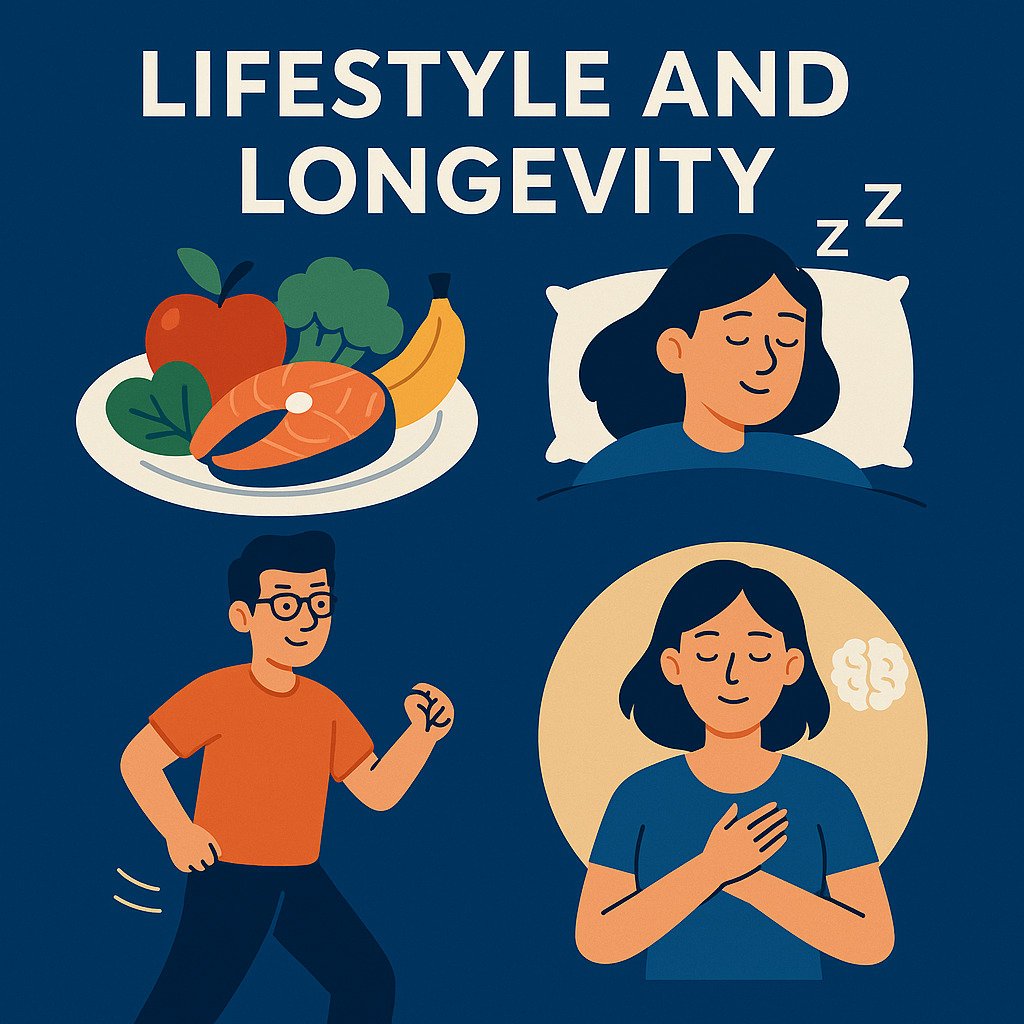
A simple formula explains long, healthy living: Longevity = Nutrition + Movement + Sleep + Emotional Balance + Relationships + Purpose
These elements work together — never in isolation.
A poor diet can undo exercise.
Chronic stress can override good sleep.
Lack of purpose can accelerate aging even with ideal health habits.
This equation shows that longevity is a daily practice, not a single decision. Modern living has brought comfort, but also a silent epidemic — sedentary behaviour, processed foods, and constant mental strain. These create what doctors call “lifestyle diseases”: diabetes, hypertension, obesity, heart ailments, and even some cancers.
Healthy longevity isn’t about extreme routines. It’s about balance — moderation in diet, regular exercise, adequate rest, and emotional steadiness.
2. Diet: The Foundation of Health
Diet is the most important controllable factor for long-term disease prevention. Food is not just fuel; it is information. Every bite sends chemical signals that influence metabolism, hormones, and cellular repair.
A nutrient-rich diet — rich in fruits, vegetables, whole grains, lean proteins, and good fats — supports strong immunity and a healthy heart. Conversely, diets high in sugar, salt, and processed fats cause inflammation, damaging the body over time.
Hydration is another often ignored factor. Even mild dehydration affects focus, energy levels, and kidney function.
Recent studies highlight the benefits of diets like the Mediterranean diet, which emphasises olive oil, nuts, fish, and fresh produce. People following such diets show lower rates of chronic illness and greater life expectancy.
“You are what you eat” is not a cliché — it’s biology in action.
Foods that Support Longevity:
Fresh fruits and vegetables
Whole grains and legumes
Nuts and seeds
Lean proteins and fish
Fermented foods (gut-friendly)
Anti-inflammatory herbs and spices. Foods that Reduce Longevity:
Ultra-processed foods
Excess sugar
Trans fats
Overconsumption of red meat
Salt-heavy snacks and packaged meals.
“For more detailed information, please click on the external links provided below.
Diet & Nutrition
Harvard T.H. Chan School of Public Health – Nutrition Source
https://www.hsph.harvard.edu/nutritionsourceWHO – Healthy Diet Guidelines
https://www.who.int/news-room/fact-sheets/detail/healthy-dietAmerican Heart Association – Dietary Recommendations
https://www.heart.org/en/healthy-living/healthy-eating
https://www.who.int/health-topics/health-promotion
Global lesson from long-lived communities:
People don’t diet — they eat naturally: real food, mostly plants, in moderate portions.
3. The Hidden Cost of Stress
Stress accelerates biological aging more than smoking, poor diet, or lack of exercise.
Chronic stress triggers:
High cortisol
Inflammation
Reduced immunity
Poor sleep
Digestive issues
Mood disorders
Learning to manage stress is essential for healthy aging. Unmanaged stress is now considered one of the biggest barriers to healthy longevity.
However, stress in small doses isn’t harmful — it can motivate and sharpen focus. The problem arises when it becomes continuous.
Practices like deep breathing, yoga, meditation, journaling, and spending time in nature have been shown to reduce stress hormones and promote emotional balance.
4. Sleep — The Silent Healer
In our rush to achieve more, sleep often becomes the first casualty. Yet, quality sleep is the body’s most powerful recovery tool. During deep sleep, cells regenerate, the brain clears toxins, and the heart rate stabilises.
Adults need 7–8 hours of uninterrupted sleep for optimal health. Long-term sleep deprivation increases the risk of obesity, diabetes, heart disease, and memory decline.
A consistent sleep schedule — coupled with limited screen time before bed — can work wonders for overall well-being.
5. Physical Activity: Movement as Medicine
The human body was designed to move. Regular exercise enhances circulation, maintains muscle tone, strengthens bones, and supports mental health.
It doesn’t have to mean rigorous gym sessions — walking, cycling, swimming, or even playing golf are all excellent for maintaining cardiovascular fitness and mental calm.
Experts suggest at least 150 minutes of moderate activity each week for adults. Consistency matters more than intensity.
6. The Mind–Body Connection
A healthy mind sustains a healthy body. Emotional balance, gratitude, and positive thinking influence hormonal balance, immunity, and even gene expression. People who maintain social connections, pursue hobbies, and cultivate optimism tend to live longer, healthier lives. This is why mental well-being is now recognised as a vital part of medical care.
7. The Path to Longevity
Longevity isn’t just about adding years to life — it’s about adding life to years.
Healthy habits build resilience against disease, but more importantly, they enhance daily quality of life — sharper thinking, steadier emotions, stronger immunity, and greater energy.
A few guiding principles:
Eat real food. Avoid excess sugar, salt, and processed items.
Move daily. Exercise moderately but regularly.
Manage stress. Breathe, relax, and take time off screens.
Sleep well. Respect your body’s natural rhythm.
Think positive. A calm mind is a healthy mind.
Conclusion
Longevity is not an accident — it is a result of mindful lifestyle choices repeated every day. By cultivating healthier routines, nourishing the mind and body, and embracing emotional balance, anyone can extend not just their lifespan, but their healthspan.
Every new day provides an opportunity to make choices that your future self will thank you for. As the saying goes, “The greatest wealth is health — and it is earned, not inherited.” 👉Advances in Modern Medicine: Revolutionising the Future of Healthcare