Table of Contents
ToggleIntroduction
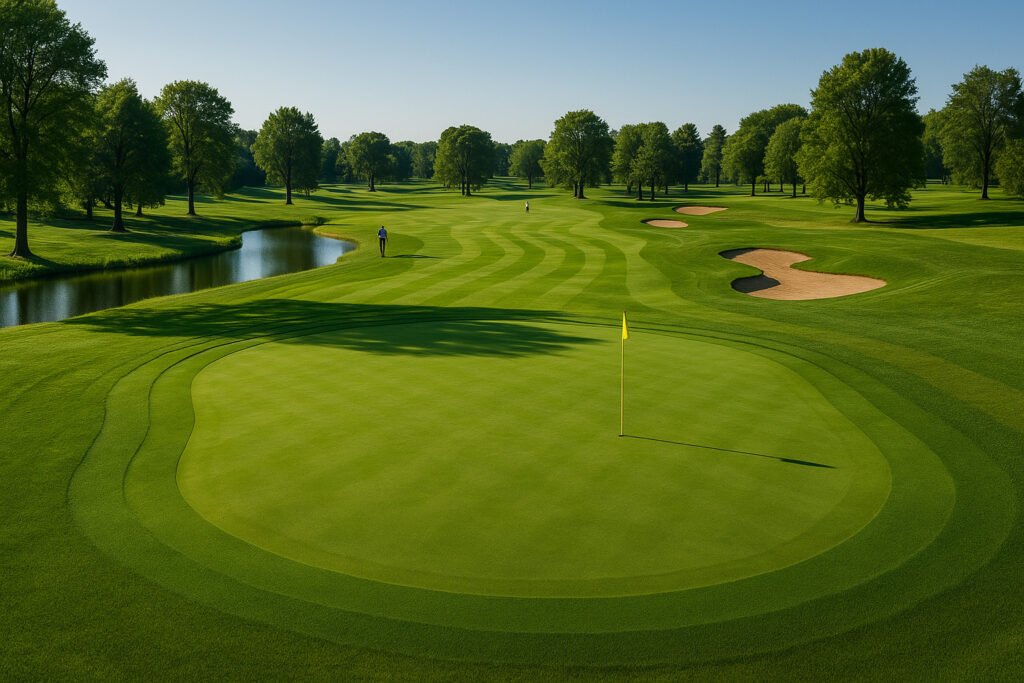
When you step onto a golf course, the first thing that catches your eye isn’t the bunkers or the shimmering water hazards — it’s the flawless carpet of green stretching across the landscape. That immaculate turf, however, is far from accidental. Golf Grass Green is the product of careful planning, climate understanding, soil science, and a deep commitment to the golfer’s playing experience. The character of every golf course is shaped by centuries of innovation and refinement, closely tied to the evolution of golf and its timeless traditions
1. Understanding the Climate and Golf Grass Green Connection
A golf course is a living, breathing ecosystem, shaped constantly by the climate it inhabits.
Warm-season grasses — including Bermuda, Zoysia, and Paspalum — thrive in regions blessed with abundant sunshine. They grow vigorously, recover quickly from wear, and are naturally tolerant of drought conditions.
Cool-season grasses, such as Bentgrass, Fescue, and Ryegrass, prefer gentler temperatures. These varieties offer a velvety texture, exceptional smoothness, and superior ball roll — ideal for precision-focused play.
Selecting a grass type that doesn’t align with the local climate can lead to patchy growth, escalating maintenance costs, and inconsistencies in play quality.
2. Greens, Fairways, and Roughs — Each Needs Its Own Turf
No single grass species can meet the demands of every part of a golf course. Each section has its own role — and its own turf requirements.
Greens demand absolute precision. Ultra-smooth surfaces typically rely on Creeping Bentgrass or Ultra-Dwarf Bermuda, both prized for delivering consistent speed and predictable ball roll.
Fairways require a balance of strength and resilience. Hybrid Bermuda and Zoysia are popular choices for their ability to withstand repeated play while maintaining visual appeal.
Roughs and tee boxes need durability above all else. Ryegrass and Tall Fescue blends are often used here, thanks to their capacity to handle heavy foot traffic and varying weather conditions.
3. The Role of Soil and Maintenance
Even the finest grass will struggle — or fail — if planted in unsuitable soil. Factors such as pH levels, drainage capability, soil compaction, and sunlight exposure determine whether turf will flourish.
Course superintendents dedicate years to mastering the delicate balance of:
optimal mowing heights,
precise irrigation cycles,
aeration schedules,
and nutrient-rich fertilisation programmes.
Their expertise forms the invisible backbone of a great golf course, ensuring uniformity, playability, and long-term health of the turf.
4. Sustainability and Modern Trends
As environmental concerns grow, many golf courses are embracing more responsible and efficient turf choices.
Water-efficient grasses like Seashore Paspalum, along with native grass mixes, are becoming increasingly popular. These varieties reduce water dependency, limit the need for pesticides, and naturally support biodiversity.
Such sustainable decisions not only protect the environment but also uphold the integrity of the game — ensuring golfers enjoy surfaces that are both beautiful and ethically managed.
5. The Final Thought
Choosing the right grass is ultimately an exercise in balance — between nature and design, between visual beauty and gameplay performance. Every golf course, whether the legendary fairways of Augusta or your local club’s cherished greens, tells its own story through the turf beneath your feet. In that sense, every fairway and green reflects golf’s rich heritage and modern transformation, blending history with contemporary design and expectations
FAQs
Grass directly affects playability, maintenance costs, and the overall golfer experience. The right choice ensures consistent greens, durable fairways, and healthy turf year-round.
Warm-season grasses thrive in hot, sunny climates and recover quickly from wear, while cool-season grasses prefer milder temperatures and offer smoother ball roll, especially on greens.
No. Greens require ultra-smooth grasses for precision, fairways need resilient turf for repeated play, and roughs rely on tougher varieties to handle foot traffic and varying conditions.
Soil type, drainage, pH balance, and sunlight exposure play a critical role. Even premium grass will struggle without the right soil conditions and ongoing care.
Yes. Many courses are now adopting water-efficient and eco-friendly grasses to reduce chemical use, conserve resources, and support long-term environmental sustainability.