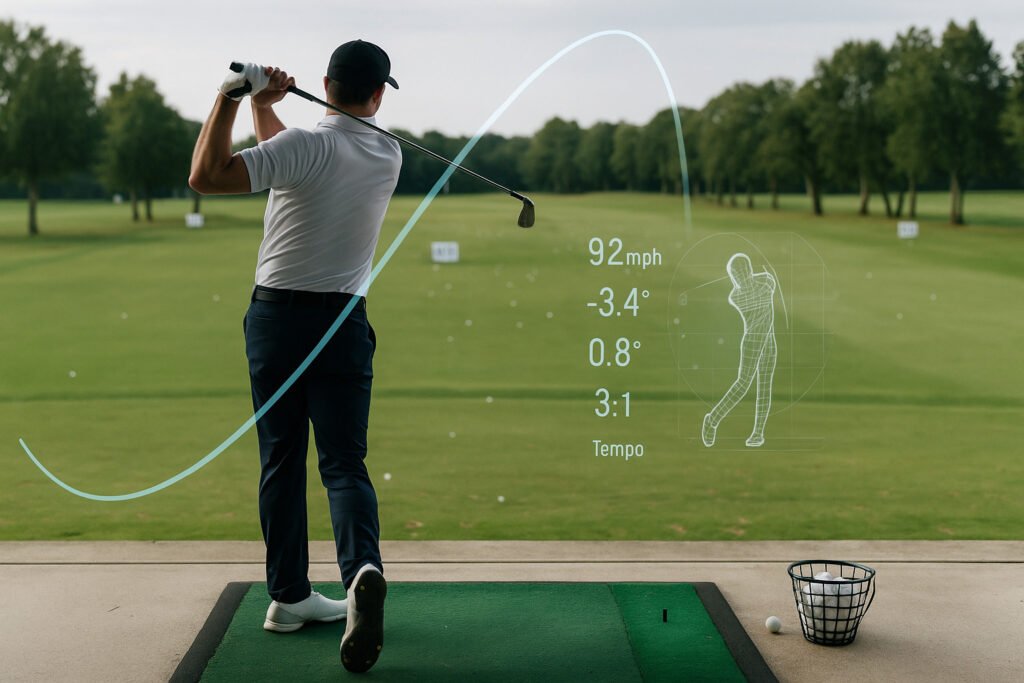
Golf has always been a game of feel, repetition and relentless self-correction. For generations, improvement depended largely on personal judgment, occasional coaching and countless hours of practice. In recent years, however, artificial intelligence has begun to reshape how golfers understand and refine their swing.
AI swing analysers combine sensors, cameras and advanced algorithms to break down a golfer’s motion into measurable data—analysing club path, swing speed, face angle and body movement with remarkable precision. What was once visible only to trained coaches can now be interpreted instantly, offering players clear, objective feedback.
As part of golf’s broader modern evolution—alongside innovations such as GPS-enabled carts and smart course design—AI swing analysers are changing how golfers train, learn and progress. This article explores how these systems work, what they offer, and whether they genuinely improve performance on the course.
Table of Contents
ToggleWhat Is an AI Swing Analyser?
An AI swing analyser is a technology-driven training tool that uses sensors, cameras and artificial intelligence to study a golfer’s swing in detail. By capturing movement data and processing it through advanced algorithms, these systems break down the swing into measurable elements that can be analysed and compared.
Unlike traditional observation-based feedback, AI swing analysers provide objective, data-backed insights. They assess factors such as swing speed, club path, tempo, face angle and body movement, presenting the information in a way that helps golfers understand what is happening during the swing, not just what feels right.
AI swing analysers are used both on practice ranges and indoors, often paired with mobile applications or software dashboards. Some systems rely on wearable sensors attached to the club or body, while others use camera-based tracking to analyse motion without physical attachments.
Importantly, these tools are designed to support, not replace, coaching and practice. By turning complex motion into clear feedback, AI swing analysers help golfers identify patterns, spot inconsistencies and work more efficiently on their game.
How AI Swing Analysers Work
AI swing analysers operate by capturing movement data during the golf swing and translating it into meaningful insights. While the technology behind them is sophisticated, the underlying process follows a few straightforward steps.
First, the swing is recorded or measured. This may be done through small sensors attached to the club or body, or through camera-based systems that track motion visually. These tools capture details such as speed, direction, angles and timing throughout the swing.
Next, the collected data is processed using artificial intelligence algorithms. The AI compares the golfer’s movement patterns against recognised swing models and performance benchmarks. Rather than analysing a single moment, it looks at the entire swing sequence, identifying trends, inconsistencies and repeatable habits.
The analysed information is then converted into clear feedback, usually delivered through a mobile app or software interface. Golfers may see visual replays, swing metrics, and simple prompts highlighting areas that need attention. Many systems also track progress over time, allowing players to see whether changes in technique are producing measurable improvement.
What makes AI swing analysers particularly effective is their ability to learn from repeated swings. As more data is captured, the system refines its understanding of the golfer’s natural movement, offering increasingly relevant insights rather than generic advice.
In practical terms, this allows golfers to practice with greater focus and purpose, turning observation into measurable learning instead of guesswork.
Key Data Points Analysed by AI Swing Systems
AI swing analysers focus on a set of core performance indicators that influence consistency, accuracy and distance. Rather than overwhelming golfers with excessive data, most systems prioritise metrics that have a direct impact on ball flight and shot control.
Swing Speed
This measures how fast the club head is moving through impact. While higher swing speed can generate more distance, AI systems also assess whether the speed is repeatable and well-timed, rather than forced.
Club Path
Club path refers to the direction the club head travels relative to the target line. AI analysis helps identify whether a swing is travelling inside-out, outside-in or square, offering insight into common shot patterns such as slices or hooks.
Club Face Angle
The position of the club face at impact plays a major role in determining where the ball starts its flight. AI swing analysers track face angle precisely, helping golfers understand why shots may consistently miss left or right.
Tempo and Timing
Tempo measures the rhythm of the swing, including the transition from backswing to downswing. AI tools assess whether a golfer’s tempo is balanced and repeatable, an often-overlooked factor in long-term consistency.
Swing Plane and Arc
Some systems evaluate the overall shape and plane of the swing, noting whether movement remains stable or breaks down under speed or pressure. This can be particularly helpful for identifying mechanical inefficiencies.
Consistency Patterns
Beyond individual shots, AI swing analysers look for patterns across multiple swings. This allows golfers to focus on habits rather than isolated misses, leading to more meaningful improvement.
By highlighting these key data points, AI swing analysers help golfers replace assumptions with clear, actionable understanding, making practice sessions more targeted and productive.
AI Swing Analysers vs Traditional Coaching
Traditional golf coaching has always relied on keen observation, experience and personal judgement. A good coach reads not only the swing, but also body language, confidence levels and physical limitations. AI swing analysers approach improvement from a different angle, focusing on measurable movement rather than interpretation.
AI systems excel at objective analysis. They record every swing in the same way, capturing details that the naked eye may miss, particularly at full speed. This makes them highly effective for identifying repeat patterns and subtle inconsistencies over time.
However, AI swing analysers lack the human context that a coach provides. They do not understand intent, pressure, fatigue or individual learning styles. A coach can adapt instruction instantly, modify drills on the spot and factor in physical constraints such as age, flexibility or injury history.
In practice, the most effective approach is often a combination of both. AI swing analysers can support coaching by providing reliable data between lessons, allowing players to practise with clarity rather than guesswork. Coaches, in turn, can interpret this data within the broader framework of technique, strategy and mental approach.
Rather than replacing instruction, AI swing analysers serve as a supporting tool, enhancing feedback and helping golfers make more efficient use of both practice time and coaching sessions.
Who Benefits Most from AI Swing Analysers?
AI swing analysers are not designed for a single type of golfer. Their value lies in how they adapt to different learning stages, offering insight wherever clarity is needed. However, certain groups tend to benefit more consistently from their use.
Beginners and New Golfers
For those starting out, AI swing analysers help establish sound fundamentals early on. Clear visual feedback makes it easier to understand basic concepts such as swing path, tempo and face control, reducing the risk of developing poor habits through trial and error.
Club and Regular Amateur Golfers
Recreational golfers who practise regularly often struggle with inconsistency rather than lack of effort. AI swing analysers help identify repeatable patterns, allowing players to focus on specific adjustments instead of experimenting blindly on the range.
Senior Golfers
As flexibility and strength change with time, senior golfers benefit from understanding how their swing adapts naturally. AI feedback assists in finding efficient, repeatable movement rather than chasing unrealistic power or technique.
Competitive and Tournament Players
For more advanced golfers, these systems offer valuable fine-tuning tools, helping monitor small changes in tempo, face angle or sequencing that can influence scoring outcomes under pressure.
Coaches and Training Academies
AI swing analysers are increasingly used by coaches as diagnostic aids, supporting instruction with objective data and enabling structured progress tracking for students.
Across all levels, the greatest benefit comes when golfers view AI swing analysers as a learning companion, not a replacement for professional guidance. Used thoughtfully, they support deliberate practice and long-term improvement.
Limitations and Real-World Considerations
While AI swing analysers offer valuable insights, they are not without limitations. Understanding these boundaries helps golfers use the technology more effectively and avoid unrealistic expectations.
One common limitation is over-reliance on data. Numbers and visuals can be informative, but without proper interpretation they may lead to confusion or constant tinkering. Golf improvement often requires time and repetition, and reacting to every data point can disrupt natural rhythm and confidence.
AI systems also analyse movement, not intent. They cannot assess factors such as course strategy, mental pressure, physical fatigue or adaptability during play. A technically sound swing on the range does not always translate directly to performance on the course.
Accuracy can vary depending on setup and calibration. Sensor placement, camera angles and environmental conditions all influence data quality. Inconsistent setup may result in misleading feedback, particularly for casual users.
Another consideration is that most AI swing analysers work best under controlled conditions. Range sessions and indoor practice provide clean data, whereas uneven lies, wind and course variables are harder to capture and interpret.
Finally, golfers should be mindful that technology cannot replace experience. Judgement, feel and decision-making develop through play and guidance, not data alone. AI swing analysers are most effective when used as supportive tools within a broader training approach.
Are AI Swing Analysers Worth Using?
Whether an AI swing analyser is worth using depends largely on how it is integrated into a golfer’s overall training approach. For players seeking clarity in their practice sessions, these tools can offer meaningful value by turning observation into measurable feedback.
From a practical standpoint, AI swing analysers are most effective when used selectively. They help confirm patterns, track progress over time and support lessons with coaches, particularly in structured practice environments. In this role, they reduce guesswork rather than promising quick fixes.
Cost, however, is an important consideration. While some entry-level systems are accessible to individuals, more advanced AI-driven setups can be expensive and better suited to golf clubs, academies and professional trainers. For many golfers, occasional access through a coach or training facility may be more sensible than personal ownership.
It is also worth noting that improvement in golf ultimately comes from application on the course. Shot selection, course management and decision-making under pressure remain outside the reach of technology. AI swing analysers support preparation, but performance is shaped during actual play.
In summary, AI swing analysers are worth using when viewed as support tools rather than solutions. Used wisely, they can enhance training efficiency; used in isolation, they risk creating dependency without real improvement.
AI Swing Analysis and the Future of Golf Training
AI swing analysis represents a natural step in golf’s ongoing evolution, blending tradition with modern understanding. As technology becomes more refined and accessible, its role in training is likely to shift from novelty to normalisation, especially within structured coaching environments.
In the future, AI-driven systems are expected to integrate more seamlessly with coaching programmes, practice facilities and golf academies, offering long-term performance tracking rather than isolated snapshots. The focus will move towards identifying improvement trends, supporting customised training plans and helping golfers practise with greater intent.
Importantly, the essence of golf is unlikely to change. Feel, judgement, adaptability and course management will remain central to the game. What AI swing analysers offer is clarity during preparation, enabling golfers to arrive on the course better informed and more confident in their technique.
As part of the modern game—alongside innovations such as GPS-enabled carts and advanced course design—AI swing analysis reflects golf’s ability to embrace progress without losing its character. When used thoughtfully, it strengthens learning while respecting the enduring values that define the sport.
Closing Insight
Technology can guide improvement, but experience earns confidence.
AI swing analysers prepare the golfer; the course completes the education.
FAQs
An AI swing analyser uses sensors or cameras combined with artificial intelligence to analyse a golfer’s swing and provide data-based feedback.
They highlight swing patterns, tempo, club path and consistency, helping golfers practise with focus rather than guesswork.
Yes. Beginners benefit from visual feedback that helps establish correct fundamentals early.
No. They are support tools that complement coaching, not substitutes for human judgement and experience.
Yes. Many professionals and elite players use AI-based swing analysis alongside coaches and performance teams.
Yes. They help seniors focus on efficiency, repeatability and tempo rather than power.
No. Course management, decision-making and shot selection develop through on-course experience.
Costs vary. Advanced systems are more common in clubs and academies, while simpler tools may be accessible to individuals.
Most perform best in controlled environments such as ranges or indoor studios.
Yes—when integrated sensibly into practice and coaching, without replacing actual course play.