Table of Contents
ToggleIntroduction
Crude oil, in its natural form, is of limited direct use. Its true value is unlocked through refining—a complex industrial process that transforms raw hydrocarbons into usable fuels and petrochemical feedstocks. From petrol and diesel to aviation turbine fuel (ATF) and plastics, refining lies at the heart of the modern energy and manufacturing ecosystem.
As demand patterns evolve and environmental considerations intensify, refining has become more sophisticated, integrating advanced technologies and efficiency-driven processes. Understanding crude refining and processing is therefore essential to appreciating how energy is converted into everyday utility.
As India emerges as one of the world’s largest economies, understanding the energy sector landscape becomes increasingly important.
What is Crude Oil Refining?
Crude oil refining is the process of separating and converting crude oil into valuable products through physical and chemical processes. Since crude oil is a mixture of hydrocarbons with varying boiling points, refining enables its separation into different fractions and subsequent transformation into finished products.
Refining involves processing crude oil sourced from crude exploration and production in India, transforming it into a range of usable fuels and petrochemical products.
The Refining Process: From Crude to Products
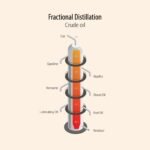
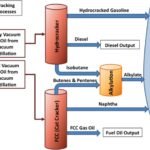
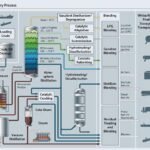
Refining typically involves three key stages:
1. Separation (Distillation)
Crude oil is heated in a distillation column where it separates into fractions based on boiling points—such as LPG, petrol, kerosene, diesel, and heavier residues.
2. Conversion (Cracking & Reforming)
Heavier fractions are chemically broken down (cracked) into lighter, more valuable products. Processes like catalytic cracking and hydrocracking enhance yield and product quality.
3. Treatment (Purification)
Impurities such as sulfur are removed to meet environmental standards. This stage ensures that fuels are cleaner and compliant with regulations.
Key Products of Refining
Refineries produce a wide range of products. These products drive transportation, industry, and everyday consumption.
- Petrol (gasoline)
- Diesel
- Aviation Turbine Fuel (ATF)
- LPG
- Naphtha (petrochemical feedstock)
- Bitumen
- Lubricants
👉Naphtha, a key refining product, serves as an important feedstock for the petrochemical and downstream industries..
Refining Capacity in India
India has developed one of the world’s largest refining capacities, with both public and private sector participation.
Major players include:
- Indian Oil Corporation
- Bharat Petroleum Corporation Limited
- Hindustan Petroleum Corporation Limited
- Reliance Industries
India is not only self-sufficient in refining but also a net exporter of petroleum products.
India’s Refining Capacity and Industry Structure
India has emerged as one of the world’s leading refining hubs, with a well-developed network of refineries across both public and private sectors.
Total Refining Capacity in India
India’s total refining capacity stands at approximately 250 million metric tonnes per annum (MMTPA), making it one of the top refining nations globally. This capacity not only meets domestic demand but also supports significant exports of petroleum products.
Public Sector Refineries
Public sector undertakings (PSUs) dominate a large part of India’s refining infrastructure. These include:
- Indian Oil Corporation
- Bharat Petroleum Corporation Limited
- Hindustan Petroleum Corporation Limited
These companies operate multiple refineries across the country and play a key role in ensuring energy security, distribution, and supply stability.
Private Sector Refineries
Private sector participation has significantly enhanced India’s refining capabilities and global competitiveness.
- Reliance Industries operates the world’s largest refining complex at Jamnagar
- Nayara Energy (formerly Essar Oil) also operates a major refinery in Gujarat
Private refineries are often more export-oriented and technologically advanced, contributing significantly to India’s position as a net exporter of petroleum products.
Major Refineries in India and Their Capacities
(Approximate capacities for reference)
| Refinery | Location | Operator | Capacity (MMTPA) |
|---|---|---|---|
| Jamnagar (SEZ + DTA) | Gujarat | Reliance Industries | ~68 |
| Vadinar | Gujarat | Nayara Energy | ~20 |
| Panipat | Haryana | Indian Oil Corporation | ~15 |
| Koyali (Gujarat Refinery) | Gujarat | Indian Oil Corporation | ~13.7 |
| Paradip | Odisha | Indian Oil Corporation | ~15 |
| Mathura | Uttar Pradesh | Indian Oil Corporation | ~8 |
| Mumbai | Maharashtra | BPCL | ~12 |
| Kochi | Kerala | BPCL | ~15.5 |
| Visakhapatnam | Andhra Pradesh | HPCL | ~13.7 |
| Numaligarh | Assam | Numaligarh Refinery Ltd. | ~3 |
| Digboi | Assam | Indian Oil Corporation | ~0.65 |
The concentration of large-scale refineries in Gujarat highlights the state’s strategic importance in India’s refining and export ecosystem.
Environmental and Regulatory Considerations
Modern refineries operate under strict environmental norms:
- Reduction of sulfur emissions
- Compliance with fuel quality standards (e.g., BS-VI in India)
- Energy efficiency and emission control
Government policies and regulations significantly influence refining operations and investments.
Future of Refining in India
The refining sector is evolving with changing energy dynamics:
Integration with petrochemicals
Transition toward cleaner fuels
Adoption of digital technologies
Gradual alignment with energy transition goals
The refining sector is gradually aligning with the growth of renewable and alternative energy sources.
Conclusion
Crude refining and processing transform raw hydrocarbons into the fuels and materials that power modern life. As India balances growth with sustainability, refining will remain a critical link between resource availability and energy consumption.
Key Takeaways
- Refining converts crude oil into usable fuels and petrochemical products
- The process involves separation, conversion, and treatment stages
- India is a major refining hub with strong domestic and export capabilities
- Profitability is influenced by refining margins and market dynamics
- The sector is evolving toward cleaner and more integrated operations
Crude oil refining is the process of converting raw crude oil into usable products such as petrol, diesel, LPG, and petrochemicals through distillation and chemical processes.
The refining process involves three key stages: separation (distillation), conversion (cracking and reforming), and treatment (removal of impurities).
India’s total refining capacity is around 250 million metric tonnes per annum (MMTPA), making it one of the largest refining hubs in the world.
Major players include Indian Oil Corporation, Bharat Petroleum Corporation Limited, Hindustan Petroleum Corporation Limited, and Reliance Industries.
Upstream refers to exploration and production of crude oil, while downstream involves refining, processing, and distribution of petroleum products.
Refining adds value to crude oil, supports domestic fuel demand, and enables India to export petroleum products, strengthening its energy economy.
Crack spread is the difference between the cost of crude oil and the value of refined products. It is a key indicator of refinery profitability.
Yes, India has sufficient refining capacity and is a net exporter of petroleum products, although it depends heavily on crude oil imports.