Table of Contents
ToggleIndia–US Trade Ties: Where Opportunity Meets Strategy—and Subtle Tensions
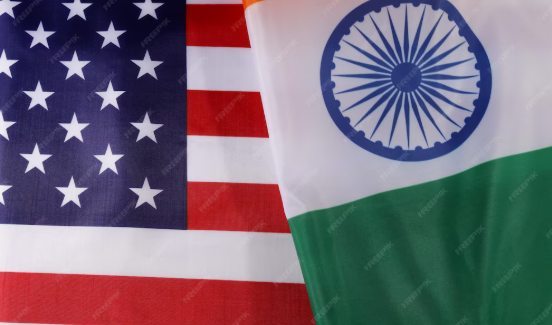
In an increasingly fragmented global economy, few bilateral relationships carry the weight and complexity of the one between India and the United States. What began as a cautious engagement decades ago has today transformed into a strategic partnership—one that blends economics with geopolitics, commerce with caution, and opportunity with underlying tension.
For investors, this relationship is not just about trade numbers or diplomatic statements. It is about understanding how policy, global alignments, and economic priorities converge to shape markets.
This analysis is part of our broader coverage on policy shifts and regulatory developments shaping global markets, featured under our Policy & Regulations section.
A Partnership That Goes Beyond Trade
At first glance, the India–US relationship appears to be a straightforward success story. Bilateral trade has expanded rapidly, with both nations increasingly dependent on each other in critical sectors.
But beneath the surface lies something more profound.
The United States views India as a key partner in its broader strategy to reduce dependence on China, particularly in manufacturing and supply chains. India, on the other hand, sees the US as a vital source of capital, technology, and market access.
This alignment is not accidental—it is strategic.
For investors, this signals a long-term structural trend rather than a short-lived economic cycle.
Bilateral trade has expanded rapidly, supported by evolving policy frameworks and ongoing negotiations, as reflected in official updates from the Office of the United States Trade Representative.
What Really Drives Trade Between the Two Nations
Trade between India and the US is not built on competition—it thrives on complementarity.
India’s strength lies in:
- IT services and software exports
- Pharmaceuticals and generics
- Gems, jewellery, and textiles
The US, in turn, supplies:
- Energy (crude oil and LNG)
- Advanced technology
- Defence equipment and aerospace products
This balanced exchange creates resilience. Unlike relationships where both countries compete in similar industries, India and the US benefit from each other’s strengths.
For example, Indian IT companies are deeply embedded in the US corporate ecosystem, while American energy exports help India diversify its energy basket.
Investor Insight:
Sectors tied to exports—particularly IT and pharma—remain closely linked to US economic health. Any slowdown in the American economy tends to ripple through Indian markets.
This complementary trade structure is also highlighted in global trade assessments published by institutions like the World Bank, reinforcing the resilience of this partnership.
The Next Frontier: Technology and Supply Chains
If the past decade was about services and trade expansion, the next one will be about technology and supply chain realignment.
The global push to diversify away from China has opened a window of opportunity for India. The so-called “China+1” strategy is no longer theoretical—it is actively reshaping investment flows.
India is emerging as a credible alternative in:
- Electronics manufacturing
- Semiconductor ecosystem development
- Digital infrastructure and AI
Collaborations between Indian and American firms are gaining traction, supported by government initiatives on both sides.
However, this transition is not automatic. It requires:
- Policy consistency
- Infrastructure readiness
- Skilled workforce development
Investor Insight:
Companies linked to electronics manufacturing, chip design, and data infrastructure are positioned to benefit disproportionately from this shift.
The Friction Layer: Policy and Trade Barriers
No major economic relationship is without its irritants—and India–US trade is no exception.
Key areas of friction include:
- Tariff disputes on certain goods
- Data localization requirements imposed by India
- Visa restrictions affecting Indian IT professionals
These issues often lead to prolonged negotiations and occasional tensions.
Yet, what is noteworthy is not the presence of disagreements—but the ability of both nations to manage them without derailing the broader relationship.
This is a classic case of pragmatism over perfection.
Investor Insight:
Policy-related volatility can create short-term market reactions, but rarely alters the long-term trajectory. Sharp corrections often present buying opportunities for patient investors.
Capital Flows: The Silent Force Behind the Markets
Beyond goods and services, capital forms the backbone of the India–US economic relationship.
The United States is a major source of:
- Foreign Direct Investment (FDI)
- Foreign Institutional Investment (FII)
American institutional investors play a critical role in Indian equity markets. Their investment decisions are heavily influenced by monetary policy signals from the Federal Reserve.
When US interest rates rise, capital tends to flow back to safer American assets, leading to outflows from emerging markets like India. Conversely, lower rates often boost liquidity in Indian equities.
Investor Insight:
Tracking US monetary policy is not optional—it is essential for understanding market direction in India.
Global capital flow trends, often analysed by institutions such as the International Monetary Fund, underline how sensitive emerging markets like India are to shifts in US monetary policy.
Currency stability and liquidity conditions are closely monitored by the Reserve Bank of India, making its policy stance crucial for investors tracking market direction.
Geopolitics: Where Trade Meets Strategy
Trade tensions cannot be separated from geopolitics.
India’s foreign policy is guided by strategic autonomy, which sometimes diverges from US expectations.
Key friction points include:
- India’s continued oil imports from Russia
- Purchase of the S-400 Triumf defense system
- Differing approaches toward China and global alliances
These are not temporary issues—they are structural realities.
For the United States, alliances are often framed in binary terms. For India, they are calibrated based on national interest.
This difference in approach creates occasional discomfort—but also reflects the maturity of the relationship.
👉 Investor Insight:
Geopolitical developments directly influence:
- Energy prices
- Defence sector growth
- Currency stability
Any escalation in global tensions can trigger market volatility, particularly in energy and currency-sensitive sectors.
Where the Opportunities Lie
Despite the complexities, the India–US trade relationship is rich with opportunity—especially for investors who can read beyond headlines.
1. Defence Manufacturing
India’s push for self-reliance, combined with strategic partnerships, is opening up new avenues in defence production.
2. Energy—Both Conventional and Green
From US crude imports to collaboration in renewable energy, this sector is undergoing transformation.
3. Technology and AI
The digital partnership between India and the US is deepening, creating opportunities in software, AI, and data services.
4. Pharmaceuticals
India continues to be a key supplier of generics to the US, ensuring steady demand for the sector.
Investor Insight:
The most attractive opportunities lie at the intersection of policy support, global demand, and supply chain realignment.
The Risks That Cannot Be Ignored
No investment landscape is complete without risks—and this relationship has its share.
- Escalation of geopolitical tensions
- Protectionist policies in the US
- Currency volatility due to global capital shifts
- Supply chain disruptions
These risks are not hypothetical—they are part of the evolving global order.
Investor Insight:
Diversification and disciplined investing remain the best safeguards against uncertainty.
A Relationship Defined by Pragmatism
What makes the India–US relationship unique is its ability to absorb friction without breaking momentum.
It is neither an alliance of convenience nor a partnership without differences. It is, instead, a pragmatic alignment of interests—flexible, evolving, and resilient.
For investors, the message is clear:
This is a long-term story.
There will be phases of volatility, moments of disagreement, and periods of uncertainty. But the underlying trajectory remains intact.
In the world of investing, it is often the complex relationships—not the simple ones—that create the most enduring opportunities.
Frequently Asked Questions (FAQs)
India–US trade relations influence key sectors like IT, pharmaceuticals, defence, and energy. They also impact capital flows, currency stability, and overall market sentiment, making them highly relevant for investors.
Sectors such as IT services, pharmaceuticals, defence manufacturing, and energy tend to benefit the most due to strong demand and strategic collaboration between the two countries.
Decisions by the Federal Reserve influence global liquidity. Higher US interest rates can lead to capital outflows from India, impacting stock markets and currency value.
Major risks include geopolitical tensions, protectionist trade policies, currency volatility, and disruptions in global supply chains.
Geopolitical factors such as India’s ties with Russia, its stance on China, and defence partnerships can influence trade dynamics, investor sentiment, and policy decisions.
Accordion Content
Yes, India is increasingly seen as a strong alternative under the “China+1” strategy. However, infrastructure, policy stability, and execution will determine how effectively it capitalizes on this opportunity.