Table of Contents
ToggleIntroduction
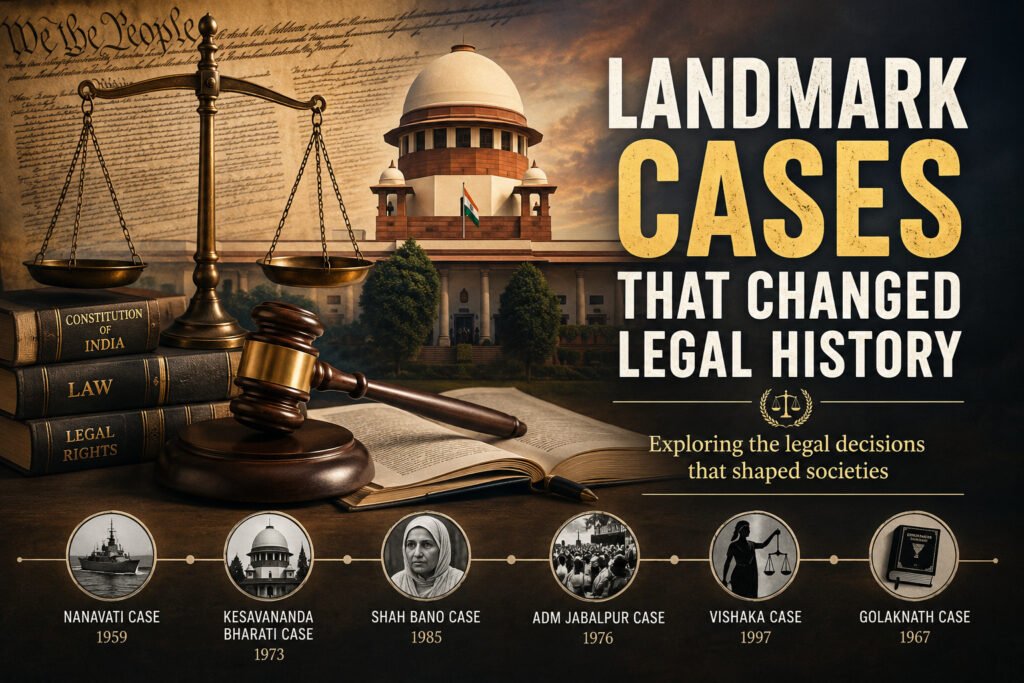
Certain legal cases become more than courtroom proceedings. They influence societies, redefine legal principles and sometimes change the course of history itself. Such cases continue to shape law, governance and public thinking long after the final judgment has been delivered.
This section explores landmark cases that have left a lasting impact on legal systems and society.
What Makes a Case Landmark?
A case is often considered landmark when it:
- Creates a new legal principle
- Changes existing laws
- Influences constitutional interpretation
- Affects public policy
- Shapes social attitudes
Some Important Landmark Cases
The Nanavati Case
The Nanavati case remains one of India’s most discussed criminal trials. The case involving Commander K. M. Nanavati, public emotions and intense media attention eventually contributed to the end of the jury system in India.
Read: The Nanavati Case – The Trial That Changed India’s Legal Landscape.
Kesavananda Bharati Case
This landmark case introduced the Basic Structure Doctrine and changed constitutional interpretation in India.
Read more: Kesavananda Bharati: Defining the Limits of Constitutional Power
Shah Bano Case
The case generated debate concerning personal law, rights and social justice.
Read more: Shah Bano Case: Law, Religion and Social Debate
Other landmark cases
Additional landmark cases will be added and explored in detail.
ADM Jabalpur Case
This case raised important questions concerning individual liberty and fundamental rights during the Emergency period.
Read more: ADM Jabalpur: A Test of Fundamental Rights.
Vishaka Case
The Vishaka judgment became an important milestone in recognising workplace rights and addressing sexual harassment.
Read more: The Vishaka Guidelines: Protecting Dignity at the Workplace.
Golaknath Case
This landmark case dealt with Parliament’s power to amend fundamental rights and had a major constitutional impact.
Read more: Golaknath Case: Constitutional Rights and Parliamentary Powers
Conclusion
Landmark cases often become turning points where law, society and history intersect. Understanding these cases helps us appreciate how legal decisions influence the world around us.