Dinesh Joshi

Hi, I’m Dinesh Joshi, an imaginative and experienced content writer with over 36 years of diverse experience in the Pharmaceutical, Steel, and Oil & Gas sectors. My writing is enriched by a deep understanding of these industries and a scientific background, ensuring accurate and highly relevant content for your audience. I possess Blogging, Content Strategy, Creative Writing, and Web Content Writing expertise.

The Birth of Uttarakhand: How India’s 27th State Came Into Being

Where Myths Meet Modernity: The Story Behind Uttarakhand’s Creation The story of Uttarakhand’s birth is as compelling as its myths and mountains. After decades of aspirations, peaceful protests, and the unyielding spirit of its hill people, Uttarakhand emerged as India’s 27th state on 9th November 2000.Carved out of Uttar Pradesh under the Uttar Pradesh Reorganization Act, this new state was born out of a quest for identity, equity, and focused development. Its creation was not merely an administrative act — it was a recognition of a region whose culture, geography, and faith had always stood distinct, echoing the resilient voice of the Himalayas. The Statehood Movement: A Voice from the Hills Background : The Early Voices for Statehood The demand for a separate hill state in what is now Uttarakhand first emerged in the 1930s, when social reformers and intellectuals such as Anusuya Prasad Bahuguna, Indramani Badoni, and Daulat Ram Joshi began voicing concerns about the administrative neglect of the hilly regions of Garhwal and Kumaon under the vast governance structure of United Provinces (later Uttar Pradesh). They argued that the region’s unique geography, scattered population, and fragile mountain ecology required a distinct administrative approach — something the plains-centric policies of Lucknow failed to provide.Over the following decades, this sentiment evolved from cultural assertion into a political movement, gaining momentum especially after India’s independence. By the 1970s and 1980s, the Uttarakhand Kranti Dal (UKD) formally championed the cause of statehood, emphasizing issues such as unemployment, lack of educational institutions, poor infrastructure, and the migration of youth from the hills.The call for a separate identity reached its peak in the 1990s, after repeated droughts, inadequate disaster response, and the perception that the voices of the hill people were drowned out in the politics of the populous plains. For the people of Garhwal and Kumaon, statehood was not merely about political separation but about preserving their culture, ensuring equitable development, and protecting the ecological balance of the Himalayas.   Parliamentary Action: From Bill to Statehood The long-standing aspirations of the people of Garhwal and Kumaon finally reached the national stage in the year 2000. Responding to decades of persistent demand and growing political consensus, the Central Government introduced the Uttar Pradesh Reorganisation Bill, 2000, in the Lok Sabha. The Bill sought to carve out a separate hill state from Uttar Pradesh, acknowledging the region’s distinct cultural, geographical, and developmental identity.After deliberation and debate, the Bill was passed by both Houses of Parliament — the Lok Sabha and the Rajya Sabha — marking a historic step toward fulfilling a long-cherished dream. The legislation subsequently received the President’s assent on 1st August 2000, officially clearing the way for the creation of India’s 27th state.Just a few months later, on 9th November 2000, the new state of Uttaranchal (later renamed Uttarakhand in 2007) was formally inaugurated, turning decades of hope, struggle, and identity into constitutional reality. Official Notification: The Birth of a New State Following the President’s assent to the Uttar Pradesh Reorganisation Act, 2000, the Government of India issued an official notification formally declaring the creation of a new state. The notification came into effect on 9th November 2000, a date now celebrated every year as Uttarakhand State Foundation Day.On this day, Uttaranchal — as it was initially named — was carved out of the northern hill districts of Uttar Pradesh, marking the realization of a dream nurtured for decades by the people of the Garhwal and Kumaon regions. Dehradun was designated as the provisional capital, while Nainital became the judicial seat.The formation of the new state was more than an administrative exercise — it was a moment of immense emotional and cultural significance. For millions across the hills, 9th November symbolized the recognition of their unique identity, environmental challenges, and developmental aspirations. The creation of Uttarakhand thus stood as a testament to the power of peaceful movements and democratic persistence in shaping India’s federal story. Result and Renaming: The Emergence of Uttarakhand On 9th November 2000, history was made as the new state of Uttaranchal — now known as Uttarakhand — was officially carved out of Uttar Pradesh, becoming India’s 27th state. This marked the culmination of a long and determined struggle for recognition and self-governance by the people of the hill regions.Dehradun was declared the interim capital, serving as the administrative hub of the fledgling state, while Nainital continued its legacy as the seat of justice, housing the High Court of Uttarakhand.A few years later, in 2007, the state’s name was officially changed from Uttaranchal to Uttarakhand, a move that resonated deeply with the people’s cultural sentiment and historical identity. The word “Uttarakhand” — meaning “Northern Land” — carries ancient roots, evoking the spiritual and mythological heritage that has always defined the region’s soul. In Brief The Uttar Pradesh Reorganisation Act, 2000 was passed by Parliament and approved by the President of India on 1st August 2000. The Act came into effect on 9th November 2000, officially creating the new state of Uttaranchal — now known as Uttarakhand.

The Birth of Uttarakhand: How India’s 27th State Came Into Being Read More »

The Government of India’s policies for setting up fuel retail outlets

Key Policy Details In a resolution dated 08 Nov 2019, the MoPNG issued new guidelines for authorisation to market transportation fuels (motor spirit – petrol, and high speed diesel) to be used in both retail and bulk business. Press Information Bureau+2The Economic Times+2 Under these guidelines, for retail authorisation, an entity must have a minimum net worth of ₹250 crore for retail-only business (or ₹500 crore if both bulk and retail). Press Information Bureau+1 The entity must commit to establishing at least 100 retail outlets of which 5 % must be in notified remote areas within five years. Press Information Bureau+1 Additionally, authorised outlets must within three years of operation offer one or more alternate-fuel infrastructure (e.g., CNG, LNG, biofuels, EV charging) at the retail site. Press Information Bureau+1 News reports indicate the government is currently reviewing these norms and may further ease them to attract more players into the fuel-retail space.

The Government of India’s policies for setting up fuel retail outlets Read More »

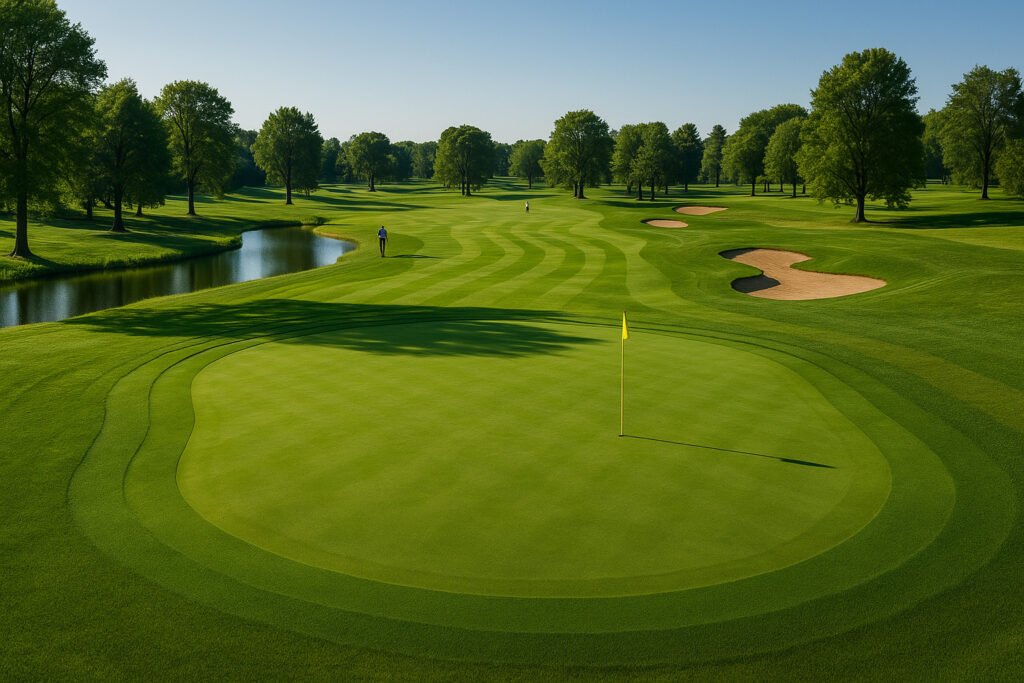
Iconic golf course set in a dramatic natural landscape representing global golf destinations

World’s Top Golf Course Destinations

Introduction Golf is more than a sport; it is a journey through some of the world’s most remarkable landscapes. From rugged coastal links and rolling green hills to desert backdrops and pine-lined mountain courses, each destination offers a distinct character and playing experience. Over time, the game has evolved beyond the scorecard, becoming closely intertwined with travel, culture and leisure. As explored in Golf: The Complete Essence of Its Origins, Tradition, Passion & Modern Evolution, modern golfers increasingly seek destinations where the quality of the course is matched by its surroundings. As golf has evolved into a global lifestyle experience, resort-led destinations have played an increasingly important role in shaping where and how the modern game is played. This article explores some of the world’s leading golf course destinations—places that continue to attract professionals and enthusiasts alike, not only for the challenge they present, but for the stories, settings and experiences that define them. 1. Scotland – The Birthplace of Golf If golf has a spiritual home, it is Scotland. The game took shape here over five centuries ago, and its traditions continue to resonate across windswept links courses shaped by nature rather than design. Must-Play Courses: St Andrews Links (Old Course): Widely regarded as The Home of Golf, this historic course remains a pilgrimage for golfers around the world. Royal Dornoch: A remote and revered links, celebrated for its stunning coastal setting and uncompromising purity of play. Why Visit:Scotland offers an unmatched blend of heritage, challenge and atmosphere. Unpredictable weather tests shot-making and judgement, while local hospitality and deep-rooted golfing culture make every round memorable. 2. United States – Diversity and Grandeur With more than 15,000 golf courses, the United States offers one of the most diverse golfing landscapes in the world. From historic private clubs to striking coastal and desert layouts, the country caters to golfers of every preference and playing style. Must-Play Courses: Augusta National (Georgia): Home of The Masters, this iconic course occupies a unique place in golf’s modern history. Pebble Beach Golf Links (California): Renowned for its dramatic coastal setting, where the Pacific Ocean defines both scenery and challenge. Pinehurst No. 2 (North Carolina): A timeless design that combines strategic complexity with understated elegance. Why Visit:Unmatched variety, world-class facilities and a calendar of iconic tournaments make the United States a cornerstone of the global golfing landscape. 3. Ireland – Where Nature Meets Challenge Ireland’s golfing identity is defined by lush countryside, rugged coastal cliffs and naturally demanding terrain. The courses here are shaped as much by wind and weather as by architecture, creating rounds that reward imagination and resilience. Must-Play Courses: Royal County Down: Regularly ranked among the world’s finest courses, set against the dramatic backdrop of the Mourne Mountains. Ballybunion: A classic links experience marked by rolling dunes, strong winds and an uncompromising test of shot-making. Why Visit:Ireland combines spectacular scenery and challenging golf with a welcoming culture, where post-round tradition often continues in the warmth of a local pub. 4. Australia – Beauty Down Under Golf in Australia blends striking natural settings with thoughtful course design, resulting in layouts that are both visually impressive and technically demanding. From parkland classics to modern coastal links, the country offers a broad and engaging golfing experience. Must-Play Courses: Royal Melbourne: Highly regarded for its firm fairways, fast greens and strategic design, it remains a favourite among purists and professionals alike. Barnbougle Dunes (Tasmania): A modern links masterpiece, seamlessly shaped into coastal dunes along one of Australia’s most dramatic shorelines. Why Visit:Australia offers a combination of sunlit landscapes, accessibility and a relaxed golfing culture, making it an appealing destination for golfers seeking quality without formality. 5. Japan – Tradition Meets Modern Design Golf in Japan reflects a distinctive balance between precision, discipline and cultural refinement. Courses are known for meticulous maintenance and thoughtful presentation, where attention to detail extends well beyond the fairways and greens. Must-Play Courses: Kawana Hotel Golf Course (Fuji Course): Celebrated for its dramatic coastal setting and uninterrupted views of Mount Fuji, offering a memorable blend of scenery and challenge. Naruo Golf Club: A traditional layout renowned for impeccable conditioning, structured play and adherence to established golfing etiquette. Why Visit:Japan offers exceptional course standards, a deep respect for the game’s traditions and unmatched hospitality, creating an experience that is ordered, rewarding and uniquely cultural. 6. South Africa – Where Golf Meets the Wild South Africa offers a golfing experience that is both luxurious and deeply connected to nature. Here, world-class courses are often set against dramatic landscapes, where wildlife and natural beauty form part of the backdrop rather than a distant view. Must-Play Courses: Leopard Creek Country Club: Located on the edge of Kruger National Park, this celebrated course combines championship-level design with views of surrounding wilderness. Fancourt Links: A Gary Player–designed masterpiece, widely regarded as one of the finest links-style courses outside Europe. Why Visit:South Africa delivers a rare mix of exceptional golf, high-quality resorts and unforgettable natural surroundings, with opportunities for adventure extending well beyond the fairways. 7. United Arab Emirates – Golf in the Desert The United Arab Emirates has redefined golf through vision, investment and design, transforming arid desert terrain into meticulously crafted courses that now feature prominently on the global golfing calendar. Must-Play Courses: Emirates Golf Club (Dubai): The first all-grass golf course in the Middle East and a long-standing host of the Dubai Desert Classic, it remains a landmark in the region’s golfing growth. Yas Links (Abu Dhabi): A striking layout that blends Arabian surroundings with links-inspired design elements and strategic shot-making. Why Visit:The UAE offers year-round playing conditions, high-end facilities and a contemporary golfing environment, making it a distinctive destination within the modern game. 8. New Zealand – Adventure and Serenity New Zealand appeals to golfers who value tranquillity, space and dramatic natural scenery. Its courses are often set in remote locations, where thoughtful design enhances rather than competes with the surrounding landscape. Must-Play Courses: Cape Kidnappers: Spectacularly positioned atop sheer cliffs overlooking Hawke’s Bay, offering

World’s Top Golf Course Destinations Read More »