Table of Contents
ToggleIntroduction
Science has always sought to understand life — biotechnology dares to reshape it.
From decoding the human genome to designing synthetic cells, biotechnology represents humanity’s most intimate dialogue with nature. It operates not in distant galaxies or digital realms, but within the very fabric of life — DNA.
What was once the work of evolution is now guided by human hands. With each discovery, we inch closer to a world where diseases can be edited out, bodies can be rebuilt, and nature itself can be redesigned.
But with such power comes a question that transcends science: Where should we draw the line between healing and creating?
🔙Previously in the Future of Technology Series:Robotics: The New Workforce:Explore how intelligent machines are transforming industries, reshaping skills, and redefining human work.
Gene Editing (CRISPR) and Its Breakthroughs
In 2012, the scientific world was transformed by a tool so simple and yet so profound — CRISPR-Cas9.
Often described as “genetic scissors,” CRISPR allows scientists to cut, replace, or repair segments of DNA with unprecedented precision. What once took years in laboratories can now be done in weeks.
Its implications are staggering:
- Curing genetic diseases like sickle-cell anemia and cystic fibrosis
- Improving crops to resist drought and pests
- Eradicating malaria by altering mosquito genes
- And even exploring the reversal of hereditary blindness
CRISPR has made gene editing accessible, but it has also blurred the moral boundary between curing disease and designing perfection. The ability to edit human embryos, though scientifically possible, challenges not only ethics but our understanding of identity and evolution.
Personalized Medicine and Bioinformatics
Imagine a future where your medical treatment is as unique as your fingerprint. That’s the promise of personalized medicine — the marriage of biotechnology and data science.
Using bioinformatics, doctors can now analyze vast genetic data to understand an individual’s susceptibility to diseases, predict drug responses, and tailor treatment precisely to that person’s genetic makeup.
A patient battling cancer, for example, can receive targeted therapy that attacks only cancerous cells, sparing the healthy ones — a quantum leap from traditional chemotherapy.
This data-driven medicine is not futuristic anymore; it’s quietly revolutionizing hospitals today. But with each digital genome stored and shared, new concerns emerge: privacy, data misuse, and genetic discrimination. The more we know about our biology, the more vulnerable we become to how others might use that knowledge.
Ethical Dilemmas in Cloning and Human Enhancement
Biotechnology doesn’t just mend — it tempts.
The possibility of cloning humans or enhancing physical and cognitive traits raises questions as old as creation itself.
Should we use science to perfect the human form? Or is imperfection what makes us human?
Cloning technology, while valuable for regenerative medicine and organ creation, crosses into moral uncertainty when applied to human reproduction. Similarly, bio-enhancement — from designer babies to memory-boosting implants — forces society to confront a dangerous divide between the “enhanced” and the “ordinary.”
Ethics cannot lag behind science.
As biotechnology races forward, it must carry with it the wisdom of restraint — to heal, not to play god.
The Merging of Biology and Technology (Bio-Cybernetics)
The newest frontier in biotechnology doesn’t lie in the lab — it lies at the intersection of biology and technology, known as bio-cybernetics.
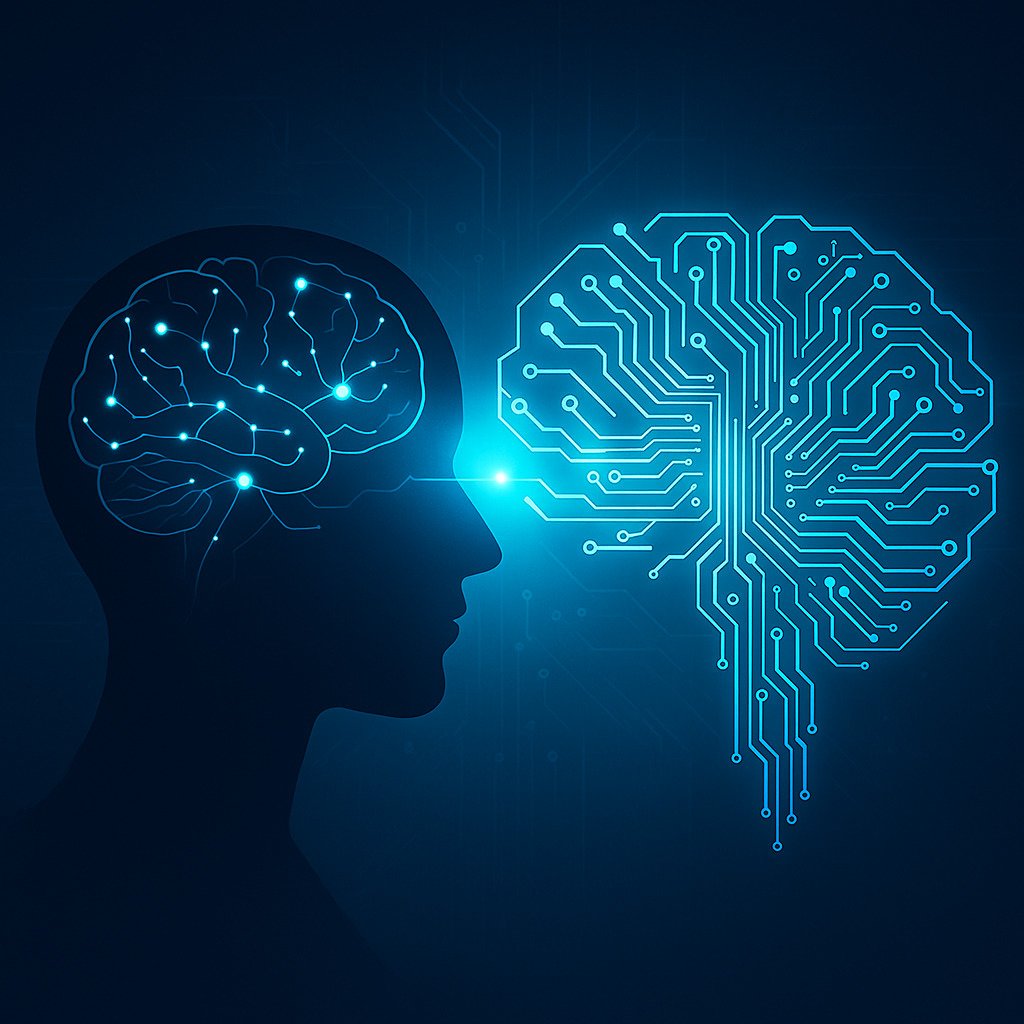
This emerging field explores how machines and living systems can interact — from brain–computer interfaces that let paralyzed patients move prosthetic limbs to artificial neurons that mimic the human brain.
The dream of merging mind and machine is no longer science fiction; it’s being tested in universities and startups worldwide. These breakthroughs promise to repair the body, extend human life, and redefine disability — yet they also redefine what it means to be human.
When silicon meets cell, and code merges with consciousness, we enter a realm where the line between biology and technology begins to dissolve. The question no longer is Can we? — it is Should we?
Conclusion
Biotechnology stands at the crossroads of hope and hubris.
It gives humanity the tools to heal, adapt, and survive — but also the temptation to engineer evolution itself.
The challenge before us is not only to advance science, but to preserve the sanctity of life while doing so.
If used wisely, biotechnology will not replace nature — it will collaborate with it, creating a future where innovation honors life rather than overrides it.
In the story of progress, this may be the chapter where humanity learns to become both the author and the guardian of its own biology.