Arts & Culture

Explore the world of Art and Culture — from music, cinema, and literature to traditions and festivals that celebrate creativity and connect humanity across generations.


Literature: Voices, Ideas and the Human Experience

Introduction Literature has always been far more than words written on paper. It is the emotional memory of civilizations, the conscience of societies and the timeless dialogue between human experience and imagination. Across centuries and cultures, literature has preserved wisdom, challenged injustice, inspired revolutions, explored spirituality and given voice to the deepest human emotions — love, loneliness, hope, conflict, faith and identity. From ancient epics and philosophical scriptures to modern novels, poetry and digital storytelling, literature reflects not only the changing world around us but also the evolving inner world of humanity itself. It transcends geography and generations, connecting individuals through shared emotions, moral dilemmas, dreams and aspirations. Great literature does not merely entertain; it questions, provokes, heals and enlightens. In an age increasingly dominated by speed, algorithms and shrinking attention spans, the role of literature becomes even more significant. Literature invites society to pause, reflect and rediscover the depth of human thought and creativity. It nurtures empathy, imagination and intellectual freedom — qualities essential for both personal growth and cultural continuity. The Literature section of WolverineSpeak.com seeks to approach literature not simply as academic study or literary criticism, but as a living exploration of civilization, culture, philosophy and human consciousness. Unlike many conventional literary blogs that focus primarily on book summaries or author reviews, this platform aspires to examine the deeper relationship between literature and life itself. Here, literature will be explored through multiple dimensions: Literature as a reflection of society and history The influence of storytelling on culture and identity The philosophical and spiritual depth of literary works The role of poetry and fiction in shaping emotions and ideas Indian and world literary traditions across generations Literature’s relevance in the modern digital age Reflections on life, morality, aging, leadership and humanity through literary perspectives The intent is not merely to discuss books, but to understand the ideas, emotions and civilizational currents flowing through them. Whether examining classical epics, modern fiction, regional literature, poetry, theatre or contemporary literary thought, this section will strive to create meaningful conversations that go beyond the printed page. At its finest, literature remains one of humanity’s greatest instruments of self-discovery. It preserves the past, interprets the present and illuminates the future. In every era, stories continue to shape societies because they ultimately shape the human mind itself. This section of WolverineSpeaks is an invitation to rediscover literature not only as art and expression, but as a timeless journey into the heart of human existence. Evolution of Literature: From Oral Traditions to the Digital Age Literature has evolved alongside human civilization itself. Long before the invention of paper, printing presses or digital screens, human beings communicated stories, beliefs, wisdom and collective experiences through oral traditions. Around firesides, in royal courts, temples and village gatherings, stories became the earliest vehicles of memory, morality and cultural continuity. In many ways, literature began not as written text, but as the spoken heartbeat of society. The Age of Oral Traditions The earliest forms of literature emerged through oral storytelling, folklore, myths, hymns and epics passed from one generation to another. These narratives preserved the identity, values and spiritual foundations of communities long before formal writing systems developed. Ancient civilizations across the world nurtured rich oral traditions: The Vedic hymns in India Homer’s epics in Greece African tribal storytelling Indigenous folklore traditions Mythological narratives from Mesopotamia and Egypt These oral compositions carried history, spirituality, ethics and cultural memory. Rhythm, repetition and poetic structures helped storytellers preserve accuracy across generations. In India, epics like the Ramayana and the Mahabharata evolved as monumental literary and philosophical traditions that continue to influence culture and society even today. The Emergence of Written Literature The invention of writing transformed literature from a spoken tradition into a permanent civilizational record. Clay tablets, palm leaves, parchment and manuscripts enabled societies to preserve knowledge with greater precision and continuity. Ancient written literature included: Religious scriptures Philosophical discourses Poetry Historical chronicles Dramatic works Political treatises Civilizations such as India, Greece, Rome, China and Persia produced literary works that laid the intellectual foundations of philosophy, ethics, governance and aesthetics. Writers and philosophers began exploring profound questions: What is justice? What is truth? What defines morality? What is the purpose of human existence? Literature increasingly became both artistic expression and intellectual inquiry. Classical and Medieval Literary Traditions As societies evolved, literature expanded into diverse forms: Poetry Drama Allegory Devotional literature Court literature Mystical writings The classical age witnessed literary excellence through figures such as: Kalidasa Shakespeare Dante Confucius Rumi Tulsidas In India, Bhakti and Sufi literature brought spirituality closer to ordinary people by using regional languages instead of elite scholarly languages. Literature became a bridge between philosophy and the masses. During medieval times, literature often reflected: Religion Kingship Heroism Morality Mysticism Social hierarchy Yet it also nurtured emotional sensitivity, poetic beauty and spiritual introspection. Literature and the Printing Revolution The invention of the printing press by Johannes Gutenberg in the 15th century marked one of the greatest turning points in literary history. Books became more accessible, literacy expanded and ideas began spreading rapidly across societies. This democratization of literature transformed civilization itself: Scientific thought expanded Political awareness increased Reform movements gained strength National consciousness emerged Literature gradually moved beyond royal courts and religious institutions into the hands of common people. Novels, essays and newspapers emerged as powerful instruments of social and political influence. Modern Literature and Social Transformation The modern era brought enormous social, political and industrial changes, and literature evolved accordingly. Writers increasingly explored: Individual identity Freedom Social injustice Nationalism Industrialization War Human psychology Literature became deeply connected with social reform and political consciousness. In India, literary figures such as: Rabindranath Tagore Premchand Bankim Chandra Chattopadhyay Harivansh Rai Bachchan used literature to address social realities, human suffering and national awakening. Globally, modern literature reflected the anxieties and complexities of changing societies. Existentialism, realism, romanticism and modernism introduced new literary styles and philosophical depth. Contemporary Literature in the Digital Era The digital revolution has transformed the creation, distribution and consumption

Literature: Voices, Ideas and the Human Experience Read More »

Festivals

Celebrating Traditions, Faith & Collective Joy This section is currently being developed as part of the Arts & Culture series on WolverineSpeak.com. Festivals are among the most vibrant expressions of human civilization — bringing together faith, tradition, music, rituals, seasonal rhythms, community celebrations, and cultural identity across generations. Upcoming features in this section will explore: Indian festivals and traditions, regional celebrations, Himalayan fairs and yatras, spiritual gatherings, folk customs, seasonal observances, and the cultural significance behind these celebrations. Please revisit soon as this section gradually evolves into a rich cultural journey through India’s festive traditions and living heritage. 👉 Meanwhile, explore other features under Arts & Culture.

Festivals Read More »

Cultural Heritage

Preserving the Legacy of Civilizations This section is currently being developed as part of the Arts & Culture series on WolverineSpeak.com. Cultural heritage reflects the collective memory of civilizations through monuments, traditions, crafts, folklore, architecture, language, sacred spaces, and community traditions passed across generations. Upcoming features will explore: India’s architectural heritage, Himalayan cultural traditions, temples and sacred sites, folk heritage, indigenous traditions, historical preservation, and the importance of protecting cultural identity in a rapidly changing world. Please revisit soon as this section grows into a rich archive of heritage, history, and cultural continuity. 👉 Meanwhile, discover more stories from Arts & Culture.

Cultural Heritage Read More »

Spirituality & Beliefs

Exploring Faith, Philosophy & Inner Traditions This section is currently under development as part of the Arts & Culture knowledge series. Across civilizations, humanity has continuously searched for meaning, inner peace, spiritual understanding, and connection with the divine. From ancient philosophies and sacred rituals to meditation, pilgrimage, and faith traditions, spirituality remains deeply woven into human culture and identity. Upcoming features will explore: Indian spiritual traditions, Himalayan spirituality, sacred journeys, meditation and philosophy, temples and rituals, local belief systems, and the role of faith in everyday life. Please revisit soon as this section expands into a thoughtful exploration of spirituality, culture, and human consciousness. 👉 Explore other journeys under Arts & Culture while this section is being prepared.

Spirituality & Beliefs Read More »

The Birth of Uttarakhand: How India’s 27th State Came Into Being

Where Myths Meet Modernity: The Story Behind Uttarakhand’s Creation The story of Uttarakhand’s birth is as compelling as its myths and mountains. After decades of aspirations, peaceful protests, and the unyielding spirit of its hill people, Uttarakhand emerged as India’s 27th state on 9th November 2000.Carved out of Uttar Pradesh under the Uttar Pradesh Reorganization Act, this new state was born out of a quest for identity, equity, and focused development. Its creation was not merely an administrative act — it was a recognition of a region whose culture, geography, and faith had always stood distinct, echoing the resilient voice of the Himalayas. The Statehood Movement: A Voice from the Hills Background : The Early Voices for Statehood The demand for a separate hill state in what is now Uttarakhand first emerged in the 1930s, when social reformers and intellectuals such as Anusuya Prasad Bahuguna, Indramani Badoni, and Daulat Ram Joshi began voicing concerns about the administrative neglect of the hilly regions of Garhwal and Kumaon under the vast governance structure of United Provinces (later Uttar Pradesh). They argued that the region’s unique geography, scattered population, and fragile mountain ecology required a distinct administrative approach — something the plains-centric policies of Lucknow failed to provide.Over the following decades, this sentiment evolved from cultural assertion into a political movement, gaining momentum especially after India’s independence. By the 1970s and 1980s, the Uttarakhand Kranti Dal (UKD) formally championed the cause of statehood, emphasizing issues such as unemployment, lack of educational institutions, poor infrastructure, and the migration of youth from the hills.The call for a separate identity reached its peak in the 1990s, after repeated droughts, inadequate disaster response, and the perception that the voices of the hill people were drowned out in the politics of the populous plains. For the people of Garhwal and Kumaon, statehood was not merely about political separation but about preserving their culture, ensuring equitable development, and protecting the ecological balance of the Himalayas.   Parliamentary Action: From Bill to Statehood The long-standing aspirations of the people of Garhwal and Kumaon finally reached the national stage in the year 2000. Responding to decades of persistent demand and growing political consensus, the Central Government introduced the Uttar Pradesh Reorganisation Bill, 2000, in the Lok Sabha. The Bill sought to carve out a separate hill state from Uttar Pradesh, acknowledging the region’s distinct cultural, geographical, and developmental identity.After deliberation and debate, the Bill was passed by both Houses of Parliament — the Lok Sabha and the Rajya Sabha — marking a historic step toward fulfilling a long-cherished dream. The legislation subsequently received the President’s assent on 1st August 2000, officially clearing the way for the creation of India’s 27th state.Just a few months later, on 9th November 2000, the new state of Uttaranchal (later renamed Uttarakhand in 2007) was formally inaugurated, turning decades of hope, struggle, and identity into constitutional reality. Official Notification: The Birth of a New State Following the President’s assent to the Uttar Pradesh Reorganisation Act, 2000, the Government of India issued an official notification formally declaring the creation of a new state. The notification came into effect on 9th November 2000, a date now celebrated every year as Uttarakhand State Foundation Day.On this day, Uttaranchal — as it was initially named — was carved out of the northern hill districts of Uttar Pradesh, marking the realization of a dream nurtured for decades by the people of the Garhwal and Kumaon regions. Dehradun was designated as the provisional capital, while Nainital became the judicial seat.The formation of the new state was more than an administrative exercise — it was a moment of immense emotional and cultural significance. For millions across the hills, 9th November symbolized the recognition of their unique identity, environmental challenges, and developmental aspirations. The creation of Uttarakhand thus stood as a testament to the power of peaceful movements and democratic persistence in shaping India’s federal story. Result and Renaming: The Emergence of Uttarakhand On 9th November 2000, history was made as the new state of Uttaranchal — now known as Uttarakhand — was officially carved out of Uttar Pradesh, becoming India’s 27th state. This marked the culmination of a long and determined struggle for recognition and self-governance by the people of the hill regions.Dehradun was declared the interim capital, serving as the administrative hub of the fledgling state, while Nainital continued its legacy as the seat of justice, housing the High Court of Uttarakhand.A few years later, in 2007, the state’s name was officially changed from Uttaranchal to Uttarakhand, a move that resonated deeply with the people’s cultural sentiment and historical identity. The word “Uttarakhand” — meaning “Northern Land” — carries ancient roots, evoking the spiritual and mythological heritage that has always defined the region’s soul. In Brief The Uttar Pradesh Reorganisation Act, 2000 was passed by Parliament and approved by the President of India on 1st August 2000. The Act came into effect on 9th November 2000, officially creating the new state of Uttaranchal — now known as Uttarakhand.

The Birth of Uttarakhand: How India’s 27th State Came Into Being Read More »

The Mohallas of Almora: Migration, Memory, and Identity.

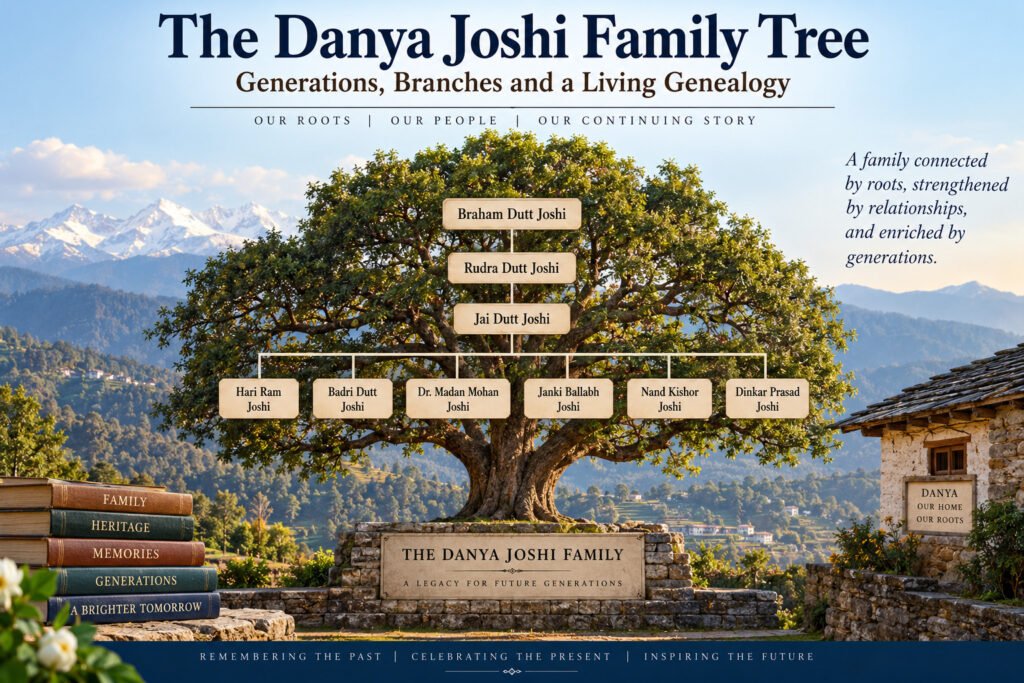
One of the unique features of Almora’s social and cultural landscape is how many of its neighborhoods (mohallas) are named after the villages from which their early settlers came. This tradition gave new settlers a sense of belonging in the town while keeping their ancestral identity alive. Some notable examples include: Danya Mohalla – Named after settlers from Danya Village in Almora district. Jhijjad Mohalla – Settlers here traced their roots to Jhijjad Village. Pali Mohalla – Originating from Pali Village, whose families moved to Almora for trade and services. Kaflikhan Mohalla – Named after Kaflikhan Village. Takula Mohalla – Linked to families from Takula, a well-known block and village area in Almora. Suyal Mohalla – Associated with Suyal Village/region, reflecting the migration of Suyal community members. Ranikhet Mohalla – Named after families who shifted from the Ranikhet region. Barechhina Mohalla – Derived from Barechhina Village, a settlement on the Almora–Pithoragarh road. These mohallas tell a story of migration — people moving from villages to Almora town in search of opportunities but carrying their identity with them. Over generations, the names remained, turning into living reminders of Almora’s cultural map and the deep ties between town and countryside.  

The Mohallas of Almora: Migration, Memory, and Identity. Read More »

Bhairav Devta: The Fierce Guardian of Uttarakhand

Why Bhairav is Worshipped  Legend says that Lord Shiva created Bhairav out of his fiery anger to uphold cosmic justice and punish arrogance. In Uttarakhand, Bhairav is seen as the rakshak (protector) — the one who keeps away misfortune, animal attacks, epidemics, and natural calamities. Villagers still believe that neglecting Bhairav invites hardship, while pleasing him ensures prosperity, good harvests, and protection from unseen forces. Bhairav (Eight Forms) The Asht Devotees across the hills recognize Asht Bhairav, the eight manifestations of Bhairav, each embodying a different form of protection: Asithaanga Bhairav – Purifier of thoughts and desires. Ruru Bhairav – The teacher and giver of wisdom. Chanda Bhairav – Fierce destroyer of evil energies. Krodha Bhairav – Righteous anger against injustice. Unmatta Bhairav – Dissolver of pride and ego. Kapala Bhairav – Guardian against disease and ill omens. Bheeshana Bhairav – Upholder of truth and justice. Samhara Bhairav – The destroyer of ignorance and evil. Together, they form a divine shield — worshipped as Asht Bhairav, the eight protectors.   Folk Beliefs and Practices in Kumaon & Garhwal  Village Protector: Almost every Kumaoni village has a Bhairav temple at its entrance. Locals believe he protects cattle, crops, and homes. Before a harvest or cattle fair, offerings are made to seek his blessings. Dreams and Omens: Folklore says that Bhairav Devta often appears in dreams — sometimes as a rider on a black horse, other times accompanied by his sacred dog. Villagers believe such visions signal both warning and protection. Bhairav Jagar: A unique Kumaoni ritual where singers, in a trance-like state, narrate the tales of Bhairav through songs and storytelling. The deity is invoked to enter the gathering and bless the community. Dogs as Divine Beings: Since Bhairav’s vehicle (vahana) is the dog, feeding stray dogs is considered an offering to Bhairav himself. In many homes, this act is performed before starting a journey or a new venture. Festivals and Sacrifices: During annual village fairs (melas), goats are sometimes offered as sacrifice to Bhairav, symbolizing the offering of ego and negativity. Local Folklore  The Protector of Cattle: In the Almora region, elders narrate that when wild animals attacked village cowsheds at night, villagers prayed to Bhairav Devta. Soon, the attacks stopped — reinforcing faith in him as the eternal guardian of livestock. The Boundary Guardian: In Pithoragarh, people say that no outsider can cross village boundaries with ill intent if Bhairav Devta’s temple stands guard. Thieves and wrongdoers are believed to lose their way or fall ill until they confess. Bhairav’s Warning: A popular belief in Kumaon says that if a dog howls continuously near midnight facing a temple, it means Bhairav is warning the villagers of some danger — and rituals must be performed the next day. The Living Faith  To this day, Bhairav Devta is not just a figure of mythology but a living presence in Uttarakhand. His shrines, stories, and rituals continue to guide communities — teaching them the eternal balance between fear and devotion, justice and protection. For the people of Uttarakhand, Bhairav Devta remains what he has always been: the fierce protector, the guardian of truth, and the eternal companion of their lives in the mountains. Famous Bhairav Temples in Kumaon Chitai Bhairav Temple (Almora): Perhaps the most famous Bhairav shrine in Kumaon, known as Chitai Golu Devta’s guardian. Devotees believe Bhairav here acts as the divine protector of justice. The temple is filled with bells and petitions written by devotees. Bhairav Temple, Danya (Almora District) :  Bhairav Devta is worshipped as the village guardian. A strong example of how faith is deeply rooted in daily life. Nanda Devi Raj Jat Route Shrines (Kumaon linkages) Along the path of the famous Nanda Devi Raj Jat Yatra, several small Bhairav shrines exist, where pilgrims stop to seek protection before moving further. Bhairav Temple, Jageshwar : Near the famous Jageshwar Dham (a cluster of Shiva temples), there is a shrine dedicated to Bhairav Devta, reinforcing his role as the guardian of Shiva temples Famous Bhairav Temples in Garhwal Kal Bhairav Temple (Kedarnath): Just 500 meters from the Kedarnath temple, this shrine is dedicated to Kal Bhairav. He is considered the protector of Kedarnath Dham. Devotees believe that during winter, when the Kedarnath temple closes, the deity of Kedarnath rests under the watch of Bhairav. Bhairav Temple, Badrinath: Near the sacred Badrinath shrine, Bhairav Devta is worshipped as the guardian deity who protects the valley during heavy snow and harsh winters. Asi Ganga Bhairav Temples (Uttarkashi) : Several Bhairav shrines exist along the Asi Ganga valley, where villagers worship him for protection against natural calamities like floods and landslides. Bhairav Temple, Haridwar : Close to the ghats, there are ancient Bhairav shrines where pilgrims seek protection before performing sacred dips in the Ganga. Bhairav Temple, Joshimath : Here, Bhairav Devta is considered the protector of the Narasimha temple and the region. Importance of Bhairav temples in Uttarakhand They show Bhairav’s role as protector of major dhams (Kedarnath, Badrinath). They connect village-level worship (Danya, Jageshwar, Uttarkashi) with pan-Himalayan traditions. Offerings and Prayers for Bhairav Bhairav Devta, a powerful form of Lord Shiva, is worshipped across Uttarakhand and many other parts of India as the fierce protector, remover of obstacles, and guardian deity. Devotees believe that sincere prayers to Bhairav bring protection, justice, and blessings of strength and prosperity. Common Offerings to Bhairav Alcohol (especially liquor) – Traditionally, offerings of country liquor or other spirits are made at Bhairav temples, symbolizing surrender of ego and seeking divine protection. Black Gram (Urad Dal) – Represents purity and devotion, often offered along with rice. Mustard Oil and Black Sesame Seeds – Poured over the idol or offered in lamps to please Bhairav. Red Flowers & Garland – Marigolds, hibiscus, and red roses are considered sacred to Bhairav. Meat & Non-vegetarian Food – In many traditions, meat is offered, though symbolic vegetarian substitutes are also used nowadays. Dogs (Bhairav’s Vahana) – Feeding black dogs with milk, sweets, or chapatis is considered a

Bhairav Devta: The Fierce Guardian of Uttarakhand Read More »