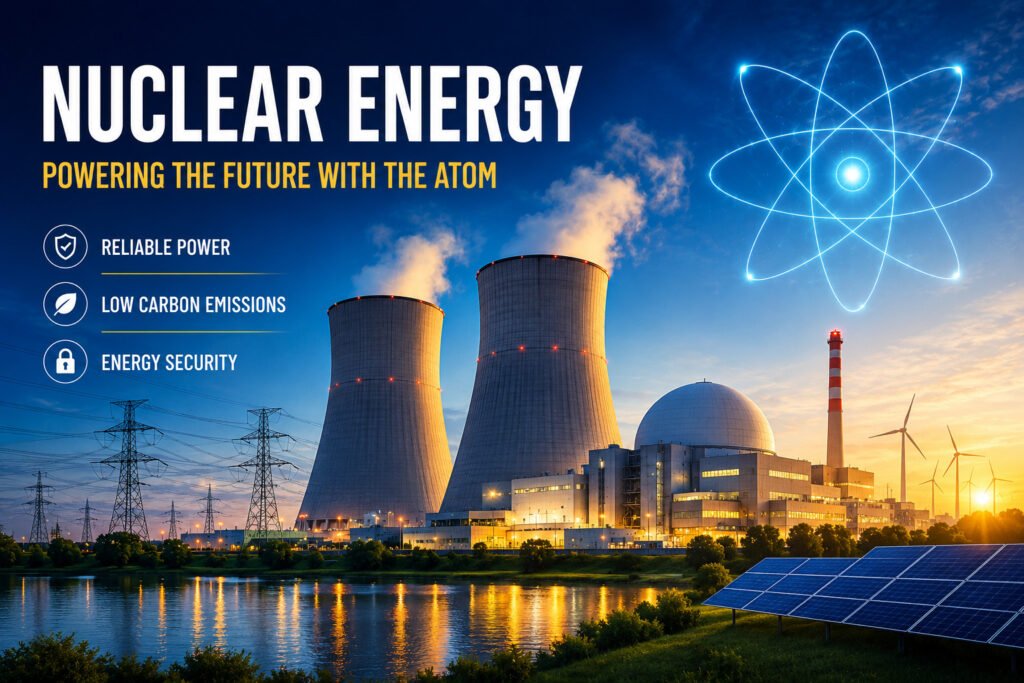
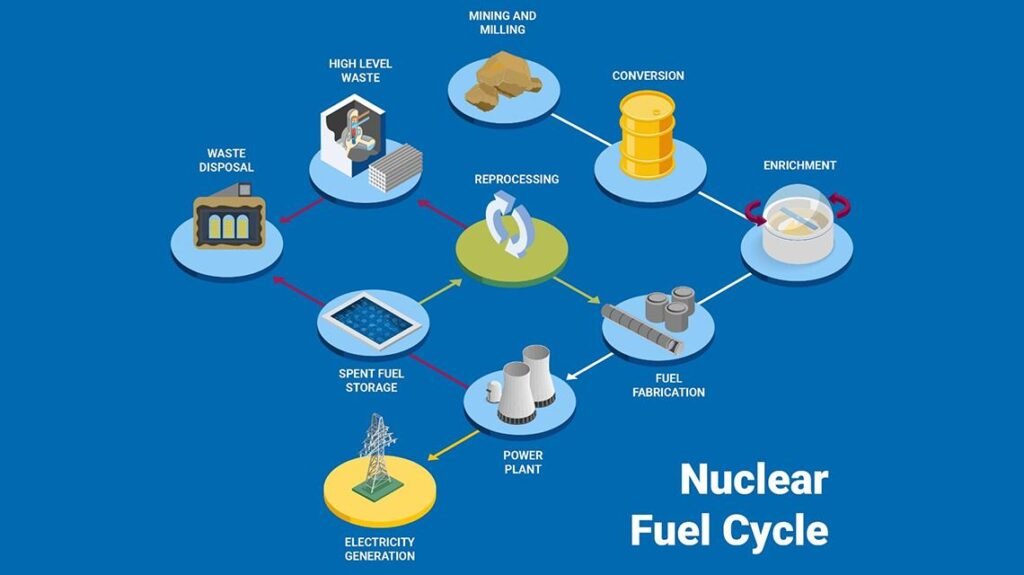
Uranium & Nuclear Fuel Cycle: Powering India’s Energy Future Introduction: The Fuel Behind Nuclear Power Nuclear energy is often discussed in terms of reactors and electricity generation, but its foundation lies in a critical resource—uranium. As countries seek reliable, low-carbon energy sources, uranium has emerged as a strategic asset, linking energy security with geopolitical and technological considerations. For India, with rising energy demand and climate commitments, understanding uranium and the nuclear fuel cycle is essential to appreciating the future of its energy landscape. As countries transition toward cleaner energy sources, understanding the energy sector landscape becomes increasingly important. What is Uranium and Why It Matters Uranium is a naturally occurring radioactive metal used as the primary fuel in nuclear reactors. When its atoms split in a controlled process known as nuclear fission, a large amount of energy is released—far greater than conventional fossil fuels. Key advantages: High energy density (small quantity produces large energy) Low carbon emissions Reliable base-load power generation This makes uranium central to the growth of nuclear energy as a reliable power source. Understanding the Nuclear Fuel Cycle The nuclear fuel cycle refers to the entire process from uranium extraction to waste management. It includes: 1. Mining & Milling Uranium ore is extracted and processed into a concentrated form known as yellowcake. 2. Conversion & Enrichment Uranium is converted into gas and enriched to increase the proportion of fissile material. 3. Fuel Fabrication Enriched uranium is made into fuel pellets and assembled into fuel rods. 4. Power Generation Fuel rods are used in reactors to produce heat and generate electricity. 5. Waste Management & Reprocessing Spent fuel is either stored or reprocessed to extract usable materials. India’s Nuclear Energy Programme India follows a unique three-stage nuclear programme designed to maximise its limited uranium resources and vast thorium reserves. Stage 1: Pressurised Heavy Water Reactors (PHWRs) using natural uranium Stage 2: Fast Breeder Reactors (FBRs) producing plutonium Stage 3: Thorium-based reactors (long-term vision) This strategy reflects India’s focus on resource efficiency and long-term sustainability. The Uranium Challenge in India India has limited domestic uranium reserves, which poses a constraint on expanding nuclear power capacity. Key challenges: Low-grade uranium deposits Limited mining capacity Dependence on imports To address this, India has: Signed international agreements Diversified uranium import sources Strengthened strategic reserves How Uranium Availability Can Be Improved 1. Expanding Domestic Exploration Investing in advanced geological surveys and mining technology can help identify new reserves. 2. Strengthening International Partnerships Long-term supply agreements with uranium-rich countries ensure stable fuel availability. 3. Improving Fuel Efficiency Advanced reactor designs can extract more energy from the same quantity of fuel. 4. Reprocessing and Recycling Reusing spent fuel reduces dependence on fresh uranium and improves sustainability. 5. Leveraging Thorium Potential India’s large thorium reserves can provide a long-term alternative to uranium. Global Perspective: Uranium as a Strategic Resource Uranium is not just an energy commodity—it is a strategic asset. Supply is concentrated in a few countries Prices are influenced by geopolitical developments Nuclear energy is gaining renewed interest globally This makes uranium critical for: Energy security Strategic independence Climate goals From a global perspective, uranium prices and supply trends are shaped by broader market dynamics and economic cycles. Is Uranium Traded Like Other Commodities? Unlike conventional commodities such as crude oil or gold, uranium is not actively traded on open commodity exchanges. Due to its strategic importance and strict regulatory oversight, uranium transactions are largely conducted through controlled and specialised channels. Most uranium is traded through long-term contracts between mining companies and nuclear utilities. These agreements provide price stability and ensure a reliable supply of fuel for nuclear power generation. A smaller portion is traded in the spot market, where prices can fluctuate based on global demand, supply conditions, and geopolitical developments. Uranium is not listed for trading on exchanges such as the National Stock Exchange of India or the Multi Commodity Exchange of India, and there are no widely traded futures contracts like those for crude oil or metals. For investors, exposure to uranium is typically indirect—through shares of mining companies such as Cameco Corporation or through specialised investment vehicles like the Global X Uranium ETF. For a deeper understanding, explore the global uranium market and investment outlook. Future Outlook: Nuclear Energy in India India aims to significantly expand its nuclear power capacity in the coming decades. Key drivers: Growing electricity demand Need for clean energy Reduction in fossil fuel dependence Nuclear energy offers: Stable, continuous power Low emissions Long-term sustainability With policy support and technological advancements, nuclear power is expected to play a larger role in India’s energy mix. Investor & Policy Perspective For investors, uranium and nuclear energy represent a long-term thematic opportunity, driven by global decarbonisation efforts. For policymakers, the focus remains on: Balancing safety and expansion Ensuring fuel security Strengthening regulatory frameworks. Uranium imports and related security concerns are shaped by policy decisions in energy markets. Conclusion: Beyond Fuel, a Strategic Imperative Uranium and the nuclear fuel cycle are central to understanding the future of energy—not just as a source of power, but as a pillar of national strategy. For India, the path forward lies in: Securing uranium supply Advancing nuclear technology Leveraging alternative resources like thorium In an era of rising energy demand and environmental concerns, nuclear energy—powered by uranium—offers a compelling pathway toward a secure and sustainable future. Key Takeaway Uranium is the primary fuel for nuclear energy and a critical resource for energy security. The nuclear fuel cycle spans mining, processing, power generation, and waste management. India faces uranium constraints but has a strategic long-term plan. Improving availability requires exploration, imports, and recycling. Nuclear energy will play an increasingly important role in India’s clean energy transition. 👉 Understanding uranium and the nuclear fuel cycle is essential to grasp the future direction of India’s energy strategy. Frequently Asked Questions (FAQs) 1. What is uranium and why is it important? Uranium is a radioactive metal used as fuel in nuclear reactors. It is important because it produces large