Nuclear energy is one of the most powerful, debated, and strategically important sources of electricity in the modern world. While renewable energy sources such as solar and wind continue to grow rapidly, nuclear power remains a critical pillar of global energy security, low-carbon electricity generation, and technological advancement.
From uranium mines deep underground to sophisticated nuclear reactors generating electricity around the clock, nuclear energy represents a fascinating blend of science, engineering, economics, and geopolitics.
This article explores the world of nuclear energy, its significance, challenges, opportunities, and future prospects, while serving as a gateway to our specialised cluster posts on uranium, the nuclear fuel cycle, global uranium markets, and India’s nuclear power programme.
Table of Contents
ToggleWhat Is Nuclear Energy?
Nuclear energy is produced through a process known as nuclear fission, where the nucleus of an atom—typically uranium-235—is split into smaller atoms, releasing an enormous amount of heat. This heat is used to:
- Produce steam
- Drive turbines
- Generate electricity
Unlike coal, oil, or natural gas, nuclear power generation does not involve combustion and therefore emits very low levels of greenhouse gases during operation.
Today, nuclear power supplies approximately 10% of the world’s electricity and remains a major component of the energy mix in many developed nations.
The Evolution of Nuclear Power
The journey of nuclear energy began with scientific discoveries in the early twentieth century.
Key Milestones
- 1938 – Discovery of nuclear fission
- 1942 – First controlled nuclear chain reaction
- 1954 – World’s first nuclear power plant connected to the grid
- 1950s–1970s – Rapid expansion of nuclear power globally
- 1986 – Chernobyl accident raises safety concerns
- 2011 – Fukushima disaster prompts regulatory reforms
- Present – Emergence of advanced reactors and Small Modular Reactors (SMRs)
Despite periods of public scepticism, nuclear energy continues to evolve with improved safety standards and advanced technologies.
Why Nuclear Energy Matters
1. Reliable Baseload Power
Unlike solar and wind energy, nuclear plants can operate continuously regardless of weather conditions.
Typical nuclear reactors achieve capacity factors exceeding 90%, making them among the most reliable electricity sources available.
2. Low Carbon Emissions
As nations strive towards net-zero emissions, nuclear energy provides a large-scale source of low-carbon electricity.
According to international energy agencies, achieving global climate goals will likely require a combination of:
- Renewable energy
- Energy storage
- Nuclear power
- Grid modernisation
3. Energy Security
Countries with limited fossil fuel resources often rely on nuclear power to reduce import dependence and enhance energy security.
4. High Energy Density
A small quantity of uranium can produce enormous amounts of energy compared to conventional fuels.
This extraordinary energy density is one of nuclear energy’s greatest advantages.
The Nuclear Fuel Cycle
Nuclear power begins long before electricity reaches homes and industries.
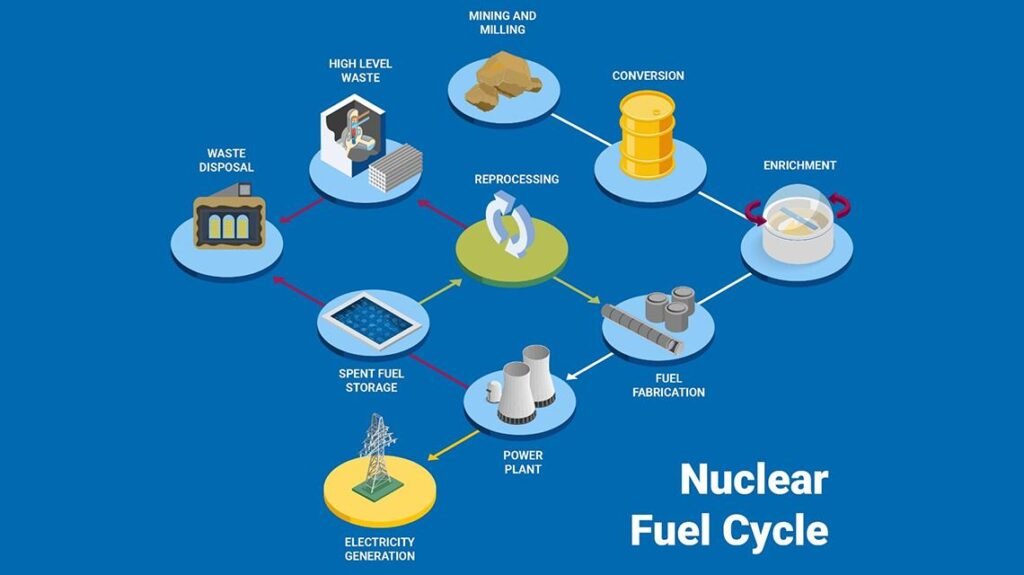
The process involves a sophisticated sequence known as the nuclear fuel cycle, comprising:
Front-End Activities
- Uranium exploration
- Uranium mining
- Milling
- Conversion
- Enrichment
- Fuel fabrication
Reactor Stage
- Electricity generation inside nuclear reactors
Back-End Activities
- Spent fuel management
- Reprocessing
- Waste disposal
- Recycling of usable materials
Understanding this cycle is essential for appreciating the economics and sustainability of nuclear power.
👉 Read our detailed cluster post: Uranium & Nuclear Fuel Cycle
Uranium: The Foundation of Nuclear Power
Without uranium, modern nuclear power would not exist.
Uranium is a naturally occurring radioactive metal found in various parts of the world.
Major uranium-producing countries include:
- Kazakhstan
- Canada
- Australia
- Namibia
- Uzbekistan
The uranium market has gained significant investor attention in recent years as nations revisit nuclear power as a clean energy solution.
Key drivers include:
- Rising electricity demand
- Decarbonisation efforts
- Expansion of nuclear reactor fleets
- Development of Small Modular Reactors (SMRs)
👉 Explore our cluster post: Global Uranium Market and Investment Outlook
Types of Nuclear Reactors
Different reactor technologies are used worldwide.
Pressurised Water Reactors (PWR)
The most widely used reactor design globally.
Boiling Water Reactors (BWR)
Generate steam directly inside the reactor vessel.
Pressurised Heavy Water Reactors (PHWR)
Use heavy water as moderator and coolant.
India has developed significant expertise in PHWR technology.
Fast Breeder Reactors (FBR)
Designed to produce more fissile material than they consume.
Small Modular Reactors (SMRs)
A new generation of reactors offering:
- Enhanced safety
- Lower capital cost
- Modular construction
- Greater deployment flexibility
SMRs are widely regarded as one of the most promising developments in the future of nuclear energy.
Nuclear Energy and Climate Change
Climate change has renewed interest in nuclear power.
Supporters argue that:
- Nuclear energy provides large-scale clean electricity.
- It complements intermittent renewable sources.
- It reduces reliance on fossil fuels.
Critics raise concerns regarding:
- Radioactive waste
- High capital costs
- Construction delays
- Accident risks
Nevertheless, many energy experts view nuclear power as an essential component of a balanced low-carbon energy system.
Nuclear Safety: Lessons Learned
Safety remains central to the nuclear industry’s future.
Major incidents have shaped modern nuclear regulation:
Three Mile Island (1979)
Improved operational procedures and training.
Chernobyl (1986)
Highlighted the consequences of poor reactor design and inadequate safety culture.
Fukushima Daiichi (2011)
Led to significant enhancements in emergency preparedness and plant resilience.
Modern reactors incorporate multiple passive and active safety systems designed to prevent such incidents.
Nuclear Waste Management
One of the most discussed challenges facing nuclear energy is the management of radioactive waste.
Solutions include:
- Interim storage
- Dry cask storage
- Reprocessing
- Deep geological repositories
Advances in reactor technology may further reduce waste volumes and improve fuel utilisation.
While technically manageable, waste disposal remains an important public policy and environmental issue.
Nuclear Power in India
India’s nuclear programme is unique and strategically significant.
The country follows a carefully planned three-stage nuclear development strategy aimed at utilising:
- Natural uranium
- Plutonium-based fast breeder reactors
- Thorium resources
India possesses some of the world’s largest thorium reserves, making long-term nuclear development particularly important.
Key nuclear facilities include:
- Tarapur Atomic Power Station
- Rajasthan Atomic Power Station
- Kakrapar Atomic Power Station
- Kudankulam Nuclear Power Plant
- Narora Atomic Power Station
India continues to expand its nuclear capacity to meet rising electricity demand while reducing carbon emissions.
👉 Read our dedicated cluster post: Nuclear Power in India
Emerging Trends Shaping Nuclear Energy
The nuclear industry is entering a new phase driven by innovation.
Small Modular Reactors (SMRs)
Potentially transformative for remote and industrial applications.
Advanced Reactor Designs
Improved efficiency, safety, and fuel utilisation.
Artificial Intelligence
Enhancing predictive maintenance and operational performance.
Hydrogen Production
Nuclear reactors may play a major role in producing low-carbon hydrogen.
Growing Global Acceptance
Many countries are reconsidering nuclear power as part of their long-term energy strategies.
Opportunities and Challenges Ahead
Opportunities
✔ Reliable low-carbon electricity
✔ Enhanced energy security
✔ Industrial growth and employment
✔ Support for net-zero targets
✔ Development of advanced technologies
Challenges
✔ High upfront investment
✔ Long construction periods
✔ Public perception concerns
✔ Waste management requirements
✔ Regulatory complexities
The future success of nuclear energy will depend on balancing these opportunities and challenges effectively.
Conclusion
Nuclear energy stands at the crossroads of energy security, climate action, and technological innovation. While debates continue over safety, economics, and waste management, the importance of nuclear power in the global energy transition is increasingly difficult to ignore.
As nations seek dependable and low-carbon sources of electricity, nuclear energy is once again gaining prominence. From uranium mining and fuel processing to advanced reactors and India’s ambitious nuclear programme, the sector offers immense opportunities for growth and innovation.
Whether viewed through the lens of science, economics, geopolitics, or sustainability, nuclear energy remains one of the most consequential components of the modern energy landscape.
Related Articles in This Cluster
Uranium & Nuclear Fuel Cycle –
Understand how uranium is mined, processed, enriched, fabricated into fuel, and ultimately used in nuclear reactors.
Global Uranium Market and Investment Outlook
Explore uranium supply-demand dynamics, major producers, pricing trends, and investment opportunities.
Nuclear Power in India
Learn about India’s three-stage nuclear programme, reactor technologies, major power stations, and future expansion plans.
Frequently Asked Questions(FAQs)
Nuclear energy is the energy released from the nucleus of an atom through processes such as nuclear fission. This energy is used to generate heat, produce steam, and ultimately generate electricity.
A nuclear reactor produces heat through controlled nuclear fission. The heat converts water into steam, which drives turbines connected to generators that produce electricity.
Most commercial nuclear reactors use uranium as fuel, particularly the isotope Uranium-235. Some advanced reactors may also utilise plutonium or thorium-based fuel cycles.
Nuclear energy is generally classified as a low-carbon energy source rather than a renewable source because uranium is a finite natural resource. However, advanced fuel cycles may significantly extend fuel availability.
Modern nuclear power plants incorporate multiple layers of safety systems and are subject to strict regulatory oversight. Significant lessons have been learned from past incidents such as Chernobyl and Fukushima.
Key advantages include reliable electricity generation, low greenhouse gas emissions, high energy density, reduced dependence on fossil fuels, and support for energy security.
Challenges include high construction costs, radioactive waste management, lengthy project timelines, and public concerns regarding safety.
The nuclear fuel cycle includes uranium mining, milling, conversion, enrichment, fuel fabrication, reactor operation, spent fuel management, and waste disposal or recycling.
Small Modular Reactors are advanced nuclear reactors designed to be smaller, safer, and more flexible than conventional nuclear power plants. They are considered one of the most promising developments in the future of nuclear energy.
Nuclear power is a key component of India’s long-term energy strategy. It supports energy security, helps reduce carbon emissions, and aligns with India’s unique three-stage programme based on uranium and thorium resources.
Yes. Nuclear power produces very low greenhouse gas emissions during operation and is considered an important technology for achieving global climate and net-zero goals.
The future of nuclear energy is expected to be shaped by advanced reactor technologies, Small Modular Reactors, improved safety systems, artificial intelligence, hydrogen production, and growing global demand for low-carbon electricity.
Explore the Nuclear Energy Knowledge Hub
Primary Cluster Posts
- Uranium & Nuclear Fuel Cycle
- History and Evolution of Nuclear Power
- Global Uranium Market and Investment Outlook
- Nuclear Power in India
- Nuclear Reactor Technologies Explained
- Nuclear Safety and Waste Management
- Nuclear Power and Climate Change
- Thorium: The Fuel of the Future?