Table of Contents
ToggleNuclear Power in India
Coming Soon
India’s growing economy, rising electricity demand, and commitment to reducing carbon emissions have made nuclear power an increasingly important component of the nation’s long-term energy strategy. While coal continues to dominate India’s power generation mix, nuclear energy offers a reliable, low-carbon source of electricity capable of supporting the country’s ambitions for energy security, industrial growth, and sustainable development.
India’s nuclear programme is unique in the world. Built upon decades of scientific innovation and strategic planning, it follows a carefully designed three-stage development pathway aimed at maximising the utilisation of the country’s limited uranium reserves and abundant thorium resources.
From the pioneering efforts of Dr Homi Jehangir Bhabha to the development of indigenous reactor technologies and ambitious future expansion plans, India’s nuclear journey is both fascinating and strategically significant.
This comprehensive article is currently under development and will shortly provide readers with an in-depth exploration of India’s nuclear power sector, its achievements, challenges, and future prospects.
What This Article Will Cover
The Evolution of India’s Nuclear Programme
Origins of India’s atomic energy programme
The vision of Dr Homi Bhabha
Key milestones in nuclear development
Formation of India’s nuclear institutions
India’s Three-Stage Nuclear Power Programme
Stage I: Pressurised Heavy Water Reactors (PHWRs)
Stage II: Fast Breeder Reactors (FBRs)
Stage III: Thorium-based reactors
Strategic importance of India’s thorium reserves
Major Nuclear Power Plants in India
Tarapur Atomic Power Station
Rajasthan Atomic Power Station
Kakrapar Atomic Power Station
Narora Atomic Power Station
Kaiga Generating Station
Kudankulam Nuclear Power Plant
Other operational and upcoming facilities
Reactor Technologies Used in India
Pressurised Heavy Water Reactors (PHWRs)
Light Water Reactors (LWRs)
Fast Breeder Reactors
Advanced Heavy Water Reactors (AHWRs)
Future reactor technologies
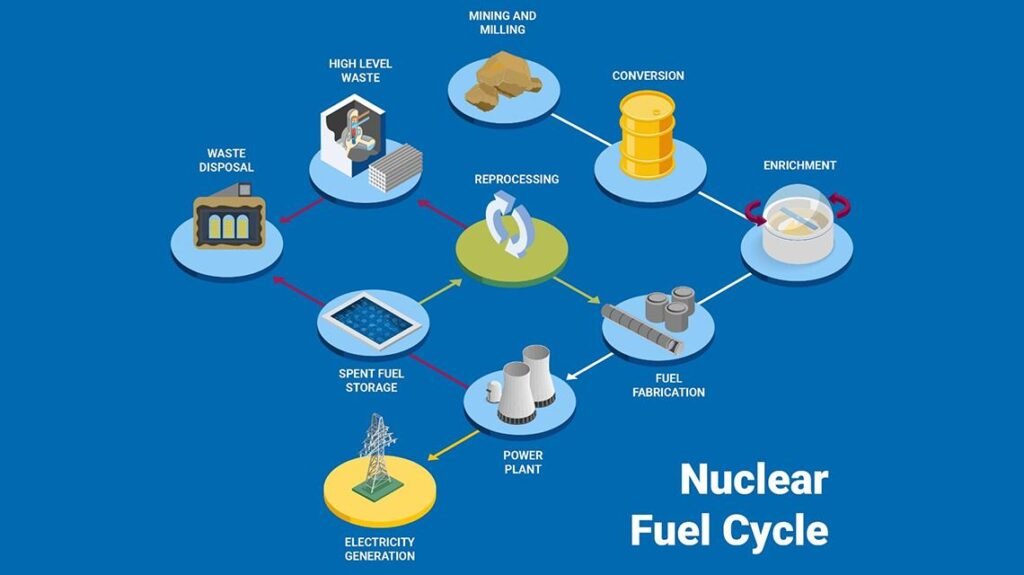
India’s Nuclear Fuel Cycle
Uranium exploration and mining
Fuel fabrication and enrichment
Reactor operations
Spent fuel management and reprocessing
Nuclear Safety and Regulatory Framework
Safety standards and oversight
Role of the Atomic Energy Regulatory Board (AERB)
Lessons from global nuclear incidents
Emergency preparedness and public safety
Nuclear Power and India’s Energy Transition
Contribution to electricity generation
Role in reducing carbon emissions
Complementing renewable energy sources
Supporting long-term energy security
International Cooperation and Strategic Partnerships
India-US Civil Nuclear Agreement
Cooperation with Russia, France, and other nations
International Atomic Energy Agency (IAEA) safeguards
Global partnerships in nuclear technology
Future Expansion Plans
New reactor projects
Capacity addition targets
Small Modular Reactors (SMRs)
Thorium-based energy development
Nuclear power in India’s net-zero ambitions
Why Nuclear Power Matters for India
India is one of the world’s fastest-growing major economies and among the largest consumers of energy. Meeting future electricity demand while reducing dependence on fossil fuels presents a significant challenge.
Nuclear power offers several advantages:
Reliable round-the-clock electricity generation
Low greenhouse gas emissions
Enhanced energy security
Reduced dependence on imported fossil fuels
Long-term utilisation of domestic thorium resources
As India pursues its climate commitments and development goals, nuclear energy is expected to play an increasingly important role in the nation’s energy mix.
Looking Ahead
India’s nuclear power sector stands at an important crossroads. Advances in reactor technology, growing electricity demand, increasing focus on clean energy, and the country’s unique thorium resources create significant opportunities for future growth.
The forthcoming article will examine these developments in detail, offering readers a comprehensive understanding of India’s nuclear journey and its role in shaping the country’s energy future.
Stay tuned for the complete article.