Sports

Advanced Turfgrass Science

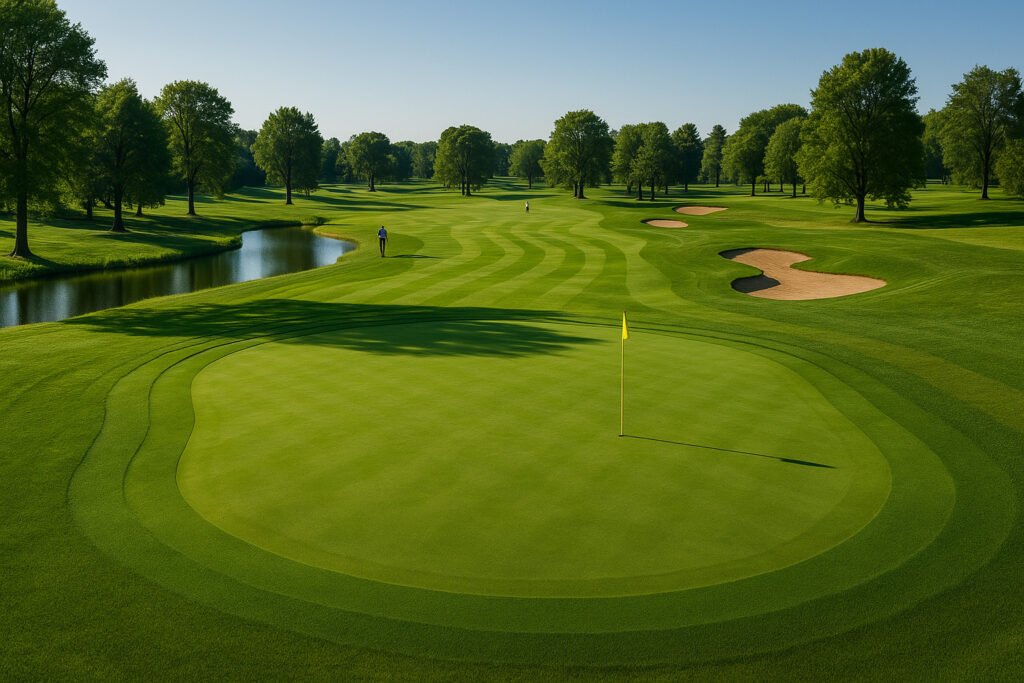
Introduction Turfgrass is the living foundation of every golf course, influencing playability, aesthetics, and overall course performance. Unlike ordinary lawn grass, turfgrass used in golf environments is scientifically selected and meticulously maintained to deliver resilience, density, and smoothness.In this post, we explore the advanced science behind turfgrass—its biology, how it interacts with soil, how it responds to stress, and why it stands apart from other forms of grass surfaces. This guide forms an essential component of golf course management and links back to the broader heritage and evolution of the game. What Is Turfgrass? Turfgrass refers to specific species of grasses cultivated to form dense, durable, fine-textured surfaces capable of withstanding foot traffic, mowing, and environmental stress. It is designed to achieve: Smooth and uniform playing surfaces High resilience to wear Rapid recovery after divots Aesthetic consistency across the course Golf courses typically use warm-season or cool-season turfgrass varieties depending on climate, soil profile, and course design requirements. How Turfgrass Is Different from Other Turf     Golf Turfgrass Ordinary Lawn / Park Turf Purpose Precision playability for golf Aesthetic greenery or recreational areas Density Highly dense, fine-leaved Medium density Mowing Height Extremely low (3–15 mm) Higher (20–40 mm or more) Stress Tolerance Very high; bred for wear and drought Moderate Species Used Bermuda, Bentgrass, Zoysia Ryegrass, Fescue, Buffalo, etc. Maintenance Level Intensive: fertilisation, irrigation, aeration, topdressing Minimal to moderate Root System Deep, fibrous, highly developed Shallower in comparison In short, golf turfgrass is a scientific, high-performance surface engineered for the sport. Diagram Explaining Turfgrass Science Concepts TURFGRASS SCIENCE: THE FIVE ESSENTIAL COMPONENTS Turfgrass BiologyUnderstanding species, growth habits, and plant structure. Soil InteractionHow turfgrass roots interact with soil health, nutrients, moisture, and pH. Stress FactorsEffects of heat, drought, shade, pests, weeds, and diseases. Management PracticesMowing height, irrigation schedules, fertilisation, aeration, and recovery routines. Course Performance OutcomesSpeed, smoothness, colour, density, resilience, and overall playability. TURFGRASS SCIENCE: THE FIVE ESSENTIAL COMPONENTS Lorem ipsum dolor sit amet, consectetur adipiscing elit. Ut elit tellus, luctus nec ullamcorper mattis, pulvinar dapibus leo.

Advanced Turfgrass Science Read More »

GPS Technology in Modern Golf: How Smart Carts Are Changing the Game

Introduction Golf has always balanced tradition with innovation, and nowhere is this blend more striking today than in the rise of GPS-enabled golf carts. What was once a simple vehicle for moving players from tee to tee has evolved into a sophisticated on-course assistant. From improving pace of play to offering precise shot data, GPS carts are transforming the way modern golfers experience the game. This post explores how these smart carts work, why golf clubs worldwide are investing in them, and what the future holds for cart-based technology. Quick FAQs: GPS Smart Carts Explained 1. What is a GPS smart cart in golf?A GPS smart cart is a golf cart fitted with digital yardage displays, course maps, and tracking tools that help golfers play more efficiently. 2. How does GPS technology help golfers?It provides accurate distances to greens, hazards, and fairway points, reducing guesswork and improving shot-making decisions. 3. Are GPS smart carts easy to use?Yes. They feature simple, intuitive touch screens that even non–tech-savvy players can use comfortably. 4. Does GPS technology speed up the round?Absolutely. Clear yardages and smoother navigation help golfers play faster, improving the overall pace of play. 5. Do all golf courses offer GPS smart carts?Not all, but many modern and premium courses have adopted them — and the number is growing quickly. What GPS-Enabled Golf Carts Actually Do At their core, GPS golf carts use satellite-driven positioning systems to map the golf course with remarkable accuracy. But their capabilities extend far beyond basic location tracking. Most modern GPS carts offer: • Real-time hole maps with distances to the green, hazards, and lay-up points• Dynamic yardages that adjust based on your exact position• Cart-path navigation to avoid restricted areas• Course messaging for weather alerts or pace reminders• Score tracking for players• Pro tips on challenging holes In many clubs, GPS carts now function as a digital caddie, helping golfers make smarter decisions without slowing down play. Fleet Management Systems: The Technology Behind the Scenes For golf course operators, GPS systems are nothing short of revolutionary. Powerful fleet-management dashboards allow staff to: ✔ Track every cart in real timeManagers can see cart locations across all 18 holes at a glance.This reduces delays and improves safety. ✔ Prevent misuse of restricted areasCarts can be programmed to slow down or stop if they approach:• greens• bunkers• lakes• maintenance zones ✔ Monitor battery health and diagnosticsElectric fleets benefit from alerts for battery drain, overheating, or mechanical faults. ✔ Improve pace-of-play managementIf a group falls behind, staff can send a message directly to the cart screen. ✔ Integrate with tee-sheet and booking systemsThis allows seamless coordination between check-in, rentals, and on-course monitoring. Fleet management has become crucial for premium courses, and clubs using these systems often report improved operational efficiency and higher customer satisfaction. How GPS Carts Improve Pace, Accuracy, and Club Selection GPS technology fundamentally enhances decision-making on the course. a) Faster pace of play Players no longer walk around searching for distance markers, guessing yardages, or debating club choice.GPS screens show:• distance to the pin• distance to the front/back of the green• hazard distances• driving-zone boundaries This significantly reduces decision time. b) More accurate shots Instead of relying on estimated yardage plates, golfers receive precise, real-time distances — improving consistency and confidence. c) Better club selection Because GPS identifies landing zones and potential trouble areas, players choose safer, smarter clubs — especially beneficial for mid- and high-handicap golfers. The result is a round that’s not only quicker but more enjoyable, reducing stress and enhancing shot-making. Why Major Golf Courses Worldwide Use GPS Carts Top-tier golf clubs across the US, UK, Europe, Australia, and Asia have embraced GPS-enabled carts for several reasons: ✔ Enhanced player experienceModern golfers expect technology-driven convenience — especially at resort and championship courses. ✔ Increased pace of playThis allows clubs to accommodate more tee times and reduce bottlenecks. ✔ Reduced maintenance costsGPS restrictions prevent damage to greens, bunkers, and sensitive turf areas. ✔ Real-time communicationsWeather warnings, frost delays, and pace reminders can be delivered instantly. ✔ Competitive advantageClubs offering GPS-enabled carts market themselves as premium, future-ready, and golfer-friendly. In many countries, resorts now treat GPS carts as a standard feature, much like high-quality rental clubs. Modern Golfers Future Innovations: What’s Next for Smart Golf Carts? The future of GPS cart technology is promising and rapidly evolving beyond simple distance readings. a) AI-driven shot recommendationsCarts may soon analyse your previous shots and suggest ideal club choices. b) Swing sensors integrated into steering wheelsReal-time swing feedback could become a standard feature. c) Augmented Reality (AR) course overlaysGolfers could see slope maps, wind impact, and ideal aiming lines on screen. d) On-cart video replayImagine having your last drive recorded and viewable instantly. e) Integration with wearable devicesSmartwatches and clubs may sync with the cart for health and swing analytics. f) Autonomous cartsSelf-driving golf carts — already in pilot testing — may become common within years. As technology advances, GPS carts are likely to become the central hub of a golfer’s on-course digital experience. Conclusion GPS-enabled golf carts have redefined the way modern players navigate and enjoy the course. With real-time distances, intelligent fleet management, and the rise of AI-driven features, smart carts are no longer a luxury — they are rapidly becoming an essential part of golf’s digital transformation. Golf’s Digital Transformation FAQs What exactly is a golf GPS smart cart? A golf GPS smart cart is a traditional golf cart fitted with advanced GPS tracking, digital yardage displays, course maps, and real-time scoring features. It helps golfers make informed decisions by offering precise distance information and strategic insights during a round. How does GPS technology improve my game? GPS technology provides accurate yardages to hazards, greens, and fairway landmarks, allowing you to plan shots with confidence. It reduces guesswork, speeds up play, and ultimately helps you make smarter, more consistent decisions on the course. Do all golf courses support GPS-enabled smart carts? Not yet. While many modern and premium courses have adopted GPS smart carts,


GPS Technology in Modern Golf: How Smart Carts Are Changing the Game Read More »

Iconic golf course set in a dramatic natural landscape representing global golf destinations

World’s Top Golf Course Destinations

Introduction Golf is more than a sport; it is a journey through some of the world’s most remarkable landscapes. From rugged coastal links and rolling green hills to desert backdrops and pine-lined mountain courses, each destination offers a distinct character and playing experience. Over time, the game has evolved beyond the scorecard, becoming closely intertwined with travel, culture and leisure. As explored in Golf: The Complete Essence of Its Origins, Tradition, Passion & Modern Evolution, modern golfers increasingly seek destinations where the quality of the course is matched by its surroundings. As golf has evolved into a global lifestyle experience, resort-led destinations have played an increasingly important role in shaping where and how the modern game is played. This article explores some of the world’s leading golf course destinations—places that continue to attract professionals and enthusiasts alike, not only for the challenge they present, but for the stories, settings and experiences that define them. 1. Scotland – The Birthplace of Golf If golf has a spiritual home, it is Scotland. The game took shape here over five centuries ago, and its traditions continue to resonate across windswept links courses shaped by nature rather than design. Must-Play Courses: St Andrews Links (Old Course): Widely regarded as The Home of Golf, this historic course remains a pilgrimage for golfers around the world. Royal Dornoch: A remote and revered links, celebrated for its stunning coastal setting and uncompromising purity of play. Why Visit:Scotland offers an unmatched blend of heritage, challenge and atmosphere. Unpredictable weather tests shot-making and judgement, while local hospitality and deep-rooted golfing culture make every round memorable. 2. United States – Diversity and Grandeur With more than 15,000 golf courses, the United States offers one of the most diverse golfing landscapes in the world. From historic private clubs to striking coastal and desert layouts, the country caters to golfers of every preference and playing style. Must-Play Courses: Augusta National (Georgia): Home of The Masters, this iconic course occupies a unique place in golf’s modern history. Pebble Beach Golf Links (California): Renowned for its dramatic coastal setting, where the Pacific Ocean defines both scenery and challenge. Pinehurst No. 2 (North Carolina): A timeless design that combines strategic complexity with understated elegance. Why Visit:Unmatched variety, world-class facilities and a calendar of iconic tournaments make the United States a cornerstone of the global golfing landscape. 3. Ireland – Where Nature Meets Challenge Ireland’s golfing identity is defined by lush countryside, rugged coastal cliffs and naturally demanding terrain. The courses here are shaped as much by wind and weather as by architecture, creating rounds that reward imagination and resilience. Must-Play Courses: Royal County Down: Regularly ranked among the world’s finest courses, set against the dramatic backdrop of the Mourne Mountains. Ballybunion: A classic links experience marked by rolling dunes, strong winds and an uncompromising test of shot-making. Why Visit:Ireland combines spectacular scenery and challenging golf with a welcoming culture, where post-round tradition often continues in the warmth of a local pub. 4. Australia – Beauty Down Under Golf in Australia blends striking natural settings with thoughtful course design, resulting in layouts that are both visually impressive and technically demanding. From parkland classics to modern coastal links, the country offers a broad and engaging golfing experience. Must-Play Courses: Royal Melbourne: Highly regarded for its firm fairways, fast greens and strategic design, it remains a favourite among purists and professionals alike. Barnbougle Dunes (Tasmania): A modern links masterpiece, seamlessly shaped into coastal dunes along one of Australia’s most dramatic shorelines. Why Visit:Australia offers a combination of sunlit landscapes, accessibility and a relaxed golfing culture, making it an appealing destination for golfers seeking quality without formality. 5. Japan – Tradition Meets Modern Design Golf in Japan reflects a distinctive balance between precision, discipline and cultural refinement. Courses are known for meticulous maintenance and thoughtful presentation, where attention to detail extends well beyond the fairways and greens. Must-Play Courses: Kawana Hotel Golf Course (Fuji Course): Celebrated for its dramatic coastal setting and uninterrupted views of Mount Fuji, offering a memorable blend of scenery and challenge. Naruo Golf Club: A traditional layout renowned for impeccable conditioning, structured play and adherence to established golfing etiquette. Why Visit:Japan offers exceptional course standards, a deep respect for the game’s traditions and unmatched hospitality, creating an experience that is ordered, rewarding and uniquely cultural. 6. South Africa – Where Golf Meets the Wild South Africa offers a golfing experience that is both luxurious and deeply connected to nature. Here, world-class courses are often set against dramatic landscapes, where wildlife and natural beauty form part of the backdrop rather than a distant view. Must-Play Courses: Leopard Creek Country Club: Located on the edge of Kruger National Park, this celebrated course combines championship-level design with views of surrounding wilderness. Fancourt Links: A Gary Player–designed masterpiece, widely regarded as one of the finest links-style courses outside Europe. Why Visit:South Africa delivers a rare mix of exceptional golf, high-quality resorts and unforgettable natural surroundings, with opportunities for adventure extending well beyond the fairways. 7. United Arab Emirates – Golf in the Desert The United Arab Emirates has redefined golf through vision, investment and design, transforming arid desert terrain into meticulously crafted courses that now feature prominently on the global golfing calendar. Must-Play Courses: Emirates Golf Club (Dubai): The first all-grass golf course in the Middle East and a long-standing host of the Dubai Desert Classic, it remains a landmark in the region’s golfing growth. Yas Links (Abu Dhabi): A striking layout that blends Arabian surroundings with links-inspired design elements and strategic shot-making. Why Visit:The UAE offers year-round playing conditions, high-end facilities and a contemporary golfing environment, making it a distinctive destination within the modern game. 8. New Zealand – Adventure and Serenity New Zealand appeals to golfers who value tranquillity, space and dramatic natural scenery. Its courses are often set in remote locations, where thoughtful design enhances rather than competes with the surrounding landscape. Must-Play Courses: Cape Kidnappers: Spectacularly positioned atop sheer cliffs overlooking Hawke’s Bay, offering

World’s Top Golf Course Destinations Read More »

The Sporting Arena

The Sporting Arena brings you premium, in-depth coverage of golf, cricket, and badminton—sports where skill, spirit, and stories intersect. From global tournaments to India’s rising stars, this pillar post introduces each sub-category with insight, style, and a passion for sport.

The Sporting Arena Read More »