Table of Contents
ToggleIntroduction: The Art and Purpose Behind Golf Course Design
Golf course design is a blend of science, imagination, and respect for nature. Every fairway, bunker, water hazard, and green tells a story shaped by the land beneath it and the architect who interprets it. A well-designed golf course is not just a playground for the sport—it is a living landscape that challenges ability, sharpens strategy, and rewards thoughtful play.
This post explores how courses are sized, shaped, and crafted to create memorable golfing experiences that stand the test of time.
What Makes a Golf Course? Understanding Its Core Elements
A golf course is more than 18 holes arranged across open land. It is a carefully planned environment built from essential components:
Tees – Starting points offering varying difficulty
Fairways – Primary pathways encouraging precision and strategy
Roughs – Punishing areas meant to penalise inaccuracy
Hazards – Bunkers, water bodies, and natural obstacles
Greens – Finely tuned surfaces designed for speed and subtle breaks
Surrounding Landscape – Trees, contours, wind channels, and terrain features
Together, these elements create the character of a course—its rhythm, difficulty, charm, and fairness. A strong layout balances all these features without overwhelming the golfer.
The R&A – The Golf Course: Principles and Guidelines https://www.randa.org/en/pace-of-play/manual/3-the-golf-course
How Big Is a Golf Course? The Numbers Behind the Landscape
Though golf courses may appear vast, their actual size follows practical design rules. The average 18-hole course covers 120–200 acres, depending on terrain and vegetation.
A typical breakdown includes:
Tees and fairways: ~40% of the total area
Roughs and natural zones: ~30%
Greens and surrounds: ~5%
Hazards: ~5–10%
Clubhouse, paths, facilities: ~10–15%
Yet size alone does not dictate quality. Some famous courses occupy less than 130 acres but deliver unforgettable challenge and beauty through clever routing and efficient use of space.
Types of Golf Course Layouts: From Links to Parkland and Beyond
The personality of a course is shaped by its location and environment. Most layouts fall into several broad categories:
Links Courses
The most ancient form—built on coastal dunes, exposed to wind, with hard-running fairways and natural hazards.
Parkland Courses
Tree-lined, manicured layouts with lush fairways and well-defined roughs—common in inland areas.
Heathland Courses
Open layouts with heather, gorse, and sandy soil—combining elements of links and parkland.
Desert Courses
Architecturally dramatic, set within arid landscapes with green fairways framed by sand and rock.
Championship Courses
Designed to test elite players—longer yardages, strategic bunkering, and demanding greens.
Every type offers its own style, from strategic decision-making to aesthetic appreciation.
The Architecture of Challenge: How Designers Shape Strategy
Golf architects think like storytellers. Their job is to guide players across the land in a way that tests decision-making, ball control, and creativity.
Key strategic principles include:
📌 Routing
Choosing the path each hole takes, respecting wind direction, topography, sunlight, and flow.
📌 Risk–Reward Balance
Providing options: the brave play gains advantage, the cautious play gains safety.
📌 Natural Integration
Using existing contours, trees, ridges, and water bodies to form hazards naturally—not artificially.
📌 Green Complexes
Designing greens with slopes, tiers, and subtle breaks that reward thoughtful approach shots.
📌 Bunker Positioning
Bunkers are never random—they guide play, guard landing zones, and shape both beauty and challenge.
A well-designed course makes the golfer think from tee to green without feeling tricked or overwhelmed.
USGA Insights into Golf Course Design https://www.usga.org/course-care.html
Signature Courses and Their Scale: Lessons from Iconic Designs
Some golf courses are known not only for their difficulty but for the brilliance of their design and use of space:
St Andrews – Old Course, Scotland
The birthplace of golf and perhaps the finest example of natural links design.
Pebble Beach Golf Links, USA
Dramatic coastal holes that rely on cliffs, wind, and precise shot demands.
Augusta National, USA
Known for its immaculate conditioning, elevation changes, and perfectly crafted strategy on every hole.
Royal Melbourne, Australia
A shining example of how bunkering and fast greens can elevate strategic play.
Each of these iconic courses teaches us that scale is secondary—design intelligence always triumphs over land size.
USGA Insights into Golf Course Design https://www.usga.org/course-care.html
Golf Digest: Leading Golf Course Architects Worldwide https://www.golfdigest.com/story/worlds-75-best-golf-course-architects
Modern Trends in Course Design: Sustainability, Technology, and Playability
Today’s designers face new priorities:
🌱 Sustainability
Reduced water consumption, drought-friendly grasses, and protecting natural ecosystems.
🔧 Technology Integration
GPS mapping, LiDAR surveys, and simulation tools help architects model holes with millimetre precision.
🎯 Playability for All Levels
Courses now aim to challenge advanced players while remaining enjoyable for beginners.
Multi-tee systems and fairer landing areas reflect this shift.
♻ Renovation of Classics
Instead of building new courses, many architects focus on restoring historic layouts while preserving tradition.
Modern design is a marriage of respect for nature, heritage, and inclusivity.
8. The Subtle Beauty of Golf Course Aesthetics: Beyond the Scorecard
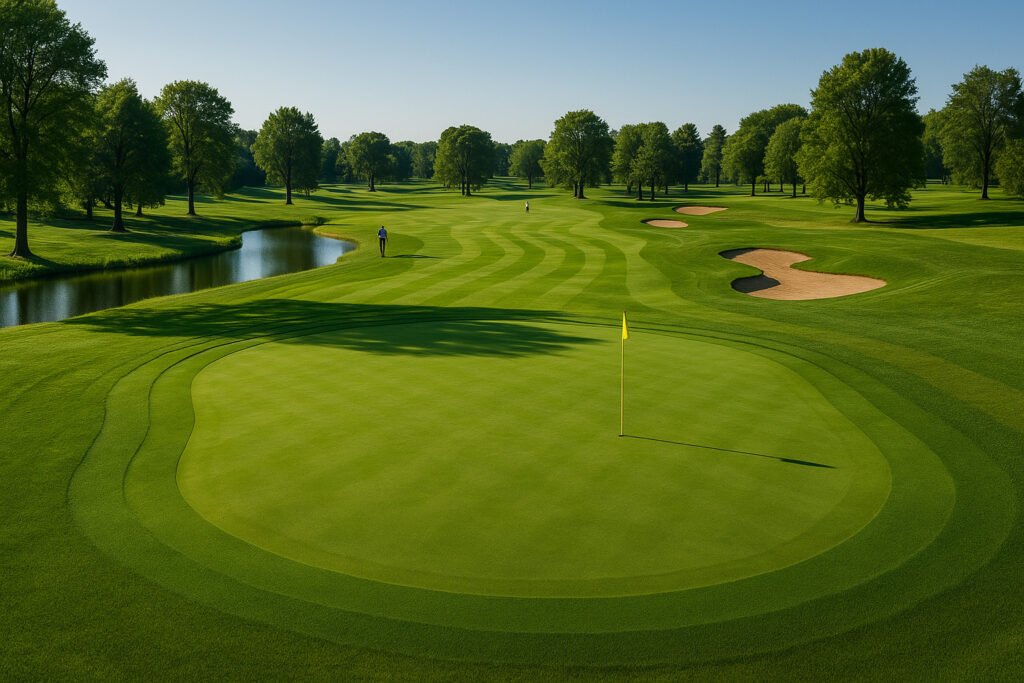
A golf course is a visual poem. Its beauty is not accidental—it is curated:
The contrast between sand and grass
The framing of fairways using trees or dunes
The harmony of colours across seasons
The choreography of shadows during sunrise and sunset
The flow of water features that reflect the environment
These aesthetic elements elevate the golfing experience, transforming a simple sporting ground into a sanctuary of calm and inspiration.
USGA Green Section – Sustainable Golf Course Care & Management https://www.usga.org/content/usga/home-page/course-care.html USGA
Golf Course Architecture Magazine – Design Trends & Insights https://www.golfcoursearchitecture.net/
The Subtle Beauty of Golf Course Aesthetics: Beyond the Scorecard
A golf course is a visual poem. Its beauty is not accidental—it is curated:
The contrast between sand and grass
The framing of fairways using trees or dunes
The harmony of colours across seasons
The choreography of shadows during sunrise and sunset
The flow of water features that reflect the environment
These aesthetic elements elevate the golfing experience, transforming a simple sporting ground into a sanctuary of calm and inspiration.
What Every Golfer Should Learn from Good Course Design
A golfer who understands course design plays smarter.
Design teaches us:
When to take risks
When to stay conservative
How slopes and winds influence shots
How architects “invite” and “punish” through layout
Why precision often beats power
Awareness of design converts every round into a richer, more strategic experience.
Conclusion: Design as the Soul of the Game
From the rugged dunes of Scotland to today’s technologically refined landscapes, golf course design has always shaped how the game is played and enjoyed.
A great course engages the mind as much as the body, blending challenge, beauty, and storytelling into every hole.
To walk a well-designed course is to walk through the vision of its architect—a journey of discipline, creativity, and timeless appeal.
FAQs
A golf course is shaped by natural terrain, soil type, wind direction, vegetation, water sources, and available land area. Modern architects also consider sustainability, strategy, player experience, and maintenance requirements when designing a layout.
Most 18-hole golf courses need between 120 and 200 acres. However, the exact area depends on the design style, environmental constraints, and whether the course is built on flat land, hills, dunes, or woodland.
A standard layout consists of tees, fairways, roughs, bunkers, water hazards, greens, and surrounding landscape features such as trees, ridges, and slopes. These components together shape strategy, difficulty, and flow.
The most common course types are links, parkland, heathland, desert, and championship designs. Each type has its own character—links are natural and wind-exposed, while parkland courses are tree-lined and landscaped.
Strategy is introduced through clever routing, risk–reward landing areas, bunker placement, green contours, and use of natural features. Designers encourage golfers to think, choose lines carefully, and balance aggression with caution.
Difficulty depends on hole length, hazards, green speed, elevation changes, wind patterns, and how tightly the course punishes mistakes. Championship courses are intentionally built to test advanced players.
Iconic courses are admired for their strategic brilliance, natural integration, visual beauty, and memorable hole designs. They use contours, angles, and natural landscapes to create unique playing experiences.
Contemporary designs prioritise sustainability, reduced water use, eco-friendly grasses, player inclusivity, and digital tools like GPS mapping and LiDAR. Many classic courses are also being restored rather than rebuilt.
No. Climate, culture, terrain, and land availability significantly influence regional design. For example, desert courses rely on irrigation and contrast, while Scottish links embrace rugged natural dunes.
Understanding design principles helps players read fairways, choose safer or more aggressive routes, interpret green slopes, and make better strategic decisions—ultimately improving performance.