Table of Contents
Toggle1. Introduction – A Village and a Lineage
High in the Kumaon hills of Uttarakhand, not far from the sacred temple complex of Jageshwar, lies the village of Danya — a place whose history is intertwined with the traditions, learning and public life of the region.Among the families associated with Danya, the Joshis of Danya occupy a distinctive place in local memory and community history. Their lineage is traditionally traced to learned Brahmin ancestors who came to Kumaon centuries ago, with later generations becoming associated with scholarship, astrology, temple administration and service under the rulers of Kumaon.The name of Shri Raghunath Joshi is particularly significant in this tradition. Accounts of the family describe him as a scholar of astrology who had studied in Kashi and who, during the period of the Chand rulers, was granted Danya as a jagir. He is also remembered for his association with the administration of the revered Jageshwar Temple. In succeeding generations, members of the family are said to have served in positions of responsibility, including in the royal establishment at Almora.
Yet the story of the Joshis of Danya is not important merely because of titles, offices or ancestry. It reflects a wider feature of Himalayan society — the close relationship between learning, faith, community responsibility and governance. Families such as these often served as links between the spiritual, intellectual and administrative life of the region.
For me, this history also carries a deeply personal meaning. Danya is not simply a place mentioned in an old genealogical account; it is the village from which my own family traces its roots. In revisiting its story, I am therefore exploring both a part of Kumaon’s history and a part of my own inheritance.
This article attempts to bring together the available historical references, community accounts and family traditions connected with the Joshis of Danya, while placing their story within the broader historical and cultural setting of Kumaon.
Explore the Danya Joshi Family Tree
The historical story of the Joshis of Danya is complemented by a separate, evolving family genealogy.
Explore: The Danya Joshi Family Tree: Generations, Branches and a Living Genealogy
This family tree is being expanded and corrected over time with contributions from members of the wider family.
2. Kumaon: The Historical Setting
To understand the story of the Joshis of Danya, it is important to first understand the wider historical world of Kumaon in which the family lived and served.
Kumaon, now part of Uttarakhand, has for centuries been a region where political authority, religious institutions and scholarly traditions developed closely alongside one another. Its mountain geography created relatively distinct centres of settlement and culture, while important temples and pilgrimage routes gave the region a strong spiritual identity.
Among the most influential rulers of Kumaon were the Chand kings, who established and expanded their authority across the region over several centuries. Their rule contributed to the development of administrative centres, temple patronage and networks of learned families who served in religious, scholarly and governmental roles.
A major turning point came when the Chand rulers shifted their principal seat of power to Almora, which emerged as an important political and cultural centre of Kumaon. From there, the royal establishment depended upon officials, scholars, advisers, priests and administrators drawn from respected families across the region.
In such a setting, learning carried practical as well as intellectual value. Knowledge of Sanskrit, astrology, religious traditions, administration and customary practices could bring individuals and families into positions of influence and responsibility. The boundaries between scholarship, faith and public service were often closely connected.
Temples too were not merely places of worship. Major religious centres such as Jageshwar also formed part of the social and cultural life of the region. Their administration required organisation, trust and the participation of individuals familiar with both religious custom and local governance.
It was within this broader world — shaped by the Chand rulers, the growing importance of Almora, the sacred presence of Jageshwar and the respected place of learning in public life — that the lineage associated with the Joshis of Danya came to prominence.
Their story therefore belongs not only to family genealogy, but also to the larger history of Kumaon itself.
3. The Joshi Lineages of Kumaon
The Joshis of Danya formed part of a much wider tradition of learned Joshi families across Kumaon. Historical and community accounts refer to several distinct branches, often identified by the villages or localities with which they became associated.
Among the better-known lineages were the Joshis of Jhijar, Galli, Shela Khola, China Khan and Gangoli Haat, alongside the Joshis of Danya. Different branches developed their own genealogical traditions and associations with scholarship, astrology, royal administration and public service.
The Joshis of Galli, for example, are traditionally associated with ancestors who came to Kumaon from Kannauj and served as royal astrologers, while accounts of the Jhijar Joshis also connect members of that lineage with positions of considerable influence in the courts of Kumaon.
This wider context is important. The present article focuses on the Joshis of Danya because of my own family lineage and personal connection with the village, rather than because Danya alone represents the history of the Joshi community of Kumaon. The histories of the other Joshi lineages are equally deserving of preservation and, perhaps, separate exploration in future articles.
4. The Early Roots of the Danya Joshis
The traditional account of the Joshis of Danya reaches back several centuries and begins before the family became associated with the village from which it later took its name.
Community histories trace the lineage to learned Brahmin ancestors who came to Kumaon from the plains of northern India. One early figure remembered in these accounts is Shri Niwas Dwivedi, associated with the Upamanyu gotra. Over succeeding generations, members of the family became known for scholarship, particularly in fields such as Sanskrit learning and astrology.
A significant stage in this family tradition concerns the adoption of the surname Joshi. The name is closely associated in northern India with jyotisha — the traditional study of astronomy, astrology and calendrical calculation. According to the preserved family account, a descendant pursued advanced learning in Kashi, or Varanasi, one of the great centres of Sanskrit scholarship, and the family subsequently came to be identified by the name Joshi.
This association with learning is important because scholarship in pre-modern Kumaon was not confined to religious study alone. Knowledge of astrology, ritual practice, calendars and Sanskrit texts could carry considerable social importance and often brought learned families into contact with royal courts, temples and administrative institutions.
By the sixteenth century, the lineage had become firmly connected with Kumaon. It is within this period that Shri Raghunath Joshi emerges as the central figure in the recorded tradition of the family. His association with the Chand rulers, the grant of Danya and his connection with Jageshwar would establish the identity by which succeeding generations came to be known — the Joshis of Danya.
The early history of the family should, however, be approached with some care. As with many genealogical traditions extending several centuries into the past, parts of the narrative have survived through community records and inherited family memory rather than through a continuous archive of contemporary documents.
That does not diminish their cultural importance. Such traditions provide valuable insight into how families understood their origins, occupations, social roles and connection with the wider history of Kumaon.
5. Possible Western Indian Connections
The wider history of Kumaoni Brahmin migration also points towards connections with western India. Community traditions record that a number of Brahmin families who later settled in Kumaon had earlier associations with regions corresponding to present-day Maharashtra, Karnataka, Gujarat and Rajasthan.
In some genealogical accounts, families are said to have moved from the Konkan region towards centres such as Kannauj and subsequently into the Himalayan regions as political circumstances changed over time. Such movements would not have been unusual in periods marked by warfare, shifting kingdoms, changing centres of learning and the search for new patronage.
The surname Joshi itself is widely found across Maharashtra, Gujarat, Rajasthan and northern India. Its presence in different regions reflects its association with jyotisha — the traditional scholarly practice of astronomy, astrology and calendrical calculation — rather than descent from a single common ancestral family.
Whether the ancestors of the Joshis of Danya followed such a western Indian route before reaching Kumaon cannot presently be established with certainty. The possibility, however, forms part of the broader historical context in which the movement of learned Brahmin families across India may be understood.
For this reason, the western Indian connection is best regarded as an important strand of community tradition and historical possibility, rather than as a conclusively documented stage in the genealogy of the Danya lineage.
6. Shri Raghunath Joshi and the Grant of Danya
The history of the Danya lineage becomes more clearly defined with the figure of Shri Raghunath Joshi, who occupies a central place in the traditional account of the family.
Raghunath Joshi is remembered as a learned scholar of astrology who had studied in Kashi (Varanasi), one of the most important centres of Sanskrit learning in India. His scholarship appears to have brought him into contact with the ruling establishment of Kumaon during the period of the Chand dynasty.
According to community and genealogical accounts, Raghunath Joshi was granted the village of Danya as a jagir. In the political system of the time, a jagir was generally a grant of land or revenue rights made by a ruler in recognition of service, responsibility or position. The grant therefore suggests that Raghunath Joshi enjoyed a degree of trust and standing within the regional administration.
It was from this association with the village that the family came to be identified as the Joshis of Danya. Over time, the place-name became more than a geographical description; it became an important marker of lineage and identity.
The traditional narrative also links Raghunath Joshi with the administration of the Jageshwar Temple complex, one of the most revered religious centres of Kumaon. If this responsibility is understood in the context of the period, it would have involved not merely ritual association but also questions of organisation, local authority and stewardship.
The story of Raghunath Joshi therefore marks a significant transition in the family’s history. Earlier traditions emphasise scholarship and migration; with Danya, the lineage becomes rooted in a specific place and increasingly associated with public responsibility, religious institutions and the political life of Kumaon.
For succeeding generations, Danya would remain the name by which this branch of the Joshi family was remembered — linking ancestry, place and identity across centuries.
7. The Connection with Jageshwar
The association of the Joshis of Danya with Jageshwar forms one of the most meaningful strands in the family’s remembered history.
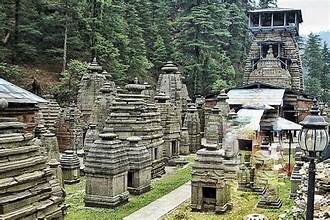
Situated only a short distance from Danya, Jageshwar has for centuries been one of Kumaon’s most important centres of Shiva worship. Its remarkable cluster of ancient stone temples, set amid deodar forests and Himalayan surroundings, has made it not only a place of pilgrimage but also an enduring symbol of the spiritual and cultural heritage of the region.
According to the traditional account of the Danya lineage, Shri Raghunath Joshi was entrusted with responsibilities connected with the management of the Jageshwar Temple after receiving Danya as a jagir. Such an association would have linked the family closely with one of the region’s most respected religious institutions and may help explain why the relationship between Danya and Jageshwar remained significant across succeeding generations.
That connection also survives in my own family memory.
My father, Nand Kishor Joshi, was the son of Jai Dutt Joshi, who in turn was the son of Rudra Dutt Joshi. I was told within the family that Rudra Dutt Joshi was blind, yet played an important role in assisting with repairs and restoration work at Jageshwar Temple. According to the recollections passed down to me, he contributed both financially and through the organisation of physical assistance required for the work.
For a man living in a Himalayan village at that time, such support would have represented a considerable personal commitment. The family tradition further recalls that, in recognition of his contribution and sacrifice, he was accorded a special privilege or consideration at the temple. Members of succeeding generations of the family are also remembered as having received that privilege for some time thereafter.
The precise documentary details of this episode may now be difficult to recover, and it is therefore best regarded as part of the family’s inherited oral history. Yet such memories are important. They reveal how relationships between a village, a family and a sacred institution could continue over generations, long after the original administrative associations had passed into history.
The geographical closeness reinforces that relationship. Danya lies only a few kilometres from Jageshwar, making the temple not some distant pilgrimage centre but part of the cultural and spiritual landscape in which generations of the family lived.
Seen in this wider context, the connection between the Joshis of Danya and Jageshwar appears not as a single historical episode, but as a relationship remembered across generations — through service, faith, responsibility and family memory.
8. From Danya to the Court of Almora
As the political centre of Kumaon shifted increasingly towards Almora, members of established scholarly and administrative families found new opportunities to serve within the Chand court and the wider machinery of governance.
The Danya lineage is traditionally associated with this transition through Shri Bharat Joshi, a descendant of Shri Raghunath Joshi. Community accounts remember Bharat Joshi as having served in a position of considerable responsibility, commonly described as that of a Diwan or senior official.
In the political culture of the period, the title Diwan could denote an important administrative function involving revenue, governance, counsel or management of affairs on behalf of the ruler. The precise responsibilities attached to the office could vary, but the title itself generally reflected trust, competence and proximity to authority.
The movement from a village-based scholarly lineage to service at the court of Almora illustrates an important feature of Kumaoni society. Learning, administrative ability and reputation could allow families from the hills to participate directly in the political life of the region.
For the Joshis of Danya, this association with the court appears to have strengthened a tradition already rooted in scholarship and religious responsibility. The family’s identity was no longer connected only with Danya and Jageshwar, but also with the administrative centre of Kumaon.
Subsequent generations are remembered as continuing to hold positions of respect in public life and in the courts of Kumaon and neighbouring regions. While the details of every appointment may no longer be fully recoverable, the recurring themes in the family tradition remain clear — learning, service, responsibility and engagement with the institutions of the time.
The story of Bharat Joshi therefore represents another stage in the evolution of the Danya lineage: from scholarship, to temple association, to participation in governance. It also reflects the broader manner in which learned families contributed to the social and political fabric of Kumaon.
As members of the Danya lineage became established in Almora, family tradition recalls that they came to be associated mainly with two localities that were known as Malla Danya and Talla Danya. In Kumaoni usage, Malla refers to the upper part and Talla to the lower part of a settlement.
Among the later members of the Danya lineage associated with Almora was Badri Dutt Joshi, son of Trilochan Joshi, who rose to prominence during the British period and served as a Sadar Amin under Commissioner Sir Henry Ramsay. He is also remembered as the maternal grandfather of Govind Ballabh Pant, one of the most distinguished political leaders to emerge from Kumaon.
The branch of the family associated with Badri Dutt Joshi came to be settled in the part of Almora known as Malla Danya.
As members of the wider Danya lineage became established in Almora, family tradition recalls that they came to be associated mainly with two localities known as Malla Danya and Talla Danya. In Kumaoni usage, Malla refers to the upper part and Talla to the lower part of a settlement.
My own branch of the family traces its residence to Talla Danya, preserving yet another geographical link between the ancestral village and the family’s later life in Almora.
The journey from Danya and Jageshwar towards Almora also passes through a landscape deeply shaped by faith. Among the important sacred places along this wider route is the Chitai Golu Devta Temple, one of Kumaon’s best-known shrines and traditionally associated with Golu Devta, revered by devotees as the dispenser of justice.
For families rooted in this region, such temples were not merely landmarks on a road. They formed part of the spiritual geography of everyday life. In looking back at the family’s movement from Danya towards Almora, I cannot separate that journey from the blessings and cultural presence of sacred centres such as Jageshwar and Golu Devta at Chitai.
9. Learning, Faith and Public Service
Looking across the remembered history of the Joshis of Danya, three themes appear repeatedly: learning, faith and public service.
The earliest traditions associated with the lineage emphasise scholarship — particularly Sanskrit learning, astrology and the intellectual disciplines that carried considerable prestige in earlier Indian society. Such knowledge was not merely academic. It had practical importance in religious observance, calendrical calculation, courtly life and social organisation.
The family’s association with Jageshwar adds a second dimension: faith expressed not only through devotion, but through responsibility. Whether in temple administration, assistance with repairs or the preservation of inherited privileges and traditions, the relationship with Jageshwar suggests a continuing sense of connection with one of Kumaon’s most important sacred centres.
The third recurring theme is service in public life. The remembered role of Bharat Joshi as a Diwan, and the wider association of members of the lineage with administration and positions of responsibility, illustrate how learning and reputation could translate into service under the rulers of Kumaon.
Taken together, these strands suggest that the identity of the Danya lineage was shaped not simply by ancestry, but by a culture of participation — in scholarship, in religious life and in governance.
This pattern was not unique to one family. Across Kumaon, many learned Brahmin lineages became closely connected with temples, royal courts and administrative institutions. Yet in the case of the Joshis of Danya, these elements form a particularly continuous thread in the family narrative.
For later generations, the significance of this legacy lies less in the offices once held than in the values they represent: respect for knowledge, commitment to community, reverence for tradition and a willingness to serve beyond the boundaries of the household.
It is perhaps in these enduring values, rather than in titles or privileges, that the deeper inheritance of the lineage is to be found.
10. Danya Beyond Genealogy
A family history is never only a sequence of names, dates and offices. It is also a story of place — of the landscapes in which people lived, the routes they travelled, the temples they visited and the memories they carried with them.
For the Joshis of Danya, the village represents far more than an ancestral point on a family tree. It is the geographical and emotional centre from which the identity of the lineage developed. Even as later generations moved towards Almora and beyond, the name Danya continued to travel with them.
This continuity is visible in the later associations with Malla Danya and Talla Danya in Almora. The preservation of the ancestral place-name in these localities suggests how strongly the memory of origin remained embedded within the family’s identity.
Migration, however, also changes the character of heritage. As families move away from their original villages, direct knowledge of land, customs, relationships and local traditions can gradually weaken. What remains is often preserved through stories told within families, references in old records, inherited rituals and occasional journeys back to ancestral places.
That is why places such as Danya matter even to descendants who may no longer live there. They provide a sense of continuity — a reminder that individual lives form part of a much longer historical journey.
The surrounding cultural landscape strengthens this sense of belonging. Jageshwar, Chitai, Almora and the villages of Kumaon are not isolated points on a map. Together, they form a connected world of faith, memory, family history and regional identity.
In this sense, Danya is more than the village from which a branch of the Joshi family emerged. It represents the idea of roots themselves — the enduring connection between people, place and memory across generations.
11. A Personal Connection
For me, the story of the Joshis of Danya is not simply an account of an old Kumaoni lineage. It is part of my own family history and therefore carries a meaning that is both historical and deeply personal.
My family traces its roots to Danya, and later to Talla Danya in Almora. The names of places, ancestors and temples that appear in this narrative are therefore not distant references from the past; they form part of the inherited memory with which I grew up.
Stories about Jageshwar, the contribution of my great-grandfather Rudra Dutt Joshi, the family’s movement towards Almora, and the continuing association with the Danya name have all helped shape my understanding of where we came from.
As generations move away from their ancestral villages, there is always a danger that such memories gradually become fragmented. Names may survive while the stories behind them disappear. Places that once formed the centre of family life can become little more than entries in a genealogical record.
That is one of the reasons I felt it important to revisit this history.
The purpose is not to glorify ancestry, but to understand it. Every family is shaped by journeys, circumstances, choices and traditions inherited from those who came before. In the case of the Joshis of Danya, those threads appear repeatedly in scholarship, faith, public service and a strong connection with the cultural landscape of Kumaon.
Writing this account is therefore also an act of preservation — an attempt to bring together what is remembered, what has been recorded and what may still be recovered through the knowledge of others.
For me, heritage is most meaningful when it remains connected with the present. Remembering Danya is not only about looking backwards; it is also about recognising the values, responsibilities and sense of belonging that continue to pass from one generation to the next.
12. Preserving Family and Regional History
Much of the history of families such as the Joshis of Danya survives not in formal archives alone, but through a combination of written references, community records, genealogical traditions, family memories and stories passed from one generation to another.
This makes preservation both valuable and difficult.
With the passage of time, first-hand knowledge disappears. Old documents may be misplaced, photographs may remain unidentified, and stories once familiar within a family can gradually lose their detail. A name may survive in a family tree while the life and circumstances behind that name are forgotten.
For this reason, family history deserves to be recorded while memories and sources are still available.
The history of Danya also illustrates something larger. Individual family stories can contribute to our understanding of the social history of Kumaon itself — its patterns of migration, scholarship, religious life, village identities, administrative traditions and connections with centres such as Jageshwar and Almora.
Oral traditions should, of course, be approached with care. Memory can change over generations, and not every inherited account can be independently verified. Yet oral history remains valuable when it is clearly identified as such and considered alongside documentary evidence.
Modern technology also creates new opportunities for preservation. Old photographs can be digitised, family trees reconstructed, documents shared among descendants, and memories recorded before they disappear. Websites and digital archives can bring together information that might otherwise remain scattered among different families and locations.
This article is therefore not intended to be the final word on the Joshis of Danya. It is better understood as a beginning — an attempt to gather what is presently known and remembered, while leaving room for corrections, additional evidence and contributions from others who may share this heritage.
In preserving these stories, we preserve more than genealogy. We preserve a part of the cultural memory of Kumaon.
Explore the Danya Joshi Family Tree
The story of the Joshis of Danya continues through many generations and family branches, now spread across India and different parts of the world.
A separate Danya Joshi Family Tree is being developed as a living genealogical record, bringing together known ancestors, descendants, family branches and contributions received from relatives.
Explore the Danya Joshi Family Tree →
The family tree will continue to be expanded and corrected as additional information becomes available.
13. Conclusion – Heritage as a Living Responsibility
The story of the Joshis of Danya is, in many ways, a story of continuity — from scholarship and migration, to temple association, public service, settlement in Almora and the preservation of family identity across generations.
What gives this history lasting meaning is not merely the record of individual ancestors, offices held or privileges once enjoyed. Its deeper significance lies in the values that appear repeatedly through the family narrative: learning, faith, responsibility, service and attachment to place.
Danya, Jageshwar, Chitai and Almora together form more than a geographical route. They represent a cultural landscape through which generations lived, moved, worshipped, served and remembered. Even as descendants spread far beyond Kumaon, these places continue to provide a sense of origin and belonging.
For me, preserving this history is therefore not an exercise in nostalgia. It is a responsibility to record what can still be remembered, to distinguish inherited tradition from documented fact, and to leave behind a more coherent account for future generations.
No family history is ever truly complete. New names, memories, photographs, documents and corrections may emerge over time. This article should therefore be seen as a living record — one that can grow as more members of the family contribute what they know.
Heritage survives only when it is remembered, examined and passed forward. In that sense, the legacy of the Joshis of Danya belongs not only to the past, but also to those who choose to preserve it for the future.
Frequently Asked Questions(FAQs)
The Joshis of Danya are a Kumaoni Brahmin lineage traditionally associated with the village of Danya in the Kumaon region of Uttarakhand. Community and family accounts connect the lineage with scholarship, astrology, temple administration and public service.
Danya is located in the Kumaon region of Uttarakhand, not far from the historic Jageshwar Temple complex. The village forms an important part of the ancestral identity of the Danya Joshi lineage.
Traditional accounts trace the lineage to learned Brahmin ancestors who migrated into Kumaon several centuries ago. Some genealogical traditions also suggest earlier connections with northern and western India.
Shri Raghunath Joshi is remembered in family and community accounts as a scholar of astrology who had studied in Kashi and later became associated with the Chand rulers of Kumaon.
According to traditional accounts, Shri Raghunath Joshi was granted Danya as a jagir. Over time, his descendants came to be identified as the Joshis of Danya.
Family and community traditions associate Shri Raghunath Joshi with responsibilities connected with Jageshwar Temple. Later family memories also recall contributions by descendants towards the temple’s upkeep and restoration.
Badri Dutt Joshi, son of Trilochan Joshi, is remembered as an important member of the Danya lineage who served as a Sadar Amin during the British period. He was also the maternal grandfather of Govind Ballabh Pant.
These names refer to two localities in Almora associated with branches of the Danya Joshi family. In Kumaoni usage, Malla means upper and Talla means lower.
Yes. Community histories refer to several other important Joshi lineages, including the Joshis of Galli, Jhijar and other parts of Kumaon. This article focuses on Danya because of the author’s own family connection with the village.
Some community traditions refer to migrations of Brahmin families from regions corresponding to present-day Maharashtra, Gujarat, Rajasthan and Karnataka towards northern India and later into Kumaon. The exact route of the Danya lineage, however, is not conclusively documented.
Content
The article draws on a combination of published references, community histories, genealogical traditions and family memories. Some details are better documented than others, so inherited accounts are identified as family or community tradition where appropriate.
Yes. The article is intended as a living record. Readers connected with Danya or the wider Joshi lineage are welcome to share corrections, photographs, family records, genealogical information and other material that may help improve the historical account.
- Yes. The article is intended as a living record. Readers connected with Danya or the wider Joshi lineage are welcome to share corrections, photographs, family records, genealogical information and other material that may help improve the historical account.