Table of Contents
ToggleIntroduction
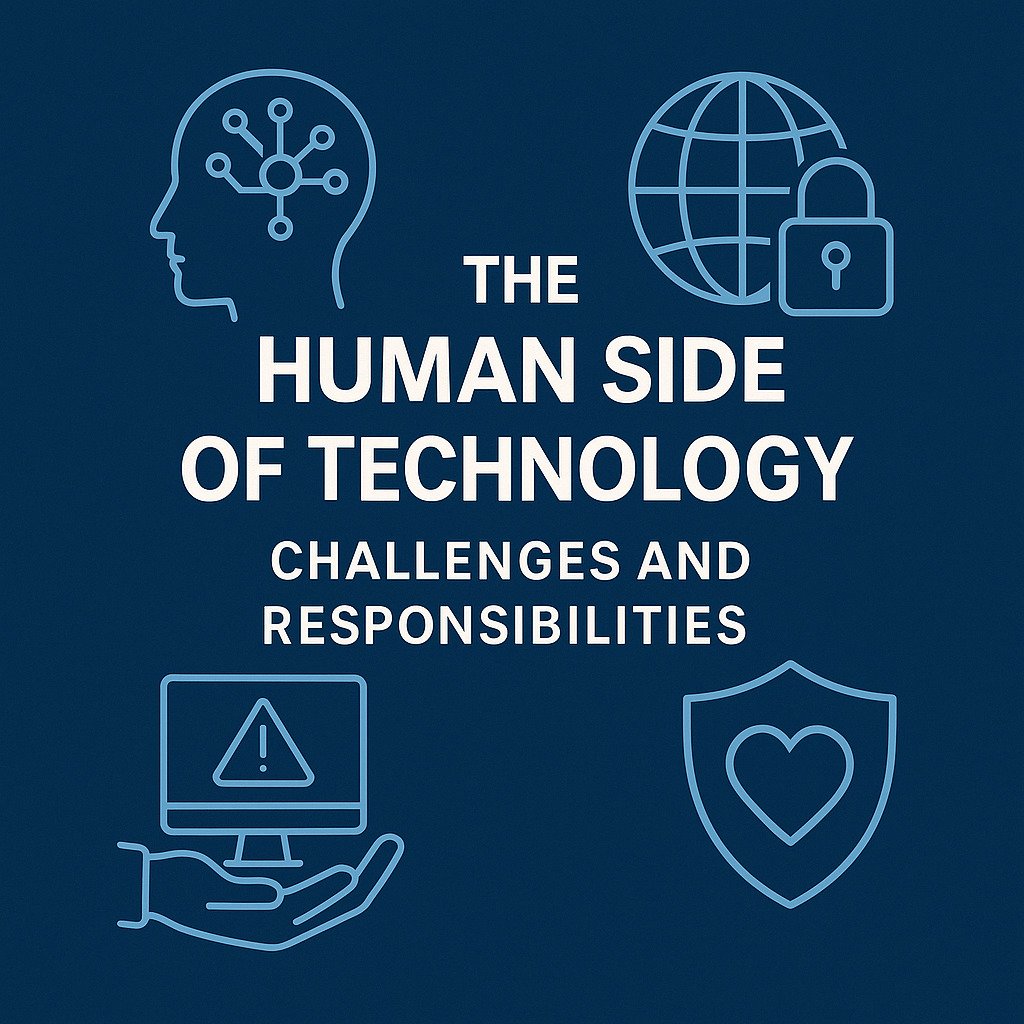
Technology is evolving faster than ever, shaping how we work, communicate, learn, and live. While innovation brings convenience and progress, it also raises important questions about its impact on people. The human side of technology focuses on how digital systems shape emotions, behaviour, relationships, inequality, and ethics. As we step deeper into the technological future, it is essential to ensure that innovation remains aligned with human welfare, dignity, and responsibility. 🔙The Internet of Things (IoT): A Connected World“: Explore how IoT is shaping modern life and transforming global connectivity.”
The Psychological and Social Impacts of Technology
Technology has fundamentally changed human behaviour and mental processes—both positively and negatively.
Positive Impacts
- Enhanced communication across distances
- Access to knowledge and education
- Productivity and efficiency in work
- New forms of creativity and expression
Challenges
- Digital fatigue caused by excessive screen time
- Social isolation despite increased virtual connectivity
- Addiction to devices and platforms
- Mental health concerns, including anxiety and reduced attention span
- Distortion of self-image through social media
Technology influences how we value relationships, perceive ourselves, and interact with the world. Understanding these psychological and social shifts is critical to creating healthier digital habits.
The Digital Divide and Inclusivity
While technology connects millions, it also widens inequality for those without access.
Forms of Digital Divide
- Economic divide — affordability of devices and internet
- Geographical divide — rural vs. urban connectivity gaps
- Educational divide — digital literacy differences
- Gender divide — unequal access in some regions
Why Inclusivity Matters
Future technologies like AI, 5G, and robotics must be accessible to all to ensure:
- Equal opportunities
- Better education and healthcare access
- Socio-economic growth
- Reduced global inequality
Bridging this divide requires government support, affordable infrastructure, digital skills training, and inclusive product design.
Technology Ethics and Governance
As digital systems grow more powerful, the ethical challenges also intensify.
Key Areas of Concern
- Data privacy and ownership
- AI transparency and fairness
- Algorithmic bias affecting employment, healthcare, and finance
- Surveillance and misuse of personal information
- Accountability for AI-driven decisions
The Need for Governance
To create a safe and fair digital environment, we need:
- Clear global regulations
- Ethical design frameworks
- Responsible data practices
- Independent oversight bodies
- Corporate accountability
Ethics must be embedded at every stage—from design to deployment.
The Need for “Humane Innovation”
Humane innovation ensures technology enhances human well-being instead of diminishing it.
Principles of Humane Innovation
- Human-centric design
- Transparency in data use
- Technology that respects mental health
- Accessibility for all
- Designing systems that reduce harm instead of amplifying it
Humane innovation focuses on empathy, inclusivity, sustainability, and long-term societal impact.
Conclusion
Technology is not just about devices and systems—it is about people. As innovation continues at a rapid pace, the world must balance progress with responsibility. By prioritizing mental well-being, ethics, inclusivity, and human-centered design, we can ensure that the future of technology is one that empowers society rather than divides it. The real challenge is not how advanced technology becomes, but how wisely we choose to use it.