Table of Contents
ToggleIntroduction
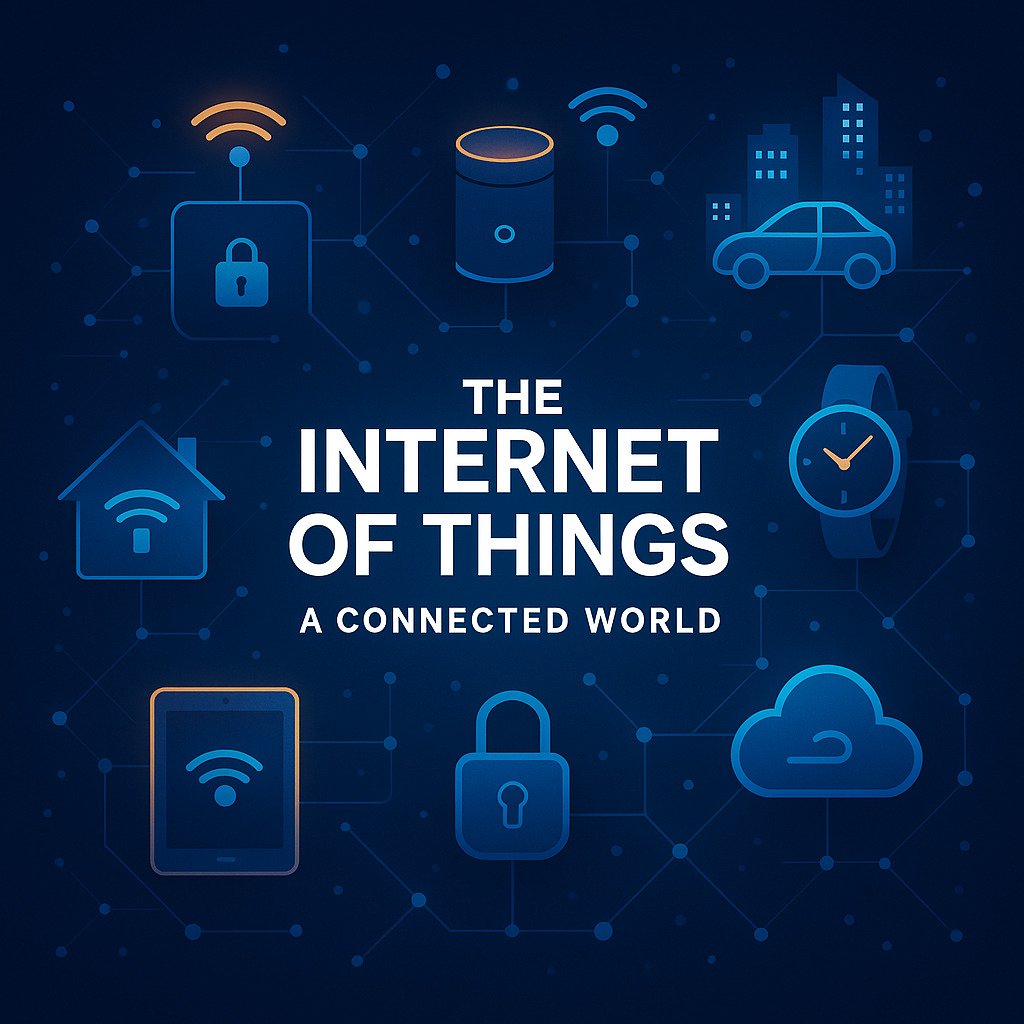
The Internet of Things (IoT) is transforming the world around us by connecting everyday objects—homes, cars, appliances, machines, even entire cities—to the internet. This network of smart devices has unlocked unprecedented efficiency, automation, and intelligence. As technology advances at a rapid pace, IoT is shaping a future where connectivity will seamlessly blend into our lives, influencing everything from personal convenience to national infrastructure.
🔙“Read how renewable energy is shaping the future of sustainable technology.”
Everyday IoT — From Homes to Cities
The growth of IoT is most visible in our daily environments: Smart Cities
Smart Homes
- Voice-controlled assistants (Alexa, Google Assistant)
- Smart lighting and thermostats
- Connected security systems
- Energy-optimizing appliances
These devices contribute to comfort, energy efficiency, and security.
Cities worldwide are adopting IoT-based solutions:
- Intelligent traffic management
- Smart parking
- Environmental monitoring
- Waste management sensors
- Connected public transport
These systems help reduce congestion, cut pollution, and improve quality of life.
Wearables & Healthcare
- Fitness trackers and smartwatches
- Remote patient monitoring
- Connected inhalers and medical devices
IoT is pushing healthcare toward proactive, personalized, real-time monitoring.
Data, Privacy, and Cybersecurity Concerns
With billions of devices constantly gathering data, privacy and security have become major challenges.
Key Concerns
- Data Privacy: Personal habits, locations, and usage patterns are often collected without full user awareness.
- Cybersecurity: IoT systems are vulnerable to hacking, botnets, and identity theft.
- Lack of Standardization: Different devices follow different security protocols, creating weak points.
- Device Misuse: Insecure devices can be exploited to cause disruptions or espionage.
The Way Forward
- Strong encryption
- Mandatory security certifications
- Consumer awareness
- Global regulatory frameworks
Security must evolve at the same pace as IoT expansion.
How IoT Integrates with AI and 5G
IoT becomes exponentially more powerful when combined with AI and 5G.
AI + IoT = Intelligent Automation
AI helps IoT devices analyze data and make decisions in real time:
- Predictive maintenance in factories
- Smart energy distribution
- Personalized user experiences
5G + IoT = High-Speed Connectivity
5G provides:
- Ultra-low latency
- Faster data transfer
- Higher device density
This enables large-scale IoT ecosystems such as autonomous vehicles and industrial automation.
The Road Ahead: Autonomous Systems and Edge Computing
The future of IoT is driven by autonomy and decentralized processing.
Autonomous Systems
IoT will power:
- Self-driving cars
- Intelligent drones
- Automated logistics and supply chains
- Smart agriculture using robotic systems
Edge Computing
Instead of sending all data to the cloud, devices process data locally at the “edge.”
- Reduces latency
- Lowers bandwidth usage
- Enhances security
This architecture makes real-time decision-making possible in mission-critical applications.
Conclusion
IoT is evolving beyond mere connectivity—it is becoming the backbone of a smarter, more efficient world. As IoT expands across homes, industries, and global infrastructure, the next decade will define how securely and responsibly we integrate billions of smart devices into everyday life. The future promises an interconnected digital ecosystem where intelligence is embedded in every object we use.
👉“Explore how AI is redefining intelligence and powering next-generation systems.”