Oil & Gas

The Government of India’s policies for setting up fuel retail outlets

Key Policy Details In a resolution dated 08 Nov 2019, the MoPNG issued new guidelines for authorisation to market transportation fuels (motor spirit – petrol, and high speed diesel) to be used in both retail and bulk business. Press Information Bureau+2The Economic Times+2 Under these guidelines, for retail authorisation, an entity must have a minimum net worth of ₹250 crore for retail-only business (or ₹500 crore if both bulk and retail). Press Information Bureau+1 The entity must commit to establishing at least 100 retail outlets of which 5 % must be in notified remote areas within five years. Press Information Bureau+1 Additionally, authorised outlets must within three years of operation offer one or more alternate-fuel infrastructure (e.g., CNG, LNG, biofuels, EV charging) at the retail site. Press Information Bureau+1 News reports indicate the government is currently reviewing these norms and may further ease them to attract more players into the fuel-retail space.

The Government of India’s policies for setting up fuel retail outlets Read More »

Petroleum Products – Retail & Distribution in India

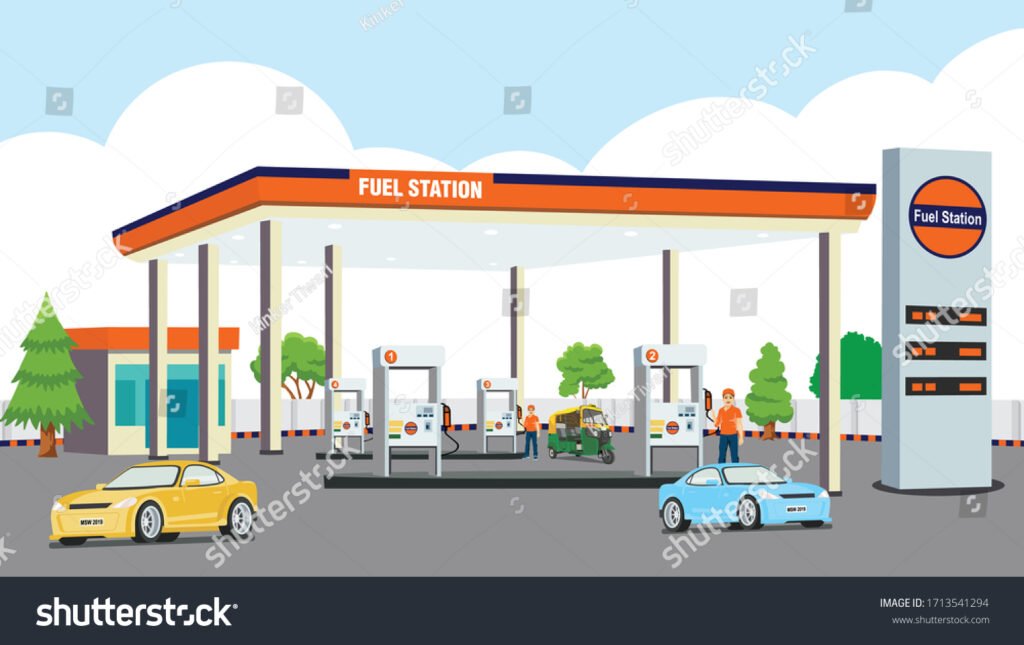
Products – Retail & Distribution in India India’s petroleum retailing and distribution system is a complex, regulated, and evolving sector. It involves multiple stakeholders, varied products (petrol/diesel, LPG, etc.), and touches both urban and rural consumers. Below is an outline covering the major players, scale, challenges, and future directions. Key Players in Petroleum Retailing These are the main categories and companies involved in retailing petroleum products, particularly petrol & diesel: Public Sector Oil Marketing Companies (OMCs) Indian Oil Corporation Ltd (IOCL) Bharat Petroleum Corporation Ltd (BPCL) Hindustan Petroleum Corporation Ltd (HPCL) Private Sector Retailers Nayara Energy (formerly Essar Oil) Reliance-BP (Joint Venture) Shell (a small presence) Others/Smaller private players Government & Regulatory Bodies Ministry of Petroleum & Natural Gas (Government of India) Petroleum Planning & Analysis Cell (PPAC) State governments in some cases (for local policy and permissions) Distributors and Dealers Individual authorized dealerships that operate petroleum retail outlets (fuel pumps). Logistics/distribution (tankers, pipelines) to get product from refineries/terminals to retail outlets. LPG Bottling & Distribution Companies Public sector (Indane/IOCL, Bharat Gas, HP Gas) Private LPG firms (Totalgaz, Jyothi Gas, etc.) Bottling plants, cylinder manufacturers, distributors Ancillary / Supporting Players Pipeline companies (for product transport) Storage terminals Equipment suppliers (pumps, meters, safety equipment) Technology providers (for digital payments, tracking, fuel quality monitoring, etc.) Number of Petrol Pumps in India, Company-Wise Here are recent figures and estimates for petrol / fuel-outlets (petrol pumps), by company, and general scale: Company / Category Approximate Number of Petrol Pumps / Retail Outlets Notes IOCL ~ 35,000-40,000+ petrol pumps www.bajajfinserv.in+4Angel One+4Business Standard+4 Market leader; large rural and urban presence. BPCL ~ 23,900 (≈ 24,000) outlets Angel One+2crustdata.com+2 Second major PSU. HPCL ~ 23,900 (≈ 23,900) outlets Angel One+2crustdata.com+2 Close to BPCL in outlet count. Nayara Energy ~ 6,700 petrol pumps Angel One+2The Economic Times+2 Largest private retailer. Reliance-BP (Jio-BP) ~ 1,900-2,000 outlets Angel One+1 Growing private JV footprint. Shell ~ 300–400 outlets Angel One+1 Limited presence compared to PSUs & private big players. Total number of petrol pumps (public + private) in India is large, varying with date, but recent estimates show ~ 80,000-90,000 retail outlets. Data Collected From Business Standard+3The Economic Times+3Moneycontrol+3 Among them, the public sector (IOCL, BPCL, HPCL) continues to dominate. Data Collected from  Firstpost+2Moneycontrol+2 Number of LPG Distribution Companies / Dealers LPG (Liquefied Petroleum Gas) is another critical petroleum product in India, primarily used for cooking (domestic), but also industrial & commercial users. Key points: Indane (IOCL’s brand) is the largest LPG distributor brand in India. Wikipedia+1 Indane has over 12,500 distributors across India, operating in more than ~6,250 towns. Wikipedia IOCL has 91 bottling plants for LPG. Wikipedia Other major LPG distributing entities include Bharat Gas (BPCL), HP Gas (HPCL), and multiple private LPG players operating at regional or local levels. (Some private LPG companies operate in specific states or for commercial/industrial usage.) Fincash The Federation of LPG Distributors of India (FLPGDI) represents over 12,000 distributors affiliated with the three major OMCs (IOCL, BPCL, HPCL) across 23 states. flpgdi.com Regulatory Environment / Licensing Norms The Government of India’s policies for setting up fuel retail outlets (e.g., minimum number of outlets required, investment norms, rural-area mandates). News Arena India+1 Rules around LPG distribution (control orders, safety norms, pricing, subsidy mechanisms). Infrastructure & Logistics How fuels are transported (pipelines, coastal shipping, road/rail & tankers) Storage terminals, bottling plants for LPG, safety systems Urban vs Rural Reach The spread of pumps is not uniform; rural areas are often less served unless by PSUs. Similarly, LPG reach under schemes such as Ujjwala has sought to expand domestic cooking gas in poorer households. Product Mix & Add-ons Besides petrol & diesel, many pumps also dispense CNG, LNG, LPG auto-fuel in some areas. EV charging facilities: increasing number of fuel stations are adding EV chargers. Business Standard Competition & Pricing Dynamics Private companies like Nayara, Jio-BP offering competitive pricing compared to PSUs. Moneycontrol+1 The effect of international crude oil prices, exchange rates, taxes, and subsidies. Technology & Digitalisation Automation, digital payments, app-based fuel booking etc. Monitoring quality, measuring fuel adulteration, customer satisfaction. Sustainability & Alternative Fuels Growing relevance of clean fuels, biofuels, blending (e.g. ethanol in petrol, biodiesel) EV charging infrastructure being integrated into fuel pumps. Business Standard Challenges & Bottlenecks Permission and land availability issues for opening new petrol pumps Safety, environment, pollution issues Distribution losses, leakage, adulteration, logistic inefficiencies Competition from alternate energy / policy push toward greener fuels Recent & Proposed Policy Changes Changes in norms for licensing of retail outlets (e.g., net worth requirement, rural quotas). News Arena India+1 Moves to liberalize or privatize various parts of the supply chain, or to allow more private players in LPG supply.

Petroleum Products – Retail & Distribution in India Read More »

Crude Exploration & Production in India

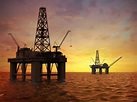
Introduction Crude oil, often referred to as “black gold,” remains one of the world’s most valuable natural resources. For a developing nation like India, it is the lifeblood of industrial and economic growth. Although India’s domestic reserves are modest compared to major global producers, consistent efforts in exploration, technology adoption, and international collaboration have strengthened its oil and gas sector. History of Oil Exploration in India India’s oil story began in 1889, when crude oil was first discovered at Digboi, Assam. The Assam Oil Company was established soon after, and by 1901, Asia’s first refinery was operational there — making Digboi the “Cradle of the Indian Oil Industry.” After independence, the Government of India set up the Oil and Natural Gas Directorate in 1955, later transformed into ONGC (Oil and Natural Gas Commission) in 1956. Major discoveries like Bombay High (1974) and Ankleshwar (1960) marked turning points, leading India toward self-reliance in energy exploration. Onshore and Offshore Oil Fields Oil fields are categorized based on their location and drilling environment: Type of Field Description Examples Onshore Fields Oil reserves located on land. Drilling and production occur using rigs installed on the surface. Digboi, Naharkatiya, Moran (Assam); Ankleshwar, Kalol (Gujarat); Jaisalmer (Rajasthan) Offshore Fields Located under the seabed; require advanced technologies and floating rigs or platforms. Bombay High, Bassein, Heera, Neelam (Arabian Sea); KG-D6 Basin (Bay of Bengal) Major Oil Fields and Production Regions India’s crude oil production primarily comes from five key regions — Western Offshore, Assam-Arakan Basin, Gujarat, Rajasthan, and Eastern Offshore (KG Basin). Oil Field / Basin Location Operator Type Remarks Bombay High Offshore, Maharashtra ONGC Offshore Largest producing field in India Ankleshwar Gujarat ONGC Onshore One of the oldest commercial fields Mangala-Bhagyam-Aishwariya (MBA) Barmer, Rajasthan Cairn Oil & Gas (Vedanta) Onshore Major private sector field KG-D6 Basin Bay of Bengal (Andhra Coast) Reliance Industries & BP Offshore Deep-water project Digboi Assam Oil India Ltd. Onshore Asia’s oldest operating oil field Naharkatiya & Moran Assam Oil India Ltd. Onshore Key producing fields in NE India Bassein & Neelam Offshore, Maharashtra ONGC Offshore Major gas and oil producing fields Crude Oil Reserves and Production Proven reserves: ~600 million metric tonnes (MMT). Daily production: Around 600,000–700,000 barrels per day, meeting only 15–18% of India’s total demand. Regional share: Western Offshore (Bombay High & Bassein): ~40% Assam-Arakan Basin: ~25% Gujarat and Rajasthan: ~30% combined India remains heavily import-dependent, sourcing over 80% of its crude oil from the Middle East (notably Saudi Arabia, Iraq, and UAE). Ongoing Exploration and New Discoveries India’s exploration activities have expanded under the Hydrocarbon Exploration and Licensing Policy (HELP) and Open Acreage Licensing Policy (OALP). Key exploration regions: Krishna-Godavari Basin (East Coast): Deep-water drilling by ONGC and Reliance-BP. Barmer Basin (Rajasthan): Enhanced recovery and expansion by Cairn Oil & Gas. Assam & Arunachal Pradesh: New blocks by Oil India Limited to boost Northeast output. Cambay Basin (Gujarat): Renewed interest in unconventional hydrocarbons. Major Players in Crude Oil Exploration & Production     Type Key Operations ONGC (Oil and Natural Gas Corporation Ltd.) Public Sector Offshore (Bombay High, Heera, Neelam); Onshore (Ankleshwar, Assam) Oil India Limited (OIL) Public Sector Assam, Arunachal Pradesh, Rajasthan Cairn Oil & Gas (Vedanta Ltd.) Private Sector Rajasthan, Gujarat, Offshore Mumbai Reliance Industries Ltd. (RIL) Private Sector KG-D6 Basin (in partnership with BP) HOEC, Adani Welspun, and others Private / JV Various exploration blocks under OALP Challenges and Future Outlook India’s exploration and production sector faces several challenges — declining output from mature fields, technical complexity in deep-water drilling, and high import dependence. However, with improved policy frameworks, private investment, and data-driven exploration, the country is taking steady strides toward energy security and self-reliance. Future strategies focus on: Enhanced oil recovery (EOR) technologies Investment in deep-water and frontier basins Integration of renewables with oil infrastructure Encouraging foreign partnerships through flexible licensing Conclusion From the discovery of oil in Digboi’s lush tea gardens to the sophisticated offshore rigs of the Arabian Sea, India’s oil exploration journey mirrors the country’s resilience and progress. While challenges persist, ongoing innovation and exploration promise a future where India continues to strengthen its foothold in global energy production.

Crude Exploration & Production in India Read More »

Crude Refining & Processing

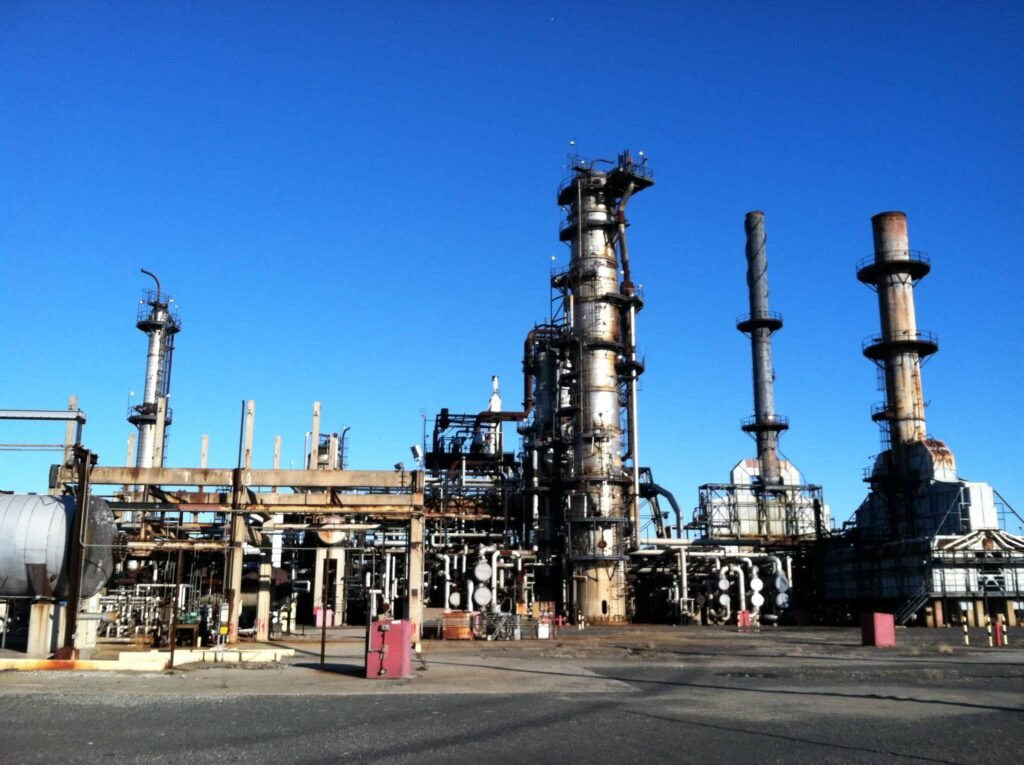
Discover everything about oil refineries in India – history, refining process, public & private players, total capacity, and the world’s largest refinery. Oil refineries form the backbone of India’s energy sector. They transform raw crude oil into everyday fuels and products that keep the country moving — from the petrol in your car to the LPG in your kitchen. With a mix of history, scale, and global importance, India’s refining industry is both fascinating and vital. Let’s explore how it works and what makes it unique. 1. What is an Oil Refinery?  Understanding the role of refineries in India’s energy sector An oil refinery is essentially a giant conversion plant. It takes crude oil — a thick, dark liquid pulled from beneath the earth — and breaks it down into usable products like petrol, diesel, kerosene, aviation turbine fuel, and even lubricants. Think of it as a “filtering house” that transforms raw material into multiple forms of energy and products we depend on daily. 2. What is Crude Oil? The raw material that powers refineries Crude oil is a naturally occurring fossil fuel made up of hydrocarbons, sulfur, nitrogen, oxygen, and traces of metals. Crude oil is often called “black gold”. It is extracted from underground reservoirs and serves as the primary raw material for producing fuels like petrol, diesel, LPG, aviation fuel, and petrochemicals used in plastics, fertilizers, and more. On its own, crude has limited use. It is only after refining that it becomes the fuel that powers cars, airplanes, industries, and homes. 3. Types of Crude Oil Once crude oil is extracted, it can vary widely in physical properties, composition, and quality. Understanding these types is crucial because they determine refining processes and the kinds of products that can be obtained. Light Crude Oil Contains a higher proportion of light hydrocarbons (like gasoline and naphtha). Flows easily and has lower viscosity. Easier and cheaper to refine. Example: Brent Crude (North Sea), West Texas Intermediate (WTI). Medium Crude Oil Balanced composition of light and heavy hydrocarbons. Requires moderate refining effort. Example: Bonny Light (Nigeria). Heavy Crude Oil Contains more long-chain hydrocarbons; higher viscosity and density. Harder to pump and refine; yields more residual fuel oils. Example: Maya (Mexico), Western Canadian Select (Canada). Extra Heavy Crude Oil / Bitumen Extremely dense and viscous; often needs heating or dilution for transport. Mainly used for producing asphalt, heavy fuels, or synthetic crude after upgrading. Example: Orinoco Belt (Venezuela), Athabasca Oil Sands (Canada). Sweet vs. Sour Crude Sweet Crude: Low sulfur content (<0.5% sulfur). Easier to refine and produces cleaner fuels. Sour Crude: High sulfur content (>0.5% sulfur). Requires additional desulfurisation during refining to meet environmental standards 4. The Process of Oil Refining and Distillation How crude oil is transformed into usable products The heart of refining lies in fractional distillation: Crude oil is first heated in a furnace. As it vaporizes, it enters a tall column where temperatures vary from bottom to top. Different components condense at different levels — lighter products like LPG and petrol rise to the top, while heavier ones like diesel, lubricants, and bitumen settle at lower levels. This is just the first step. Advanced processes such as cracking, reforming, and blending further refine the fractions to improve quality and efficiency. 5. How Many Oil Refineries are in India? Total number of refineries across sectors India currently operates 23 oil refineries. Of these, 18 are in the public sector, 3 in the private sector, and 2 are in the joint sector. Together, they make India a refining powerhouse in Asia. 6. The Oldest Oil Refinery in India  Digboi Refinery – India’s first step in refining history  India’s oil refining story began in 1901 with the Digboi Refinery in Assam. Often called the “Oil City of Assam,” Digboi is not only India’s first refinery but also one of the oldest operating refineries in the world. 7. Major government-owned companies and their contribution The public sector dominates refining in India, driven by major state-run giants such as: Indian Oil Corporation Limited (IOCL) Bharat Petroleum Corporation Limited (BPCL) Hindustan Petroleum Corporation Limited (HPCL) ONGC (via Mangalore Refinery and Petrochemicals Limited) These companies account for the majority of refining capacity and ensure energy security across the nation. 8. Oil Refineries in the Private Sector  How private players like Reliance and Nayara changed the game Private companies also play a major role, especially in terms of scale: Reliance Industries Limited (RIL) – Runs the Jamnagar refinery complex, the largest in the world. Nayara Energy – Operates a major refinery at Vadinar, Gujarat. These players have placed India on the global refining map with massive export capacities. 9. Oil Refineries in the Joint Sector Collaboration between public and private entities  Joint sector refineries emerged as collaborations between government entities and private or foreign partners. Examples include: Numaligarh Refinery Limited (NRL) in Assam. MRPL (Mangalore Refinery and Petrochemicals Limited), which began as a joint venture and later became an ONGC subsidiary 10. Refinery-wise Capacity in India A breakdown of refining capacities across companies  Refining capacity varies widely across facilities: Reliance Jamnagar Complex – ~68 million metric tonnes per annum (MMTPA) Nayara Energy, Vadinar – ~20 MMTPA IOCL Refineries (Panipat, Mathura, Paradip, Haldia, Barauni, etc.) – Combined ~70+ MMTPA BPCL Refineries (Mumbai, Kochi, Bina) – ~35 MMTPA HPCL Refineries (Mumbai, Visakhapatnam) – ~20 MMTPA Other refineries (MRPL, CPCL, NRL, etc.) – Significant regional contributors. 11. India’s Total Refining Capacity Where India stands globally in oil refining Together, India’s refineries boast a capacity of around 254 MMTPA. This makes India the second-largest refiner in Asia (after China) and the fourth-largest globally. 12. The Largest Oil Refinery in India Jamnagar Refinery – India’s crown jewel and global leader  The crown jewel of India’s refining industry is the Reliance Jamnagar Refinery Complex in Gujarat. With a capacity of 68 MMTPA, it holds the title of the largest refinery in the world, producing fuels not only for domestic use but also for export markets across Asia, Africa, and

Crude Refining & Processing Read More »