Data Centres: Listed Companies (India)
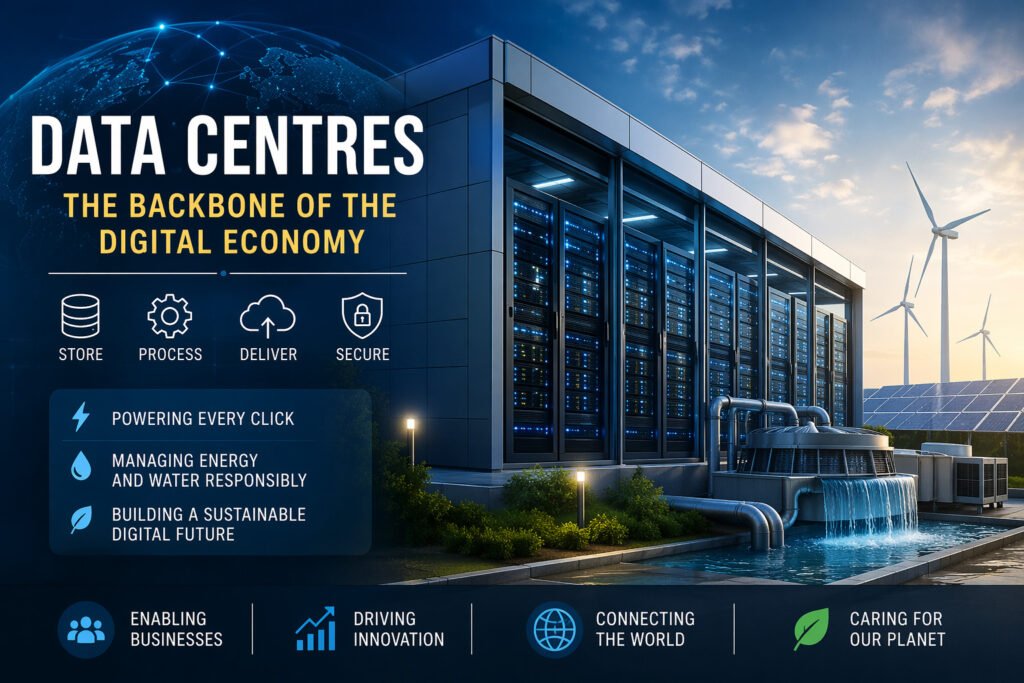
1. Introduction: Data Centres in India are Structural Opportunity, Not a Passing Trend A India’s data centre story is no longer a futuristic idea—it is unfolding right now, powered by three irreversible forces: data localisation, explosive AI & cloud demand, and aggressive hyperscaler expansion. The government’s push for Data Protection and Digital Personal Data Protection Act is ensuring that critical data stays within India’s borders. This is not just a regulatory move—it is a multi-billion dollar infrastructure opportunity. At the same time, the rise of artificial intelligence and cloud computing is dramatically increasing the need for high-performance, low-latency data processing. Global tech giants such as Amazon Web Services, Microsoft Azure, and Google Cloud are expanding aggressively in India, creating massive demand for local data centre capacity. 👉 For investors, this is not just a sector—it is a backbone play on India’s digital economy. 2. Why Listed Companies Matter Unlike sectors such as banking or FMCG, pure-play data centre companies in India are largely unlisted. Names like CtrlS or STT GDC remain outside public markets. This means investors must participate indirectly through listed proxies—companies that are: Building data centre infrastructure Partnering with hyperscalers Benefiting from cloud and AI-driven demand 👉 This makes identifying the right listed exposure both challenging and rewarding. 3. Key Listed Players (India) 🏢 Reliance Industries Limited Reliance is quietly positioning itself at the intersection of data localisation, AI, and cloud infrastructure through Jio Platforms. Building a pan-India digital ecosystem Likely to benefit from localisation mandates requiring domestic storage Investing in AI and cloud capabilities 👉 Investor Insight: Reliance offers optional upside from data centres embedded within a diversified giant. The real value may emerge as India’s AI ecosystem scales. Deep Dive: Reliance’s Data Centre Ambitions While Reliance Industries Limited does not separately disclose financials for its data centre business, publicly available information points to significant investments in AI infrastructure, hyperscale facilities, and cloud ecosystems through Jio Platforms. From large-scale data centre plans in Jamnagar to proposed gigawatt-scale capacity backed by renewable energy, Reliance is positioning itself as a long-term digital infrastructure leader. 👉 For a detailed breakdown of its strategy, investments, and future potential, read our full analysis:“Reliance Data Centres: Strategy, Scale and Investment Potential” 🏢 Adani Enterprises Limited Through AdaniConneX (JV with EdgeConneX), the group is building hyperscale-ready data centre infrastructure. Direct play on hyperscaler expansion Strong integration with renewable energy (critical for data centres) Large-scale capacity creation 👉 Investor Insight:This is a high-growth, high-conviction bet on India becoming a global data hub—but execution and capital intensity remain key risks. 🏢 Tata Communications Limited A more mature and stable player with a global footprint. Serves enterprises transitioning to cloud Benefits from AI-driven data traffic growth Strong international connectivity 👉 Investor Insight: A steady compounder—less aggressive than peers, but well-positioned for sustained demand. 🏢 Bharti Airtel Limited Airtel’s Nxtra is one of India’s largest data centre networks. Strong enterprise and hyperscaler relationships Positioned to benefit from cloud adoption and localisation norms Expanding capacity rapidly 👉 Investor Insight: A balanced story—combining telecom cash flows with data centre growth. 🏢 HCL Technologies Limited Not a direct owner, but a major enabler of the data centre ecosystem. Helps enterprises migrate to cloud Manages infrastructure for global clients Gains from AI and digital transformation spending 👉 Investor Insight: An indirect but powerful beneficiary of rising data consumption and cloud adoption. 4. Emerging / Indirect Plays Smart investors often look beyond the obvious. Power Companies: Data centres are energy-intensive—renewable integration is key Real Estate / REITs: Land and long-term leasing opportunities EPC Players: Construction of hyperscale campuses 👉 The data centre boom creates a multiplier effect across sectors. 5. What Investors Should Track To move from narrative to actionable investing, watch: 📊 Capacity Expansion (MW): Signals future revenue 🤝 Hyperscaler Tie-ups: Strongest demand indicator ⚡ Power Strategy: Renewable vs conventional 💰 Capex & Debt Levels: Capital-heavy nature 📜 Regulatory Push: Data localisation policies 6. Risks: The Other Side of the Story Every structural opportunity carries risks: High capital expenditure and long payback periods Rapid technological evolution Pricing pressure from global players Policy uncertainty despite localisation push 👉 Ignoring risks is where most investors go wrong. 7. Valuation Perspective India still lacks a pure-play listed data centre company. Most stocks: Are valued on core businesses Offer data centre growth as optional upside 👉 This creates an interesting situation where early investors may benefit as the theme gains visibility. Closing Insight India’s data centre opportunity sits at the crossroads of policy, technology, and global capital. But the winners will not just be those who build capacity—they will be those who align with hyperscalers, manage power efficiently, and scale profitably. 👉 For investors and traders alike, this is a space worth tracking closely—not for quick gains, but for structural wealth creation. Freuently Asked Questions (FAQs) 1. What are data centre stocks in India? Data centre stocks refer to listed companies involved in building, operating, or supporting data centre infrastructure, either directly or indirectly. 2. Are there pure-play data centre companies listed in India? Currently, most leading data centre operators in India are unlisted. Investors gain exposure through companies like Reliance Industries Limited, Bharti Airtel Limited, and Tata Communications Limited. 3. Why are data centre stocks gaining attention? Growth is driven by increasing demand from AI, cloud computing, data localisation policies, and expansion by global hyperscalers. 4. Which sectors benefit from data centre growth? Apart from telecom and digital companies, sectors like power, real estate, and infrastructure also benefit from rising data centre demand. 5. Is investing in data centre stocks a long-term opportunity? Yes, the sector is considered a long-term structural opportunity, though many listed companies currently offer indirect exposure. 6. What should investors track in data centre companies? Key factors include capacity expansion (MW), partnerships with hyperscalers, capital expenditure, and energy efficiency strategies.
Data Centres: Listed Companies (India) Read More »